

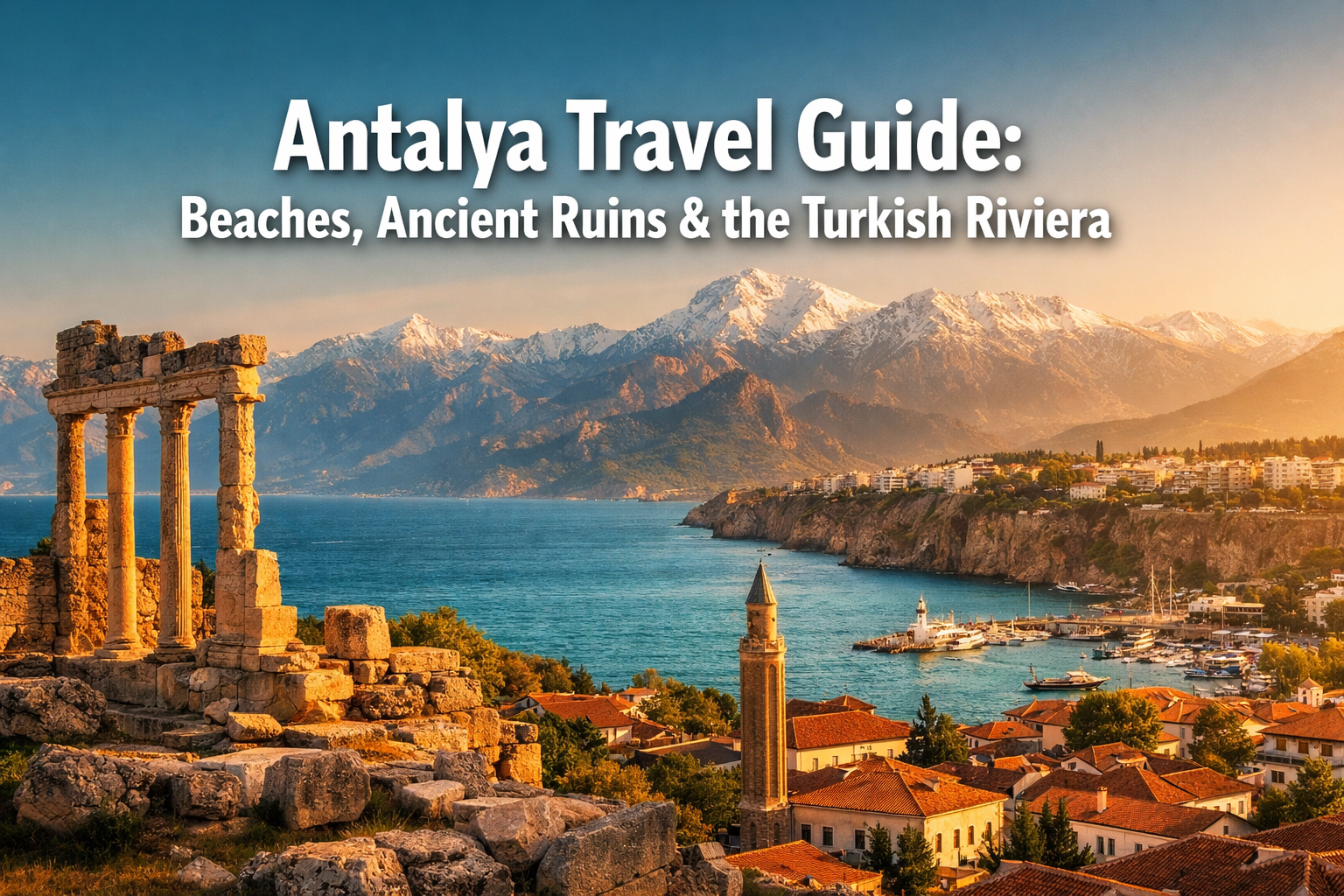

Fewer than 3% of Mediterranean destinations can claim a Roman theatre still used for live performances, a UNESCO-listed old town, and over 300 days of sunshine per year — yet Antalya delivers all three. This Antalya Travel Guide: Beaches, Ancient Ruins & the Turkish Riviera covers everything you need to plan a confident, rewarding trip to one of Turkey’s most captivating cities. Whether you are drawn by turquoise water, millennia-old stone, or simply exceptional value, Antalya rewards every type of traveller.
Attracting more than 15 million visitors each year, Antalya is not a hidden secret — but knowing where to go and what to skip makes all the difference. This guide gives you that edge.
Antalya Travel Guide: Key Takeaways
- 🏖️ Antalya offers distinct beach experiences — from lively resort strips to quiet, natural coves — to suit every preference.
- 🏛️ The region holds some of the world’s best-preserved Greco-Roman ruins, many within an easy day trip.
- 🕌 Kaleiçi (Antalya Old Town) is a living neighbourhood, not just a museum — explore it on foot.
- 💰 In 2026, Antalya delivers outstanding value: luxury hotels at mid-range European prices, dining at roughly one-third of Western European costs.
- 🗺️ A local guide or travel specialist can unlock hidden sites, skip queues, and tailor your itinerary to your pace.

Why Antalya Belongs on Your 2026 Travel List
Antalya sits at the heart of the Turkish Riviera, a 600-kilometre arc of coastline where limestone cliffs tumble into impossibly blue water. The city itself is home to nearly 3 million residents and is served by direct flights from major European and Middle Eastern hubs, making it one of the most accessible Mediterranean destinations on the planet.
What sets Antalya apart from rivals like the Amalfi Coast or the French Riviera is value without compromise. In 2026, a luxury hotel here costs what a mid-range property costs elsewhere in Europe. A sit-down dinner of fresh grilled sea bass, mezze, and local wine averages roughly one-third of what you would pay in Paris or Rome — and the quality is genuinely excellent.
Beyond the economics, the region layers history on top of natural beauty in a way that few places can match. You can swim at a Blue Flag beach in the morning, walk through a 2,000-year-old Roman colonnade after lunch, and sip tea in a 19th-century caravanserai courtyard by evening.
For a broader picture of the coastline stretching west from Antalya, our guide on how to explore the Turkish Riviera is an excellent companion read.
Your Antalya Beach Guide: Finding the Right Shore
The Antalya beach guide question most travellers ask first is simple: sand or pebbles? The answer shapes your entire coastal experience.
Konyaaltı Beach 🪨
Stretching several miles along Antalya’s western edge, Konyaaltı is a dramatic pebble beach backed by the snow-capped Taurus Mountains. The scenery is genuinely spectacular. Despite summer crowds, finding a comfortable spot is rarely difficult. Beach clubs line the promenade offering sun lounger rentals, cold drinks, and showers. Bring water shoes — the pebbles are beautiful but unforgiving on bare feet.
Lara Beach 🏖️
Head east and the coastline shifts to fine golden sand. Lara Beach is Antalya’s resort heartland, lined with large all-inclusive hotels offering family-friendly pools, water sports, and direct beach access. If you are travelling with children or simply want everything in one place, Lara delivers.
Mermerli Beach & Kayalıklar 🌊
For something more intimate, Mermerli Beach is a small sandy strip tucked between the marina and rocky hillsides — a genuine alternative to the main crowds. Further south, Kayalıklar is a public stony beach near the airport with minimal infrastructure and a wonderfully unpolished atmosphere. Ideal for travellers who prefer authenticity over amenities.
| Beach | Surface | Vibe | Best For |
|---|---|---|---|
| Konyaaltı | Pebble | Lively, scenic | Active travellers, views |
| Lara | Sand | Resort, family | Families, all-inclusive stays |
| Mermerli | Sand | Intimate, quiet | Couples, relaxation |
| Kayalıklar | Stone | Raw, natural | Budget travellers, locals |
What to See in Antalya Old Town (Kaleiçi)
Antalya Old Town — known locally as Kaleiçi, meaning “inside the castle” — is the historic heart of the city and one of the most atmospheric urban neighbourhoods in Turkey. Narrow cobblestone lanes wind between restored Ottoman-era mansions, Roman-era walls, and Byzantine churches converted into mosques. It is compact enough to explore entirely on foot in half a day.
Must-See Landmarks in Kaleiçi
- Hadrian’s Gate 🏛️ — A triumphal arch built in 130 AD to honour the visiting Roman Emperor Hadrian. The carved marble detail is extraordinary and admission is free.
- Yivli Minaret Mosque — Antalya’s iconic 13th-century fluted minaret, visible from across the bay and a defining feature of the city skyline.
- Roman Harbour — The ancient port still functions as a marina. Sitting at a waterfront café here, watching wooden gulet boats bob in the water, is one of Antalya’s great simple pleasures.
- Antalya Museum — One of Turkey’s finest archaeological museums, housing artefacts from Perge, Aspendos, and Side. Allow at least two hours.
💬 “Kaleiçi is not a theme park version of history — people actually live here. That is what makes it special.”
Getting lost in Kaleiçi is genuinely part of the experience. Every turn reveals a bougainvillea-draped doorway or a centuries-old fountain. For context on the broader scope of Turkey’s ancient sites, our guide to archaeological sites in Turkey provides excellent background reading.
Antalya Travel Guide to Ancient Ruins: Day Trips Worth Every Kilometre
The region surrounding Antalya is one of the richest archaeological landscapes in the Mediterranean world. These are the three sites that genuinely justify a day trip.
Perge Ancient City (18 km East)
Perge is the most accessible major ruin from Antalya city centre — about 30 minutes by public bus from the main bus station. The site rewards visitors with a monumental gateway, a colonnaded main street stretching hundreds of metres, a large agora, and a stadium that once seated 12,000 spectators. The bath complex is among the most complete you will find anywhere in Turkey. Entrance is approximately €3, and the site is open 08:00–19:00 in summer.
Practical tip: The bus drops you about 2 kilometres from the ruins. An organised tour provides direct access and expert commentary — well worth considering.
Aspendos (47 km East)
Aspendos is home to what many archaeologists consider the best-preserved Roman theatre in the world. Built in the 2nd century AD, the theatre still hosts live opera and ballet performances during summer festivals — making it the rare ancient site where you can experience history in action. The acoustics are remarkable even without amplification.
For more on Turkey’s remarkable ancient theatres and temples, explore our dedicated resource on which ancient ruins in Turkey are worth visiting.
Side Ancient City (75 km East)
The coastal peninsula of Side blends Greco-Roman ruins with a working resort town in an unusual and charming way. The Temple of Apollo — with its restored columns framing a sunset over the Mediterranean — is one of the most photographed ancient monuments in Turkey, and access is free. The ancient theatre, agora, and archaeological museum charge a combined entrance fee of around €3.
Things to Do in Antalya Beyond the Beach and Ruins
The things to do in Antalya list extends well beyond archaeology and sunbathing.
🚤 Boat Tours
Boat trips departing from the Roman Harbour explore sea caves, hidden coves, and swimming spots inaccessible by land. Full-day tours typically include lunch and multiple swimming stops.
🥘 Eat Like a Local
Antalya’s food scene is seriously underrated. Fresh seafood dominates the coastal restaurants, but the city also excels at traditional Turkish mezze, slow-cooked lamb dishes, and street food. Don’t miss şiş köfte (grilled meatballs) from a street vendor in the bazaar district. Our Turkish street food guide will help you eat confidently and adventurously.
🥾 Hiking the Lycian Way
The famous Lycian Way long-distance trail passes near Antalya, offering day-hike sections through pine forests and along clifftop paths with spectacular Mediterranean views.
🛍️ Shopping in the Bazaars
The old bazaar district near Kaleiçi sells everything from hand-painted ceramics to locally produced olive oil soap. Bargaining is expected and part of the experience. If you are interested in traditional crafts, our piece on Turkish carpets and their history offers fascinating context.
Practical Planning: Getting the Most from Your Visit
Best Time to Visit
| Season | Weather | Crowds | Value |
|---|---|---|---|
| April–May | Warm, 22–27°C | Moderate | ✅ Excellent |
| June–August | Hot, 35°C+ | Peak | Average |
| September–October | Warm, 28–32°C | Lighter | ✅ Excellent |
| November–March | Mild, 12–18°C | Low | ✅ Best rates |
Spring and autumn are widely considered the sweet spots — comfortable temperatures, manageable crowds, and the best hotel rates. For detailed seasonal advice, see our guide on the best time of year to visit Turkey.
Getting Around
- Within the city: Antalya’s tram line connects the city centre, Kaleiçi, and Konyaaltı Beach efficiently. Taxis are affordable by European standards.
- Day trips: Organised tours are the easiest option for Perge, Aspendos, and Side. Public buses serve most destinations but require more planning.
- Airport: Antalya Airport is one of Europe’s busiest, with direct connections from the UK, Germany, Russia, and the Gulf states.
Working with a Local Guide or Travel Specialist
Here is an honest truth: Antalya’s best experiences are not always the most obvious ones. A knowledgeable local guide or travel specialist can take you to lesser-known Roman sites with no queues, connect you with family-run restaurants where no English menu exists (in the best possible way), and design an itinerary that matches your pace rather than a generic schedule.
For first-time visitors in particular, the difference between a good trip and an extraordinary one often comes down to local expertise. At ExploreMoreTurkey, we connect travellers with specialists who know this region deeply. Whether you want a fully guided experience or simply some expert advice before you go, professional guidance pays dividends.
It is also worth familiarising yourself with how to respect local customs and laws while travelling in Turkey — a small investment of time that makes a meaningful difference to how locals receive you.
Conclusion: Your Next Steps for an Unforgettable Antalya Trip
This Antalya Travel Guide: Beaches, Ancient Ruins & the Turkish Riviera has covered the essentials — but Antalya is a destination that genuinely rewards deeper exploration. The city has a way of exceeding expectations: the ruins are more impressive in person, the food is better than you anticipated, and the warmth of local hospitality is something no guidebook fully captures.
Here are your actionable next steps:
- ✅ Choose your base — Kaleiçi for atmosphere and history, Lara for resort comfort, Konyaaltı for scenery.
- ✅ Book flights early — Direct routes fill quickly, especially for spring and autumn travel.
- ✅ Plan your day trips — Aspendos and Perge are non-negotiable; Side adds a third perfect day.
- ✅ Connect with a local specialist — Visit ExploreMoreTurkey to find expert guidance tailored to your interests.
- ✅ Learn a few Turkish phrases — Even basic greetings open doors. Our guide to learning Turkish phrases quickly makes it easy.
Antalya in 2026 offers something increasingly rare in European travel: genuine wonder at genuine value. Go before everyone else catches on.
Related Turkey destination guides: To combine Antalya with a wider route, compare our 7-day Turkey itinerary, 10-day Turkey itinerary, best time to visit Turkey guide, and must-do Turkey experiences.