

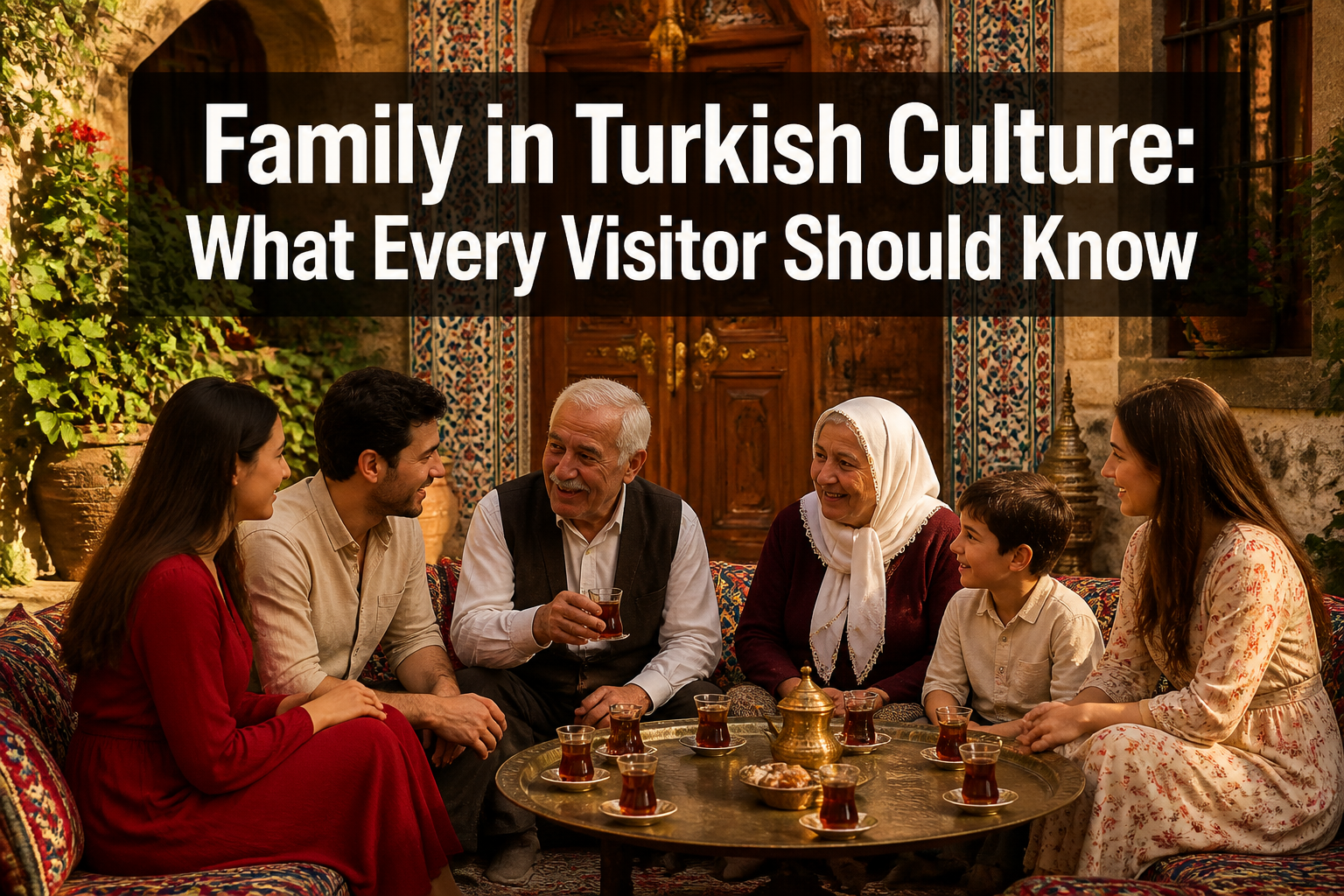

Understanding turkish family values is essential for anyone hoping to experience the warm hospitality Turkey is famous for. Last updated: May 3, 2026
Quick Answer: Family sits at the center of Turkish social life in a way that directly shapes how locals greet you, invite you into their homes, and treat you as a guest. Understanding Turkish family values — including hospitality norms, generational roles, and the cultural weight of kinship — will make your visit smoother, warmer, and far more memorable.
Key Takeaways
- 🏠 Turkish family culture prizes hospitality above almost everything else — expect to be offered tea, food, and genuine warmth within minutes of meeting someone.
- 👴 Respect for elders is non-negotiable. Greeting the oldest person first in any group is standard practice.
- 📉 Turkish family structures are changing fast: average household size dropped from 4 people in 2008–2009 to 3.11 in 2024, and solo living has surged from 13.9% to 20% in just one decade [3].
- 🍵 Refusing tea or food in a Turkish home can feel rude to your host — accepting (even a small amount) is the polite move.
- 🎁 Bringing a small gift when visiting a Turkish home is appreciated and culturally expected.
- 💬 Don’t be surprised if locals ask personal questions about your family, marital status, or children — it’s genuine curiosity, not nosiness.
- 🕌 Religion and family are deeply intertwined in many Turkish households, though urban and rural attitudes can differ significantly.
- 📊 Turkey’s fertility rate has fallen to 1.48 — well below the 2.1 replacement rate — prompting the government to declare 2025 the “Year of the Family” and launch a “Decade of Family and Population” running through 2035 [1].
Why Family Is the Core of Turkish Social Life
Family is the single most important social institution in Turkey. It’s not just a living arrangement — it’s a support system, a source of identity, and a framework for how people relate to strangers, neighbors, and guests.
When a Turkish person introduces themselves, family context often comes up within the first few minutes. Where are you from? Are you married? Do you have children? These aren’t intrusive questions. They’re a way of placing you in a social map that Turks navigate naturally every day.
This family-first orientation shapes everything from business relationships to how neighborhoods function. Understanding Family in Turkish Culture: What Every Visitor Should Know means recognizing that hospitality toward guests is essentially an extension of how Turks treat family members — with care, generosity, and a genuine desire to make you feel at home.

How Is the Turkish Family Structure Changing Right Now?
Turkish family structure is shifting faster than most visitors realize. The classic image of a large multigenerational household is giving way to smaller, more varied arrangements — and the data tells a striking story.
According to Üsküdar University research, average household size fell from 4 people in 2008–2009 to 3.11 in 2024 [3]. Single-person households jumped from 13.9% in 2014 to 20% in 2024. Classic nuclear families (two parents, children) dropped from 45.7% to 38.6% over the same period. Single-parent families rose from 7.6% to 10.9% — a 43% increase [3].
What’s driving this shift?
- Rapid urbanization pulling young people away from extended family networks
- Longer working hours leaving less time for family life
- Young Turks delaying marriage and approaching it more selectively
- Rising cost of living in major cities like Istanbul and Ankara
- Digitalization changing how people socialize and form relationships [1]
Turkey’s fertility rate has dropped to 1.48 — significantly below the 2.1 replacement threshold [1]. This prompted the government to declare 2025 the “Year of the Family” and launch a “Decade of Family and Population” covering 2026–2035, complete with financial incentives for marriage and childbearing [1][4].
Key insight for visitors: Don’t assume every Turkish household you encounter is a traditional multigenerational setup. Urban Turks, especially younger generations, may live alone or in small nuclear families — but the cultural values around family loyalty and hospitality often remain strong regardless of living arrangement.
What Does Hospitality Actually Look Like in a Turkish Home?
Turkish hospitality toward guests is one of the most genuine expressions of family values you’ll encounter anywhere. It’s direct, warm, and occasionally overwhelming if you’re not prepared.
Here’s what typically happens when you’re invited into a Turkish home:
- You’ll be asked to remove your shoes at the door. Slippers are often provided.
- Tea (çay) arrives almost immediately. Refusing it is considered impolite. If you don’t want a full glass, accept a small amount and sip slowly.
- Food will likely follow, even if you visited unannounced. Hosts feel responsible for feeding guests.
- You’ll be introduced to family members, often starting with the eldest.
- Expect to stay longer than planned. Rushing out quickly can feel dismissive to your host.
Common mistake: Saying “no thank you” to food or drink multiple times. In Turkish hospitality culture, the host will keep offering. The polite move is to accept at least a small portion, then you can decline additional servings more easily.
Choose this approach if: You’re visiting a Turkish colleague’s home, attending a family gathering as a guest, or even just stopping by a local shop where the owner offers tea — which happens more often than you’d expect.
How Should You Greet Elders Under Turkish Family Values?
Greetings in Turkish family settings follow a clear social hierarchy. Getting this right signals respect and earns you immediate goodwill.
| Situation | What to Do |
|---|---|
| Meeting elders (grandparents, older relatives) | Greet them first; a slight bow or hand-to-forehead gesture shows deep respect |
| Meeting adults of similar age | A handshake is standard; close friends may exchange cheek kisses |
| Meeting children | Smile and acknowledge them — ignoring children is noticed |
| Religious households | Wait for the other person to initiate physical contact, especially across genders |
| Formal family gatherings | Use titles (Amca for uncle, Teyze for aunt) even for non-relatives as a sign of respect |
One thing that surprises many visitors: Turkish people often use family titles (like “uncle” or “auntie”) for older people they’re not actually related to. It’s a way of expressing warmth and closeness, not confusion.
What Role Do Elders Play in Turkish Family Values?
Elders hold genuine authority and deep respect in Turkish families — this isn’t just ceremonial. Grandparents often live with or very near their adult children, and their opinions on major decisions (marriage, career, where to live) carry real weight.
For visitors, this means a few practical things:
- Always greet the oldest person in a room first. Walking past an elder to greet a younger person is considered disrespectful.
- Stand when an elder enters the room. This is especially common in more traditional or rural households.
- Don’t contradict elders publicly, even in casual conversation. Disagreement is handled privately.
- Asking about someone’s grandparents or parents is a genuine conversation starter and shows you value family — Turks will appreciate it.
What Gift-Giving Customs Reflect Turkish Family Values?
Bringing a gift when visiting a Turkish home is both appreciated and expected. It doesn’t need to be expensive — the gesture matters more than the price tag.
Good gift choices:
- Sweets or pastries (baklava, Turkish delight, quality chocolates)
- Fresh fruit or a fruit basket
- Quality tea or coffee
- Flowers (avoid giving 13 of anything — odd numbers are traditional for flowers, but 13 is considered unlucky)
Things to avoid:
- Alcohol (especially in more religious households — when in doubt, skip it)
- Overly personal items on a first visit
- Cheap or clearly generic gifts — quality matters even at a modest price point
Gifts are often set aside and opened later rather than immediately in front of you. Don’t read this as indifference — it’s simply the custom.
How Does Understanding Family in Turkish Culture Help You Connect With Locals?
Knowing the basics of Family in Turkish Culture: What Every Visitor Should Know gives you a genuine conversational advantage. Turks respond warmly when visitors show curiosity about family life rather than treating Turkey as just a tourist backdrop.

A few conversation starters that work well:
- Ask about someone’s hometown (memleket) — it’s tied deeply to family and regional identity.
- Compliment the food if you’re at a home meal. Asking for a recipe is a huge compliment.
- Show genuine interest in children or grandchildren — photos are often shared enthusiastically.
- If someone mentions a family celebration (wedding, circumcision ceremony, religious holiday), express congratulations warmly.
What to avoid in conversation:
- Criticizing Turkish family values or comparing them unfavorably to Western norms
- Assuming all Turkish families are conservative or religious — urban and rural attitudes vary enormously
- Making jokes about marriage or children early in a relationship
Urban vs. Rural: Does Family Culture Differ Across Turkey?
Yes, significantly. The gap between urban and rural family culture in Turkey is one of the most important nuances for visitors to understand.
| Factor | Urban Turkey (Istanbul, Ankara, Izmir) | Rural/Eastern Turkey |
|---|---|---|
| Household size | Smaller, often nuclear or solo | Larger, multigenerational more common |
| Gender roles | More flexible, women often work | More traditional divisions |
| Hospitality style | Still warm, but more scheduled | Spontaneous, extended, highly generous |
| Religious observance | Varies widely | Often more consistent |
| Marriage age | Later, more selective | Earlier on average |
| Family decision-making | More individual | More collective, elder-led |
Young Turkish university students today prioritize trust, respect, loyalty, and shared values when choosing a partner — rather than traditional gender roles [3]. This shift is more visible in cities but is gradually influencing rural attitudes too.
Frequently Asked Questions
Q: Is it rude to decline an invitation to a Turkish home?
A: It can feel that way to your host, especially if they’ve gone to effort to prepare. If you must decline, do so warmly and with a specific reason — and offer an alternative time if possible.
Q: Will Turkish families expect me to speak Turkish?
A: No. While a few words of Turkish (merhaba for hello, teşekkürler for thank you) go a long way, most urban Turks are accustomed to guests who don’t speak the language. The effort matters more than fluency.
Q: How important is religion in Turkish family life?
A: It varies a lot. Some families are deeply observant; others are secular. Don’t assume either way. Follow the lead of your host and avoid initiating religious discussions unless they do.
Q: Is it okay to ask a Turkish person if they’re married or have kids?
A: Yes — Turks ask each other these questions freely and won’t be offended if you do the same. It’s seen as showing genuine interest, not prying.
Q: What should I know about Turkish weddings if I’m invited?
A: Turkish weddings are large, celebratory, and often loud. Guests typically pin money on the bride and groom’s clothing. Dress formally, arrive ready to dance, and expect the celebration to run late into the night.
Q: Do Turkish families eat together regularly?
A: Yes, shared meals are a cornerstone of family life. Sunday family dinners and holiday gatherings are taken seriously. If you’re invited to one, treat it as a meaningful occasion.
Q: Is the multigenerational household still common in Turkey?
A: Less so than a generation ago. Average household size dropped to 3.11 in 2024, and solo living has grown to 20% of households [3]. But family ties remain strong even when people don’t live under the same roof.
Q: What does “misafir” mean and why does it matter?
A: Misafir means “guest” in Turkish, and there’s a saying that “guests bring blessings.” Being a guest in a Turkish home carries genuine cultural significance — you’ll be treated accordingly.
Conclusion
Understanding Family in Turkish Culture: What Every Visitor Should Know is genuinely one of the best investments you can make before traveling to Turkey. The warmth you’ll receive isn’t performance — it’s rooted in centuries of cultural practice around hospitality, kinship, and community.
Actionable next steps before your visit:
- Learn five basic Turkish phrases — hello, thank you, cheers (şerefe), bon appétit (afiyet olsun), and “it’s delicious” (çok lezzetli). These will earn you smiles in any family setting.
- Pick up a small, quality gift before visiting anyone’s home — sweets or quality tea work universally.
- Remember the greeting hierarchy: elders first, always.
- Accept tea when offered. Every time.
- Ask about family — where someone is from, their hometown, their children. It opens doors that tourist small talk never will.
Turkey’s family culture is shifting, but the core values of generosity, respect, and genuine connection remain strong. Lean into them, and you’ll find that the warmth Turks show their own families extends naturally to you.
References
[1] Turkish Minister Warns of Global Pressure on Cultural Family Dynamics – https://www.dailysabah.com/politics/turkish-minister-warns-of-global-pressure-on-cultural-family-dynamics/news
[2] Turkey’s Year of the Family 2025 – https://www.swp-berlin.org/publikation/turkeys-year-of-the-family-2025
[3] Turkish Data Show That the Family Structure Is Rapidly Changing – https://uskudar.edu.tr/en/new/turkish-data-show-that-the-family-structure-is-rapidly-changing/65278
[4] Turkey’s Family Conference Signals Urgent Battle Against Demographic Decline – https://impactpolicies.org/news/795/turkeys-family-conference-signals-urgent-battle-against-demographic-decline
[5] Turkish Culture and Families – https://royalturkish.com/blog/turkish-culture-and-families