


From haunting folk melodies to modern hip-hop beats, Turkish music offers a rich tapestry of sounds spanning centuries and cultures. Last updated: May 1, 2026
Quick Answer: Turkish music spans at least eight major genres, from centuries-old Anatolian folk traditions to a booming hip-hop scene that dominates streaming charts in 2026. Understanding these genres gives travelers a richer experience of Turkey’s culture, whether you’re catching a live fasıl performance in Istanbul or stumbling upon a village wedding in the Black Sea region.
Key Takeaways
- Turkish folk music (türkü) is rooted in regional traditions, with distinct sounds from the Black Sea, Aegean, and Eastern Anatolia
- Ottoman classical music (Türk sanat müziği) uses a unique system of makams (melodic modes) with over 600 documented scales
- Arabesk emerged in the 1960s-70s as the soundtrack of rural-to-urban migration and remains hugely popular
- Turkish pop and rock exploded in the 1990s, producing global names like Tarkan and bands like Duman
- Turkish hip-hop is the fastest-growing genre, with artists regularly surpassing 100 million YouTube views
- The bağlama (saz) is considered Turkey’s national instrument, but you’ll hear everything from the ney flute to 808 bass
- Live music is woven into daily Turkish life, from meyhane taverns to massive festival stages
- Each genre connects to a specific cultural moment, region, or social movement
What Makes Turkish Music So Unique Compared to Western Genres?
Turkish music operates on a fundamentally different tonal system than Western music. Where Western scales divide an octave into 12 equal semitones, Turkish classical music theory recognizes 53 intervals per octave, creating microtonal inflections that give Turkish melodies their distinctive emotional pull.
Here’s the magic: this isn’t just academic theory. When you hear a street musician in Beyoğlu bend a note on the bağlama, that quarter-tone slide is what makes your spine tingle. It’s the sound that separates “nice melody” from “why am I suddenly emotional in a kebab shop.”
Turkish music also blends influences from Central Asia, the Middle East, the Balkans, and the Mediterranean. The result is a sonic palette you genuinely can’t find anywhere else. Trust us on this.
How Did Turkish Folk Music (Türkü) Develop Across Regions?
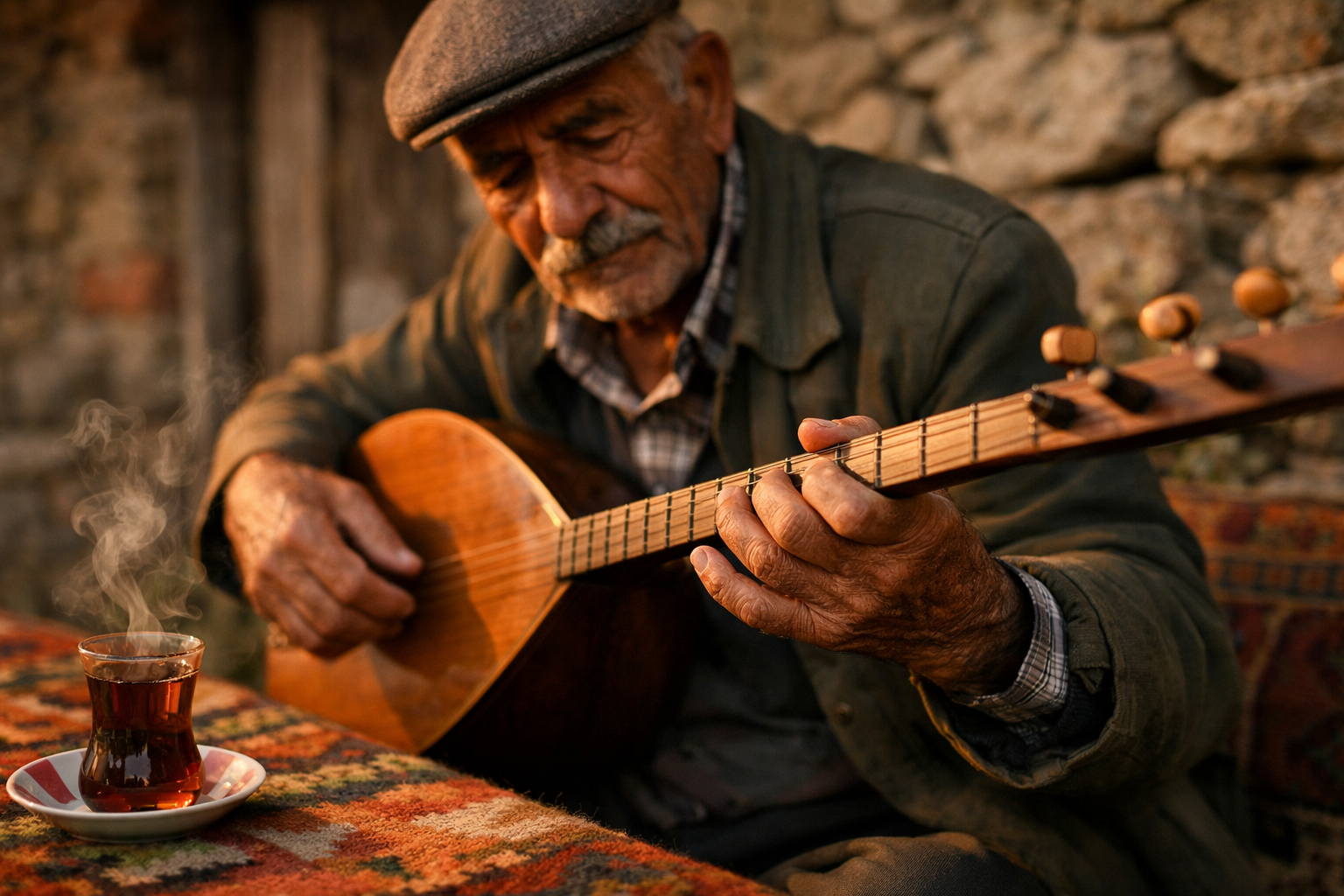
Türkü is the bedrock of all Turkish music, with each region producing wildly different sounds tied to landscape, livelihood, and local instruments. Think of it as Turkey’s musical DNA.
Regional breakdown:
| Region | Sound Character | Key Instruments | Famous Example |
|---|---|---|---|
| Black Sea | Fast, energetic, fiddle-driven | Kemençe, tulum (bagpipe) | Horon dance music |
| Aegean | Lyrical, 9/8 rhythms | Bağlama, zurna | Zeybek dances |
| Eastern Anatolia | Plaintive, epic storytelling | Duduk, bağlama | Dengbêj vocal tradition |
| Central Anatolia | Meditative, steppe-influenced | Bağlama, kaval (flute) | Neşet Ertaş compositions |
| Southeast | Arabic-influenced, rhythmic | Cümbüş, darbuka | Şanlıurfa sıra geceleri |
Pro move: if you want to experience these traditions firsthand, check out our guide to the best places to experience Turkish folk music. The regional differences are a total game-changer for understanding the country.
Common mistake: Assuming all Turkish folk music sounds the same. A Black Sea horon (with its frenetic kemençe fiddle and ankle-breaking dance tempo) has almost nothing in common with an Eastern Anatolian uzun hava (a free-rhythm vocal improvisation that can last ten minutes on a single breath phrase).
What Is Ottoman Classical Music and Where Can You Hear It?
Ottoman classical music (Türk sanat müziği) is the refined, court-born tradition that developed over 500+ years under Ottoman patronage. It uses the makam system, a framework of melodic modes that dictates not just which notes to play but how to move between them.
Key instruments include the ney (end-blown reed flute), kanun (plucked zither), ud (short-necked lute), and tanbur (long-necked lute). The revival of traditional Turkish instruments has brought these sounds back into contemporary spaces.
Where to hear it in 2026:
- Fasıl performances in Istanbul meyhanes (tavern-restaurants), especially in Beyoğlu and along the Bosphorus
- The Istanbul Music Festival (June-July)
- Sufi music ceremonies at cultural centers (not tourist-trap “whirling dervish shows,” but actual musical gatherings)
Fair warning: Ottoman classical music demands patience. Pieces unfold slowly, and the beauty lives in subtle ornamental details. But once it clicks? Prepare to be obsessed.
For more context on the cultural backdrop, our piece on Turkey’s influence on classical music goes deeper.
What Is Arabesk Music and Why Does It Still Matter?
Arabesk is the sound of longing, heartbreak, and urban alienation. It emerged in the 1960s and 1970s when millions migrated from Anatolian villages to Istanbul and Ankara, finding themselves caught between two worlds.
Musically, arabesk fuses Turkish folk melodies with Arabic-influenced orchestration, heavy string sections, and emotionally intense vocal delivery. Orhan Gencebay is widely considered the genre’s founding father, while İbrahim Tatlıses became its most commercially successful voice.
Why it still matters: Arabesk never went away. It evolved into “fantezi” in the 1990s, influenced Turkish pop, and its emotional DNA runs through virtually every Turkish ballad you’ll hear on the radio today. When a taxi driver in Ankara cranks up a melancholic tune and stares wistfully at traffic, that’s arabesk energy.
How Did Turkish Pop and Rock Become So Popular?
Turkish pop (Türkçe pop) and rock (Anadolu rock) represent two parallel revolutions that made Turkish music globally relevant.
Anadolu Rock (1960s-70s): Artists like Barış Manço, Cem Karaca, and Erkin Koray blended psychedelic rock with Anatolian folk melodies and instruments. The result was ridiculously good, and these records now sell for hundreds of dollars to international collectors. Seriously underrated outside Turkey until recently.
Turkish Pop (1990s onward): Tarkan’s “Şımarık” (1997) went global, but the domestic pop scene is far richer than one hit. Sezen Aksu, often called the “Queen of Turkish Pop,” shaped the genre for decades. In 2026, artists like Melek Mosso and Zeynep Bastık blend pop with electronic and folk elements.
For a deeper dive into the rock side, our best Turkish rock bands of all time piece is absolutely worth it.
Choose Anadolu rock if: you love Jimi Hendrix and want to hear what happens when that energy meets a bağlama.
Choose Turkish pop if: you want catchy, modern production with Turkish melodic sensibilities.
What’s Happening in Turkish Hip-Hop and Electronic Music Right Now?
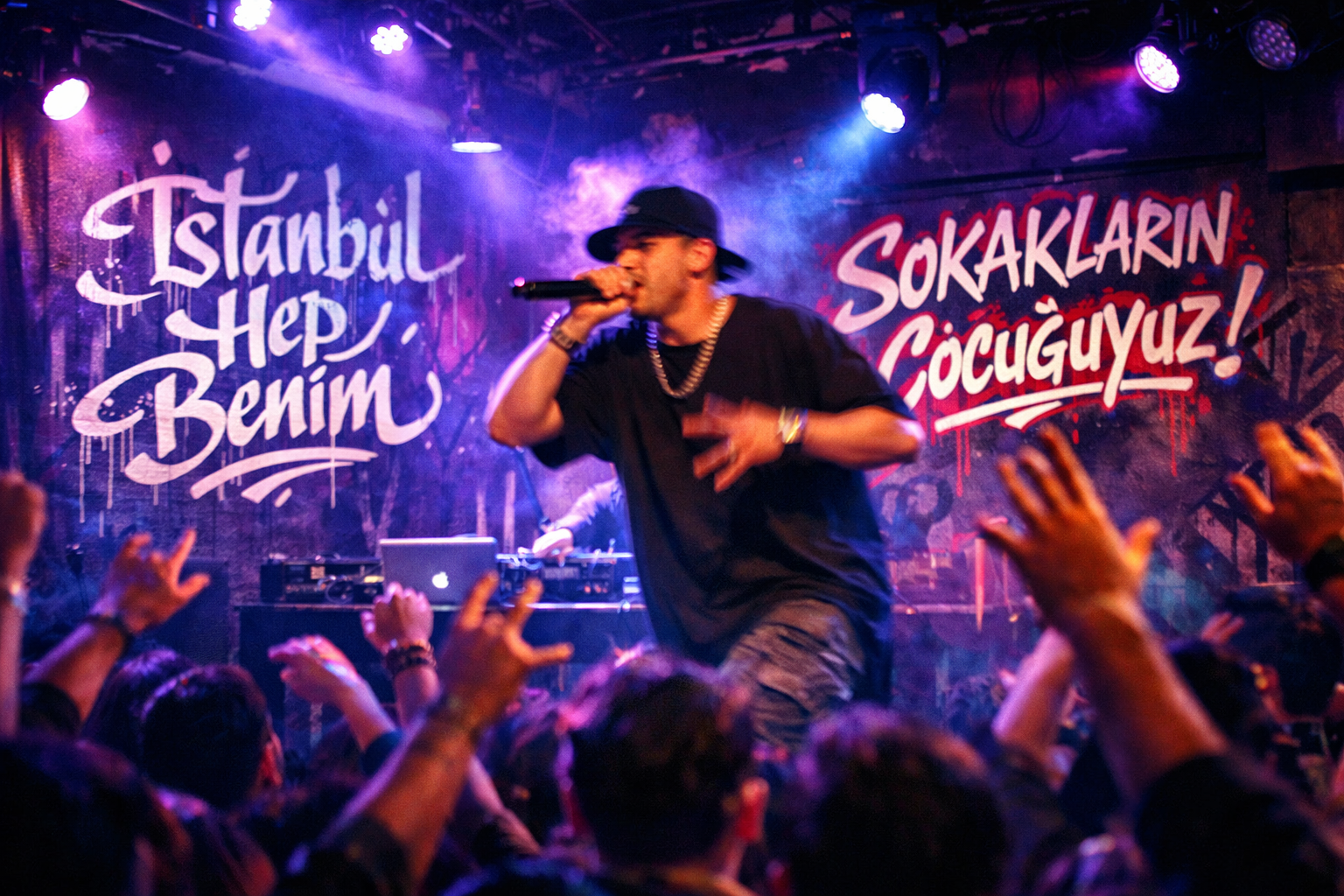
Turkish hip-hop is the country’s fastest-growing genre, with artists like Ceza, Şehinşah, and Ben Fero commanding massive audiences. Ceza’s rapid-fire delivery earned him a Guinness World Record for fastest rap in 2013, and the scene has only exploded since.
Key developments in 2026:
- Trap and drill subgenres dominate Turkish streaming charts
- Artists increasingly blend Turkish folk samples with 808 production
- Istanbul’s Kadıköy district is the epicenter of underground hip-hop
- Female rappers like Ece Seçkin and emerging underground voices are reshaping the scene
Electronic music also thrives, particularly in Istanbul and along the Turkish coastline. Clubs in Bodrum and Antalya host international DJs, while Turkish producers like Oceanvs Orientalis create ambient electronic music infused with Anatolian textures.
Bookmark this: the best venues for live music in Turkey covers where to catch both hip-hop and electronic acts.
How Can Travelers Experience Turkish Music Firsthand?
The best way to experience Turkish music is to stop treating it as background noise and actively seek it out. Here’s your action plan:
- Attend a fasıl night at a meyhane in Istanbul (Nevizade Street is chef’s kiss for this)
- Catch a wedding in rural Turkey if you’re lucky. Turkish hospitality is no joke, and travelers occasionally get invited. The music is always live and always energetic
- Visit during festival season (June-September). Our guide on how to navigate Turkish festivals as a tourist has the details
- Check out street musicians on İstiklal Caddesi, where you’ll hear everything from classical kemençe to beatboxing
- Stream before you go. Build a playlist mixing genres so you can recognize what you’re hearing in real time
Edge case: If you’re visiting smaller towns, don’t expect concert venues. Instead, listen for music at tea gardens, barbershops, and local celebrations. That’s where the real stuff lives.
FAQ
What is the most popular music genre in Turkey in 2026?
Turkish pop (Türkçe pop) remains the most commercially popular genre, but Turkish hip-hop and trap are the fastest-growing categories on streaming platforms.
What instruments are unique to Turkish music?
The bağlama (saz), ney (reed flute), kanun (plucked zither), kemençe (Black Sea fiddle), and tulum (bagpipe) are distinctly Turkish or have uniquely Turkish playing traditions.
Is Turkish music similar to Arabic music?
They share some melodic concepts (maqam/makam systems have common roots), but Turkish music incorporates Central Asian, Balkan, and Western influences that give it a distinct character. Arabesk is the genre most influenced by Arabic musical aesthetics.
Where can I hear live Turkish music in Istanbul?
Beyoğlu/Taksim for variety, Kadıköy for indie and hip-hop, Bosphorus-side meyhanes for classical and fasıl, and Babylon (venue) for touring acts across all genres.
What is Anadolu rock?
A genre from the 1960s-70s that fused Western psychedelic rock with Turkish folk melodies and instruments. Key artists: Barış Manço, Cem Karaca, Erkin Koray, Moğollar.
Can I find Turkish music on Spotify and Apple Music?
Yes. Both platforms have extensive Turkish catalogs. Search for “Türkçe” playlists or specific genre terms like “arabesk,” “türkü,” or “Anadolu rock.”
What’s the difference between türkü and sanat müziği?
Türkü is folk music with regional, oral traditions and simpler structures. Sanat müziği (art music) is the composed, classical tradition with complex makam theory and Ottoman court origins.
Do Turkish musicians sing in English?
Some do, particularly in rock and electronic genres, but the vast majority of Turkish popular music is performed in Turkish. The language’s vowel-rich phonetics actually make it excellent for singing.
Conclusion
Turkish music isn’t one sound. It’s an entire universe spanning centuries, dozens of instruments, and emotions from ecstatic joy to devastating heartbreak. Whether you’re drawn to the ancient drone of a ney flute or the bass-heavy punch of Istanbul trap, there’s a genre waiting to become your obsession.
Your next steps:
- Start with a mixed playlist (search “Turkish music genres” on Spotify for curated options)
- Pick one genre that resonates and go deep
- Plan your trip around live music opportunities, using our rise of pop music in Turkey guide for modern scene context
- When you arrive, ask locals what they’re listening to. Future you will thank us
Consider this your sign to press play.
References
- Stokes, Martin. The Arabesk Debate: Music and Musicians in Modern Turkey. Oxford University Press, 1992.
- O’Connell, John Morgan. Alaturka: Style in Turkish Music (1923–1938). Ashgate Publishing, 2013.
- Bates, Eliot. Music in Turkey: Experiencing Music, Expressing Culture. Oxford University Press, 2011.