

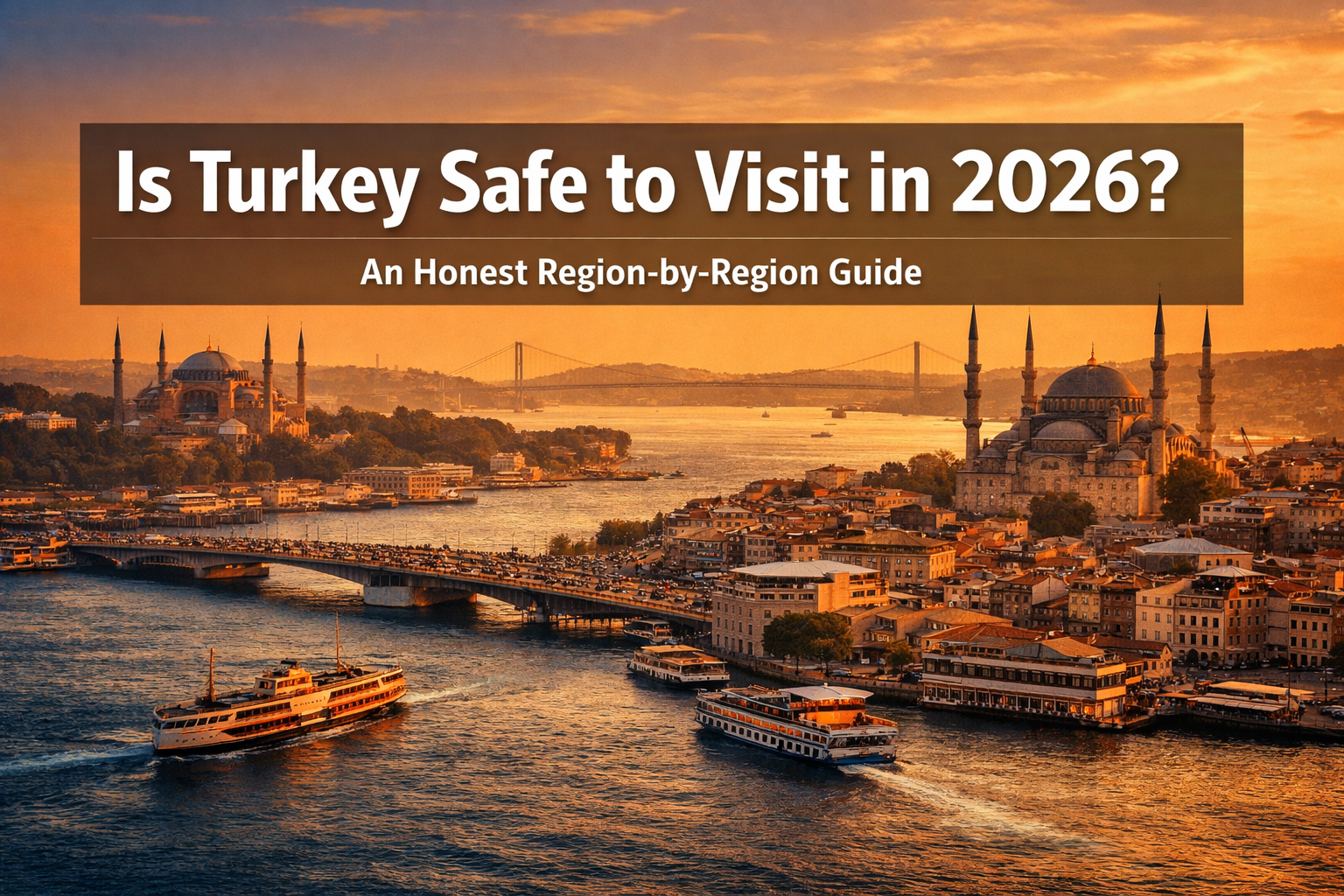

Many travelers are asking if Turkey safe to visit right now, especially with conflicting reports in international news. Last updated: May 1, 2026
Quick Answer: Yes, the vast majority of Turkey is safe for tourists in 2026. The western half of the country (Istanbul, the Aegean and Mediterranean coasts, Cappadocia, and central Anatolia) sees millions of visitors annually with crime rates comparable to major European destinations. The southeastern border regions near Syria and Iraq remain areas most governments advise against visiting, but these are far from typical tourist routes. Your biggest real-world risks? Aggressive taxi meters and eating one too many börek.
Key Takeaways
- Most popular tourist areas (Istanbul, Antalya, Cappadocia, Izmir, Bodrum, Fethiye) have strong security infrastructure and are considered safe by major travel advisories.
- Petty crime like pickpocketing exists in crowded areas but violent crime against tourists is rare.
- Southeastern border provinces (Hakkari, Şırnak, Siirt, and parts of Mardin) carry government travel warnings and should be avoided.
- Natural disaster preparedness has improved significantly since the 2023 earthquakes, with updated building codes in tourist zones.
- Solo female travelers report positive experiences in western Turkey, though conservative dress is appreciated in rural eastern areas.
- Turkish hospitality is no joke — locals frequently go out of their way to help visitors, which itself acts as a safety net.
- Health infrastructure in major cities is modern, with private hospitals meeting international standards.
- Scams (overpriced restaurants, fake tour guides, shoe-shine tricks) are the most common tourist complaint, not safety threats.
Why Are People Asking “Is Turkey Safe to Visit in 2026?”
The short answer: media coverage of regional conflicts, the 2023 earthquake aftermath, and general Middle East proximity anxiety. But here’s what nobody tells you — Turkey hosted over 56 million international visitors in 2024, making it one of the top five most-visited countries on Earth. Those numbers don’t happen in places people genuinely feel unsafe.
The confusion comes from Turkey’s size. This country spans two continents and covers an area larger than Texas. Judging all of Turkey by its southeastern border is like refusing to visit New York because of a conflict in Guatemala. The distances (and realities on the ground) are that different.
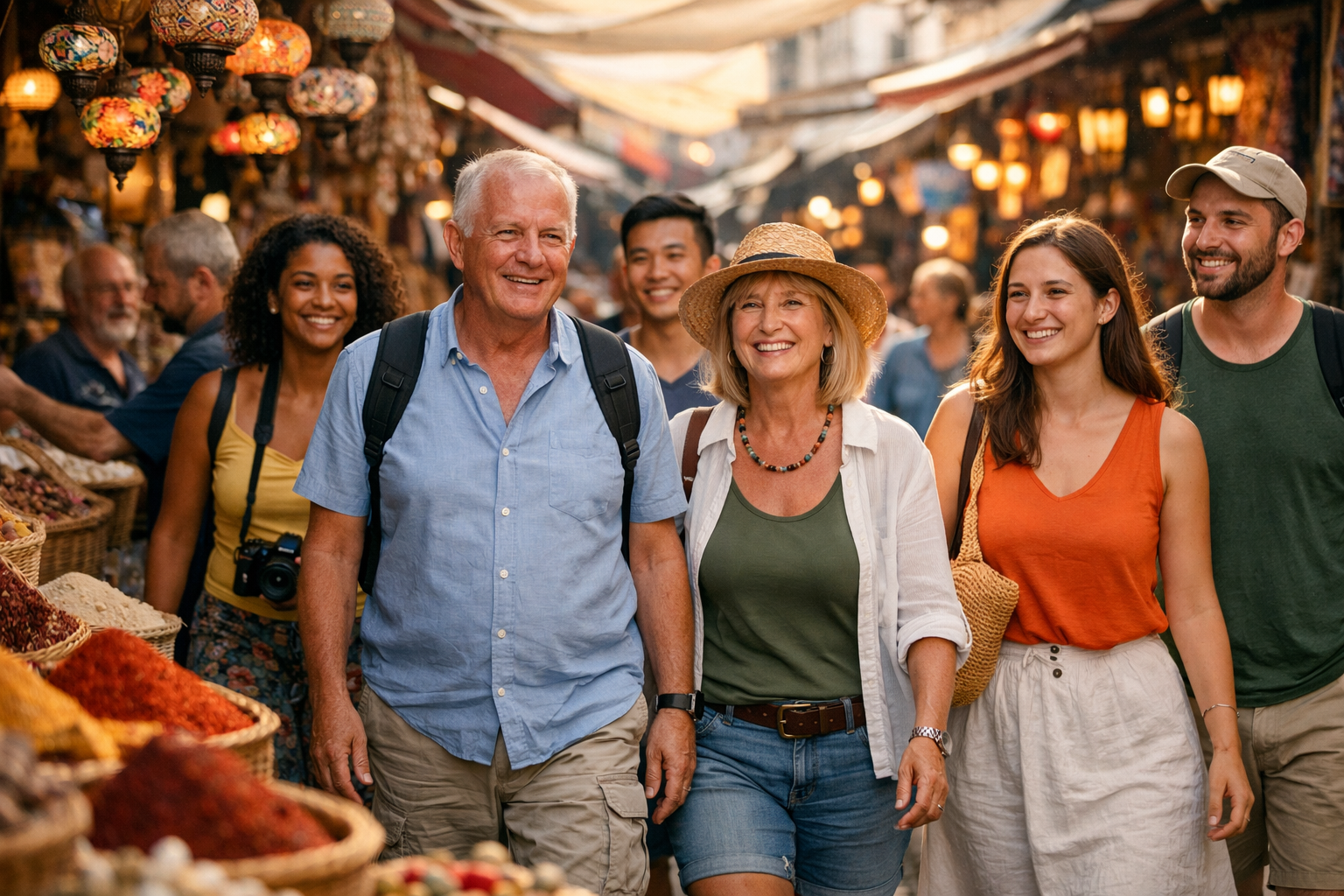
Is Istanbul Safe for Tourists in 2026?
Direct answer: Istanbul is as safe as any major European city — think Rome or Barcelona levels of tourist-friendly.
Istanbul’s 16 million residents share their city with roughly 20 million tourists per year. The historic Sultanahmet district, Beyoğlu, Kadıköy, and the Bosphorus neighborhoods all have heavy police presence and well-lit streets.
What to watch for:
- Pickpockets on the İstiklal Avenue tram and around the Grand Bazaar (keep bags zipped and in front)
- The “friendly local” scam where someone invites you to a bar, then you get a massive bill
- Taxi drivers taking long routes — pro move: use the BiTaksi app instead of hailing cabs
What’s actually great: Istanbul’s metro system is modern, efficient, and safe even late at night. The ferry system across the Bosphorus operates until midnight with zero safety concerns. And wandering the backstreets of Balat or Karaköy at 11pm? Perfectly normal. If you’re planning a full week, our 7-day Istanbul itinerary covers all the safe, ridiculously good neighborhoods.
How Safe Is Turkey’s Aegean and Mediterranean Coast?
Direct answer: These coastal regions are among the safest areas in the entire country, with tourism infrastructure built over decades.
The Turkish Riviera (Antalya, Fethiye, Kaş, Ölüdeniz) and the Aegean coast (Bodrum, Kuşadası, İzmir, Çeşme) function essentially as European beach destinations. British, German, and Russian tourists have been flocking here for 30+ years, and the safety record reflects that long history.
Crime is genuinely low. Most police reports in these areas involve lost passports and sunburn-related hospital visits (fair warning: that Mediterranean sun is no joke in July).
For adventure travelers heading to these coasts, our guide on ensuring safety during adventure travel in Turkey covers paragliding, diving, and hiking specifics. And if you’re drawn to the Aegean’s food scene, prepare to be obsessed — the culinary journey through Turkey’s Aegean region is absolutely worth bookmarking.
Is Cappadocia Safe? What About Central Anatolia?
Direct answer: Cappadocia and central Anatolia (Ankara, Konya, Kayseri) are safe, well-touristed, and far from any conflict zones.
Cappadocia sits almost in the geographic center of Turkey. It’s roughly 750 kilometers from the Syrian border. The region’s economy depends entirely on tourism, so security is taken seriously. Hot air balloon operations are regulated, cave hotels meet safety standards, and the hiking trails through the valleys are well-marked.
Ankara, as the capital, has significant security presence. Konya — home to the Whirling Dervishes — is conservative but extremely welcoming to visitors. Steal this tip: central Anatolia is where you’ll experience the most genuine Turkish hospitality because tourism hasn’t made interactions transactional yet. A tea invitation from a local here is just… kindness.
For those exploring this region’s history, the Seljuq Dynasty historical sites guide covers the area beautifully.
Which Parts of Turkey Should You Avoid in 2026?
Direct answer: The provinces directly bordering Syria and Iraq in the far southeast remain under travel advisories from most Western governments.
Here’s the honest breakdown:
| Region | Safety Level | Notes |
|---|---|---|
| Istanbul & Marmara | Safe | Standard big-city awareness |
| Aegean Coast | Safe | Very tourist-friendly |
| Mediterranean Coast | Safe | Established resort infrastructure |
| Cappadocia & Central Anatolia | Safe | Well-touristed, welcoming |
| Black Sea Coast | Safe | Less touristed, very friendly |
| Eastern Turkey (Kars, Van, Erzurum) | Generally safe with caution | Check current advisories, travel in daylight |
| Southeast border (Hakkari, Şırnak, Siirt) | Avoid | Active military operations, government warnings |
| Within 10km of Syrian border | Avoid | Restricted zones in places |
The areas to avoid represent maybe 5% of Turkey’s landmass and contain zero major tourist attractions. You won’t accidentally wander into them — they’re remote, far from transport hubs, and clearly flagged by every travel advisory.
What About Earthquakes and Natural Disasters?
Direct answer: Turkey sits on active fault lines, but tourist infrastructure in western regions meets modern seismic standards, and post-2023 building regulations have tightened further.
The devastating February 2023 earthquakes primarily affected southeastern provinces (Hatay, Kahramanmaraş, Adıyaman). Major tourist areas like Istanbul, Antalya, and Cappadocia were unaffected. Since then, Turkey has invested heavily in retrofitting buildings and enforcing stricter construction codes.
Practical steps:
- Hotels in tourist zones are built to seismic standards
- Download Turkey’s AFAD emergency app for real-time alerts
- Know your hotel’s evacuation route (takes 30 seconds to check)
- Istanbul has an earthquake risk, but so does San Francisco and Tokyo — preparation matters more than avoidance
Safety Tips for Solo Travelers and Women
Direct answer: Solo travel in Turkey is common and manageable, with extra awareness needed in conservative eastern regions.
Solo female travelers consistently report positive experiences in Istanbul, the coasts, and Cappadocia. Turkish culture values hospitality, and locals often look out for solo visitors. That said, unwanted attention (catcalling, persistent conversation) can happen, particularly in less-touristed areas.
What works:
- Dress modestly when visiting mosques and rural eastern towns (shoulders and knees covered)
- A confident “hayır” (no) or “rahatsız ediyorsunuz” (you’re bothering me) shuts down unwanted attention
- Sit in the family section on long-distance buses (marked “aile” — this is a total game-changer for comfort)
- Stay in well-reviewed accommodations with female staff
Our safety tips for solo travelers in Turkey goes deeper on this topic. And for nightlife safety specifically, check our guide on experiencing Turkey’s nightlife safely.
Common Scams to Watch For (The Real “Dangers”)
Let’s be honest — your actual risk in Turkey isn’t violence or political instability. It’s paying triple for a carpet you didn’t need. Here’s the secret sauce to avoiding the most common tourist traps:
- The shoe-shine drop: A man “accidentally” drops his brush, you pick it up, he insists on shining your shoes, then demands payment. Just smile and walk away.
- Overpriced fish restaurants: Especially in Istanbul’s Kumkapı district. Always confirm prices before ordering.
- Fake tour guides at major sites offering “special access.” Buy tickets from official booths only.
- Currency confusion: Turkey uses the Turkish Lira (TRY). Some shops quote in euros then charge unfavorable exchange rates. Always clarify currency.
- The friendly bar invite: If a stranger insists you join them at a specific bar, politely decline. This is how inflated bills happen.
None of these are dangerous — just annoying. And honestly? They exist in every tourist-heavy city worldwide.
FAQ
Is Turkey safe for American tourists in 2026?
Yes. The U.S. maintains a Level 2 advisory (“exercise increased caution”) for Turkey overall, which is the same level as France, Germany, and the UK. The Level 4 (“do not travel”) designation applies only to areas near the Syrian border.
Do I need travel insurance for Turkey?
Strongly recommended. Turkey doesn’t require it for entry, but medical evacuation costs and trip cancellation coverage provide peace of mind. Private hospitals are excellent but expensive without insurance.
Is the tap water safe to drink in Turkey?
No — drink bottled or filtered water everywhere. This isn’t a safety issue so much as a mineral content issue that upsets foreign stomachs.
Are there terrorist threats in Turkey in 2026?
Turkey’s counter-terrorism operations have significantly reduced incidents in tourist areas. The last major attack targeting tourists was in 2016. Security at airports, malls, and metro stations includes bag screening.
Is it safe to drive in Turkey?
Driving is safe on main highways but challenging due to aggressive local driving styles. The road infrastructure is modern, especially on toll motorways. Consider this your sign to use intercity buses or domestic flights instead.
Can LGBTQ+ travelers visit Turkey safely?
Turkey doesn’t criminalize homosexuality, but public attitudes vary widely. Istanbul has a visible LGBTQ+ scene (particularly in Beyoğlu), while rural and conservative areas are less accepting. Discretion is advised outside major cities.
Is street food safe to eat in Turkey?
Absolutely — and it’s ridiculously good. Stick to busy stalls with high turnover. The vibrant street markets guide covers where to find the best (and safest) bites.
What emergency numbers should I know?
Police: 155. Ambulance: 112. Tourist Police (Istanbul): 0212 527 4503. The 112 line has English-speaking operators.
Conclusion
Here’s the magic of Turkey in 2026: it’s a country where you can wander ancient ruins older than Rome, eat breakfast for two hours overlooking the Mediterranean, soak in geothermal pools, and haggle for hand-painted ceramics — all while feeling genuinely safe. The regions that carry warnings are remote, clearly defined, and nowhere near where you’ll be sipping çay and watching the sunset paint the Bosphorus pink.
Your action steps:
- Check your government’s travel advisory for the most current region-specific guidance
- Get travel insurance (future you will thank us)
- Download BiTaksi and the AFAD emergency app before arrival
- Stick to the western half and central regions for a worry-free first trip
- Tell your nervous relatives that 56 million tourists can’t all be wrong
Consider this your sign to stop researching and start booking. Turkey is waiting, and Turkish hospitality is no joke.
Tags: Turkey travel safety, is Turkey safe 2026, Turkey region guide, Istanbul safety, solo travel Turkey, Turkey travel tips, Cappadocia safety, Turkish Riviera, Turkey travel advisory, Turkey scams, Turkey earthquake safety, Turkey tourism