



Last updated: April 1, 2026
Raki is Turkey’s iconic anise-flavored spirit, made from twice-distilled grape pomace and aniseed. It turns milky-white when mixed with water (earning the legendary nickname “Lion’s Milk”), contains 40–50% alcohol by volume, and is best enjoyed slowly alongside meze at a long, unhurried dinner with good company. If you’re heading to Turkey and haven’t tried it yet, prepare to be obsessed.
Key Takeaways
- Raki is a clear, anise-flavored spirit made from grape pomace that turns white when diluted with water
- Alcohol content ranges from 40% to 50% ABV, depending on the brand — this is stronger than ouzo or arak
- Turkish law protects raki as a geographical indication since 2009, meaning it must be produced in Turkey from Turkish-grown grapes and anise
- The traditional serving method is one-third raki to two-thirds chilled water, sipped slowly with meze
- Raki nights (rakı sofrası) are a cornerstone of Turkish social culture — they’re about connection, not just drinking
- Production requires copper stills of 5,000 liters or less, with at least 65% of alcohol from grape-based distillate
- Craft raki is emerging: Yeni Rakı launched “Uzun Demleme” in 2024, made from 100% fresh grapes
- Cretan raki (tsikoudia) and Greek tsipouro are related but distinct spirits with lower ABV and different production methods
Where Does Raki Come From? A Brief History
Raki’s roots stretch back centuries across the Mediterranean and Middle East, with anise-flavored spirits appearing in various forms from the Balkans to the Levant. In Turkey specifically, raki production expanded dramatically after the Crimean War (1853–1856) when restrictions on distillation were lifted.
When the Turkish Republic was established in 1923, raki production came under the state monopoly Tekel, which controlled all alcohol production and sales for decades. Private production didn’t resume until 2004, when regulations were eased. That shift opened the door for the craft and premium raki brands you’ll find in Turkey in 2026.
Atatürk himself was famously fond of raki, and the drink became intertwined with the modernizing, secular identity of the young republic. Even though ayran was declared Turkey’s official national drink in 2013, raki remains the country’s signature spirit — the one that shows up at celebrations, commemorations, and long evenings where nobody’s checking the time.
For more on the cultural forces that shaped modern Turkey, our guide to the Ottoman Caliphs provides fascinating context.
How Is Raki Made? The Distillation Process Step by Step
Raki production follows a precise, legally defined process. Turkish law requires copper stills with a maximum capacity of 5,000 liters, and at least 65% of the total alcohol must come from grape-based distillate, known as suma.

- Grape harvest and pressing — Fresh grapes are pressed for winemaking. The leftover pomace (skins, seeds, stems) becomes raki’s base material.
- Fermentation — The grape pomace (or sometimes raisins) is fermented to produce a low-alcohol liquid.
- First distillation — The fermented liquid is distilled in copper pot stills to create suma, a clear grape spirit.
- Anise addition — Aniseed is added to the suma. This is the step that gives raki its signature licorice flavor.
- Second distillation — The anise-infused suma is distilled a second time, concentrating both the alcohol and the essential oils from the anise.
- Resting period — The spirit must rest for a minimum of 30 days before sale, allowing flavors to harmonize.
Common mistake travelers make: Assuming all anise spirits are the same. Raki’s double distillation and grape pomace base give it a depth and potency that distinguishes it from Greek ouzo, Balkan arak, or Italian sambuca. The production method matters.
Modern vs. Traditional Production
Most commercial raki in 2026 is produced by Mey İçki (a Diageo subsidiary since 2011), which makes Yeni Rakı — the most widely available brand. But a growing craft movement is changing the landscape. In 2024, Yeni Rakı introduced “Uzun Demleme,” a craft raki made from 100% fresh grapes (not pomace) with carefully selected anise seeds. Tasting notes include yellow fruit, vanilla, licorice, and hints of black pepper and pine.
Some smaller producers are also exploring organic and sustainable production methods, particularly in Aegean wine-growing regions. If you’re interested in eco-friendly travel practices in Turkey, seeking out artisanal raki producers makes for a ridiculously good day trip.
How Strong Is This Anise Spirit? Alcohol Content and Brands Compared
Raki is not a casual sipper. It packs significantly more punch than wine or beer, and even edges out many other Mediterranean spirits.
| Brand | ABV | Notes |
|---|---|---|
| Yeni Rakı | 45% | Most popular, strong licorice taste |
| Tekirdağ Rakısı | 45% | Smoother, from Thrace region |
| Kulüp Rakısı | 50% | Premium, higher proof |
| Altınbaş | 50% | Rich, aged character |
| Uzun Demleme (craft) | Varies | 100% fresh grape, fruit-forward |
| Cretan raki (tsikoudia) | 30–40% | Greek variant, no anise typically |
Fair warning: That 45–50% ABV means raki deserves respect. The traditional dilution with water isn’t just for show — it’s how you pace yourself through a long evening. Drinking it neat is uncommon and, frankly, a fast track to a rough morning.
Choose Yeni Rakı if you want the classic, widely available experience. Choose Tekirdağ if you prefer something slightly smoother. Choose Kulüp or Altınbaş if you want premium and don’t mind the higher ABV.
How Do You Properly Serve and Drink Raki?
Here’s the magic of a proper raki service: it’s a ritual, not just a pour.
- Use a tall, slim glass (called a kadeh) — not a tumbler, not a wine glass
- Pour raki one-third to one-half full
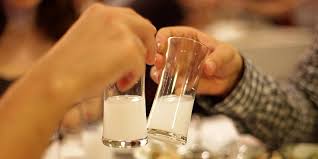
- Add chilled water from a separate glass, filling to near the top — watch it turn milky white (this is the “lion’s milk” moment)
- Add ice if you like, though purists add it after the water, not before (adding ice first can cause the anise oils to crystallize unevenly)
- Sip slowly — this is not a shot, and nobody will be impressed if you rush it
Pro move: Order a glass of cold water on the side and alternate sips. Turkish hosts will respect this, and future you will thank us.
The Rakı Sofrası: More Than Just a Drink
The rakı sofrası (raki table) is where this spirit truly comes alive. It’s a long, leisurely dinner built around meze — small dishes meant for sharing — and conversation that stretches for hours. Think of it as Turkey’s answer to the French salon or Spanish sobremesa, but with better snacks.
Classic meze pairings with raki include:
- White cheese (beyaz peynir) and honeydew melon — the classic, non-negotiable starter
- Grilled octopus or calamari
- Stuffed vine leaves (yaprak sarma)
- Roasted red peppers and eggplant dishes
- Fresh arugula salad with lemon
- Fried mussels (midye tava)
The rule of thumb: raki loves seafood, fresh vegetables, and sharp cheeses. For a deeper dive into what to eat alongside your raki, check out our guide to the best Turkish delicacies and where to find them.

How Does Raki Compare to Other Mediterranean Spirits?
| Spirit | Country | Base | ABV | Key Difference |
|---|---|---|---|---|
| Raki | Turkey | Grape pomace + anise | 40–50% | Double-distilled, legally protected |
| Ouzo | Greece | Grape or grain + anise | 37.5–50% | Often sweeter, sometimes grain-based |
| Tsipouro | Greece | Grape pomace | 40–45% | May or may not include anise |
| Tsikoudia | Crete | Grape pomace | 30–40% | Usually no anise, rougher character |
| Arak | Lebanon/Middle East | Grape + anise | 40–63% | Triple-distilled in some traditions |
| Zivania | Cyprus | Grape pomace | 45–49% | No anise, clear and fiery |
| Sambuca | Italy | Grain + anise | 38–42% | Sweeter, often served with coffee beans |
The bottom line: Raki is more potent and less sweet than ouzo, more refined than tsikoudia, and carries a legally protected production standard that most of its cousins don’t have.
What’s the Cultural Significance of Raki in Turkey?
Raki is far more than an alcoholic beverage — it’s a social institution. The raki table represents Turkish hospitality at its most generous: slow, warm, and deeply communal.
Generational knowledge transfer plays a real role here. Many families have their own preferences, rituals, and even homemade raki traditions passed down through generations. In rural Anatolia and along the Aegean coast, the grape harvest season still carries echoes of communal distillation culture.
Raki also functions as a cultural diplomacy tool. Business deals, family reconciliations, political debates, and lifelong friendships have all been forged over a raki table. The drink demands time and presence — you can’t rush it, and that enforced slowness creates space for real conversation.
If you want to experience this culture firsthand, head to a meyhane (traditional Turkish tavern). Istanbul’s Beyoğlu and Kadıköy neighborhoods are packed with excellent ones. Pair the experience with live Turkish folk music for the full effect.
For a quieter, more local raki experience, consider visiting one of Turkey’s best small towns for a quiet getaway, where meyhanes tend to be family-run and the meze is homemade.
Health Considerations and Moderation
- Pace yourself. The traditional water dilution and meze-heavy format exist partly because they naturally slow consumption.
- Eat before and during. Raki on an empty stomach is a mistake you’ll only make once.
- Hydrate. Alternate raki sips with water. The anise can mask how much alcohol you’re actually consuming.
- Know your limits. Two to three glasses over a long evening is a perfectly respectable amount.
Where Can You Try Raki During Your Turkey Trip?
- Meyhanes in Istanbul — Beyoğlu (especially Nevizade Street) and Kadıköy are the classic spots
- Aegean coastal towns — Alaçatı, Ayvalık, and Bozcaada island, where seafood meze and raki are practically a religion
- Anywhere with a Bosphorus view — the combination of water, sunset, and lion’s milk is chef’s kiss
- Small-town lokantalar — less polished, more authentic, and often cheaper
Steal this tip: If a waiter asks “Rakı mı?” (Raki?), they’re offering to start your evening properly. A simple “Evet, lütfen” (Yes, please) is all you need.
Conclusion
Raki isn’t just something you drink in Turkey — it’s something you experience. From its legally protected, double-distilled production process to the unhurried ritual of the rakı sofrası, this spirit embodies a philosophy of slow enjoyment, genuine connection, and generous hospitality that defines Turkish culture at its best.
- Order raki at a meyhane with a meze spread — don’t skip the white cheese and melon
- Try at least two brands (Yeni Rakı for the classic, Tekirdağ for comparison)
- Practice the proper water-dilution ritual
- Budget at least three hours for the experience
- Bring good company and an open schedule
Frequently Asked Questions
What does raki taste like?
Raki has a strong anise (licorice) flavor with a warm, slightly sweet finish. When diluted with water, it becomes smoother and more refreshing. It’s more potent and less sweet than ouzo.
Why does raki turn white when you add water?
The anise essential oils dissolved in the alcohol are not soluble in water. When water is added, these oils come out of solution and form tiny droplets that scatter light, creating the milky-white “lion’s milk” appearance.
Can you drink raki straight?
You can, but most Turks don’t. Drinking it neat is uncommon because the high ABV (45–50%) makes it harsh, and the traditional diluted method brings out more nuanced flavors.
Is raki the same as ouzo?
No. While both are anise-flavored spirits, raki is typically stronger (45–50% vs. ouzo’s common 37.5–40%), must be made from grape-based distillate in Turkey, and has a legally protected production process.
How much does raki cost in Turkey?
In 2026, a 70cl bottle of Yeni Rakı in a Turkish market typically costs between 400–600 Turkish Lira. Restaurant prices vary, but expect to pay roughly 150–300 TL per glass in Istanbul meyhanes.
What food goes best with raki?
White cheese with honeydew melon is the classic pairing. Seafood (grilled fish, octopus, calamari), fresh salads, stuffed vine leaves, and eggplant dishes all complement raki beautifully.
Is homemade raki legal in Turkey?
No. Turkish law requires raki to be produced in licensed facilities using regulated copper stills. Homemade distillation is illegal, though it persists informally in some rural areas.
What’s the best raki brand for beginners?
Yeni Rakı is the most widely available and a solid starting point. It has a strong, distinct licorice taste that represents the classic raki profile.
Can you buy raki outside of Turkey?
Yes, Yeni Rakı and Tekirdağ are exported internationally and available in many countries, though selection is more limited than in Turkey.
What is Cretan raki (tsikoudia)?
Cretan raki is a Greek grape pomace spirit produced after the autumn harvest, typically containing 30–40% ABV. Unlike Turkish raki, it usually contains no anise and has a rougher, more rustic character.