

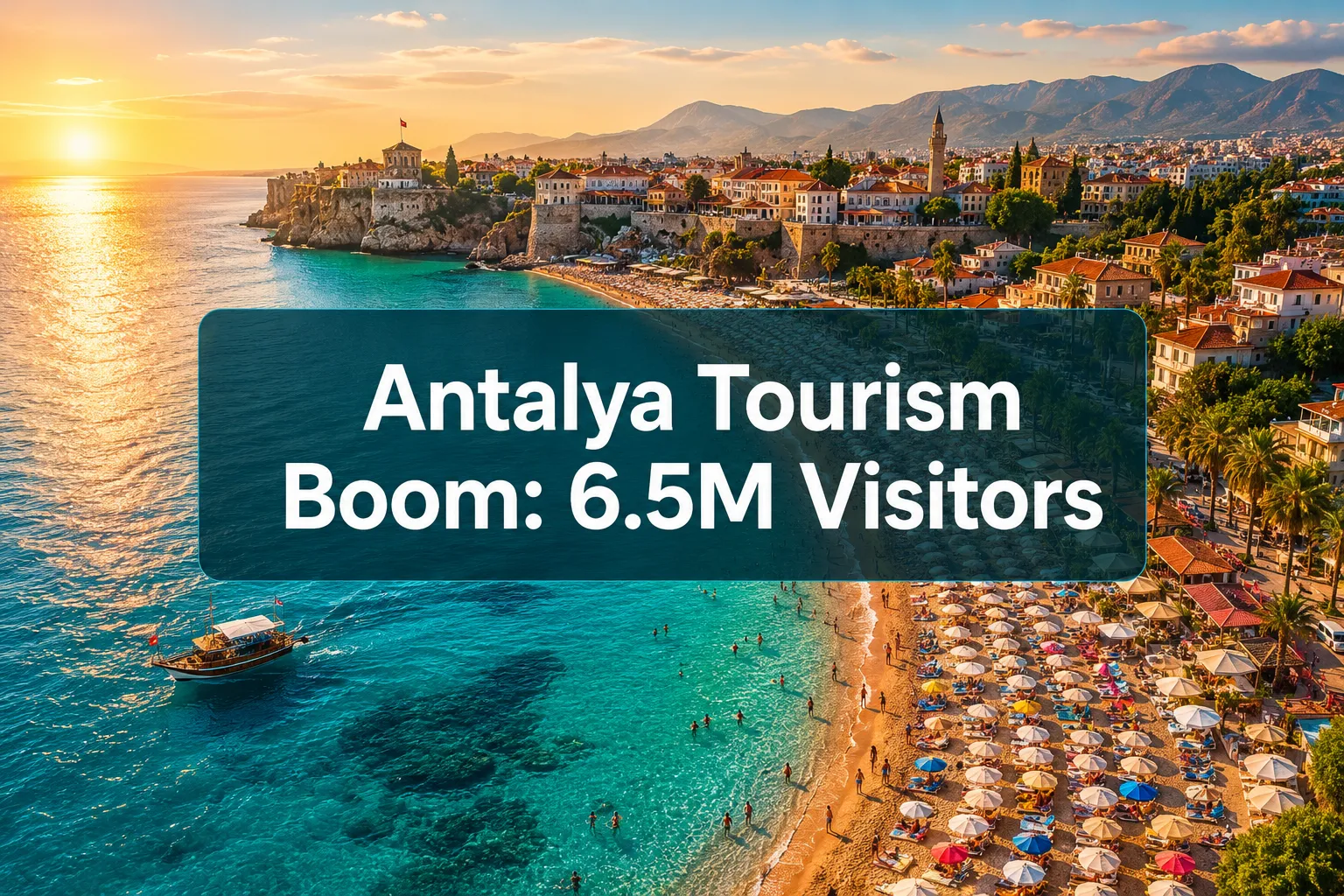
Antalya has emerged as Turkey’s crown jewel, welcoming over 6.5 million visitors this summer alone. Last updated: August 3, 2026
Quick Answer: Antalya surpassed 6.5 million tourist arrivals during the 2026 peak summer season, according to data reported on July 27, 2026. This milestone confirms Antalya’s position as Turkey’s single most-visited holiday destination and one of the Mediterranean’s top beach cities, drawing millions of European, Russian, and Middle Eastern travelers every year.
Key Takeaways
- Antalya crossed the 6.5 million visitor mark during the 2026 summer season, cementing its status as Turkey’s tourism powerhouse.
- European tourists (particularly Germans, Russians, and British nationals) make up the largest share of arrivals.
- The city’s combination of ancient history, world-class all-inclusive resorts, and reliable sunshine drives repeat visits year after year.
- Summer (June through August) is peak season; shoulder months of May and September offer thinner crowds and lower prices.
- A budget traveler can manage Antalya for roughly $50-70 USD per day outside the all-inclusive bubble; mid-range visitors typically spend $100-150 USD per day.
- Antalya’s airport is one of Turkey’s busiest, with direct charter and scheduled flights from dozens of European cities.
- The city’s tourism infrastructure, including transport, hospitality, and multilingual services, is genuinely well-equipped to handle large crowds.
- Safety conditions for tourists remain generally positive, though standard urban travel awareness applies.

Why Is Antalya So Popular With Tourists?
Antalya delivers a combination that very few Mediterranean cities can match: Roman-era ruins, a UNESCO-listed old town, some of the clearest water on the Turkish coast, and a resort infrastructure that has been refined over four decades of mass tourism. That’s the secret sauce right there.
Here’s what nobody tells you: Antalya isn’t just a beach destination. The old quarter of Kaleiçi, with its 2,000-year-old Hadrian’s Gate and winding Ottoman streets, sits about a ten-minute walk from five-star beach clubs. Visitors get history and hammam steam and a sunbed all in the same afternoon. Add to that the extraordinary value for money compared to equivalent destinations in Greece, Spain, or Italy, and the appeal becomes obvious.
The city also benefits from Turkey’s expanding visa-free travel agreements, which have made access easier for travelers from dozens of countries. Russian visitors, historically one of the largest groups, have continued arriving in significant numbers, joined by growing contingents from Germany, the UK, Poland, and the Gulf states.
What Is Driving Antalya’s Tourism Boom: Over 6.5 Million Visitors This Summer?
The 6.5 million figure covers arrivals recorded through the peak summer season up to late July 2026, as reported by Turkish tourism authorities on July 27, 2026. To put that in context, Antalya typically receives between 12 and 15 million international visitors across a full calendar year, meaning the city was already well over halfway to its annual total before August even started.
Several factors are accelerating this growth:
- Currency advantage: The Turkish lira’s exchange rate continues to make Turkey excellent value for European travelers paying in euros or pounds.
- Charter flight expansion: Low-cost and charter carriers have added new routes from Central and Eastern Europe, bringing in visitors who previously couldn’t afford or access the destination easily.
- All-inclusive dominance: Antalya’s Belek and Lara Beach corridors are home to some of the largest all-inclusive resorts in the world, which appeal to families and couples who want a predictable, stress-free holiday.
- Post-pandemic appetite: Demand for reliable sunshine and beach holidays has stayed elevated, and Antalya consistently delivers both.
Best Time to Visit Antalya, Turkey
May, June, and September are the sweet spots for visiting Antalya. July and August bring the biggest crowds and the hottest temperatures (regularly above 38°C / 100°F), while May and September offer warm sea temperatures, fewer tourists, and noticeably lower hotel prices.
Month-by-month breakdown:
| Month | Avg. Temp (°C) | Crowd Level | Best For |
|---|---|---|---|
| April | 18-22 | Low | Sightseeing, hiking |
| May | 22-27 | Moderate | Beach + culture mix |
| June | 27-33 | High | Beach season opens |
| July | 33-38 | Peak | Full beach season |
| August | 33-38 | Peak | Families, resorts |
| September | 28-33 | High-Moderate | Best overall balance |
| October | 22-27 | Low | Quiet, great value |
Pro move: book a September trip and you’ll get the same sea temperature as August (still a blissful 28°C) with roughly 30-40% lower accommodation costs and half the airport queues.
Antalya Summer Weather and What to Pack
Antalya summers are hot, dry, and reliably sunny, with almost zero rainfall between June and September. Temperatures regularly hit 38°C in July and August, and the humidity stays low thanks to the Mediterranean climate, which makes the heat more bearable than it sounds.
Pack these essentials:
- High-SPF sunscreen (factor 50+ is genuinely necessary, not optional)
- A light cotton or linen layer for evenings and mosque visits
- Comfortable walking sandals for Kaleiçi’s cobblestones
- A reusable water bottle (tap water is generally not recommended for drinking; bottled water is cheap and everywhere)
- A modest scarf if you plan to visit any of Antalya’s beautiful mosques (check out Turkey’s most spectacular mosques for inspiration)
Fair warning: the midday sun between 12pm and 3pm is genuinely fierce. Schedule ruins and old-town walks for early morning or late afternoon. Your future self will thank you.
How Much Does a Trip to Antalya Cost?
Antalya is one of the Mediterranean’s best-value destinations. Budget travelers staying in hostels or guesthouses can manage comfortably on $50-70 USD per day including food, local transport, and activities. Mid-range travelers in three-star hotels typically spend $100-150 USD per day. All-inclusive resort packages from Europe often start around €600-900 per person for a week, flights included, which is genuinely hard to beat.
Rough cost breakdown per day (mid-range, excluding flights):
- Accommodation (3-star hotel): $50-80 USD
- Meals (mix of local restaurants and resort dining): $20-35 USD
- Activities and entrance fees: $10-20 USD
- Local transport: $5-10 USD
The top luxury resorts in Turkey push well above these figures, with five-star all-inclusive properties in Belek running $250-400+ USD per person per night. Absolutely worth it if the budget allows.
Cheapest Way to Get to Antalya
Direct charter and scheduled flights from major European cities are the most cost-effective option, often significantly cheaper than routing through Istanbul. Antalya Airport (AYT) receives direct flights from London, Frankfurt, Moscow, Warsaw, Amsterdam, and dozens of other cities, especially in summer.
Budget flight tips:
- Book charter packages through a tour operator rather than booking flights and hotels separately (the bundled price is often lower).
- Flying mid-week (Tuesday or Wednesday) typically saves 15-25% compared to weekend departures.
- Pegasus Airlines and SunExpress offer competitive scheduled fares from European hubs.
- Traveling from within Turkey? Turkish Airlines and Pegasus both connect Istanbul to Antalya in about 55 minutes, with fares often under $40 USD if booked in advance.
Antalya vs. Other Turkish Beach Destinations
Antalya wins on scale, infrastructure, and resort variety. Bodrum and Fethiye win on boutique charm and sailing culture. Here’s the honest comparison:
- Antalya vs. Bodrum: Bodrum attracts a more upscale, party-oriented crowd and has a stronger yacht scene. Antalya is better for families, all-inclusive value, and sheer beach variety. Explore more coastal towns in Turkey to find your match.
- Antalya vs. Fethiye: Fethiye (and nearby Ölüdeniz) is smaller, more scenic for hiking, and less commercialized. Antalya has better flight connections and more accommodation options at every price point.
- Antalya vs. Marmaris: Marmaris skews younger and more nightlife-focused. Antalya has more cultural depth and a stronger historical old town.
Choose Antalya if: you want reliable infrastructure, a wide range of resorts, direct flights from your home city, and a mix of beach and history in one place.

What to Do in Antalya for a Week
A week in Antalya is genuinely enough to cover the highlights without rushing. Here’s a framework:
Days 1-2: Settle in, explore Kaleiçi old town, visit Hadrian’s Gate and the Antalya Museum (one of Turkey’s best archaeological collections).
Days 3-4: Beach days at Konyaaltı or Lara Beach. Consider a boat trip along the coast for a different perspective on the cliffs and sea caves.
Day 5: Day trip to Perge and Aspendos, two of the best-preserved Roman sites in Turkey. The amphitheater at Aspendos still hosts concerts today. For more inspiration, browse archaeological sites across Turkey.
Day 6: Head to the Düden Waterfalls or take a longer trip to the Taurus Mountains for a cooler, greener contrast to the coast.
Day 7: Slow morning in a local café, last swim, and a proper Turkish meal before departure. Turkey’s culinary map will tell you exactly what to order.
Best Beaches in Antalya for Families
Konyaaltı Beach and Lara Beach are the top picks for families visiting Antalya. Both are long, well-maintained, and backed by good facilities including cafés, sun lounger rentals, and calm entry points into the water.
- Konyaaltı: Pebble beach stretching several kilometers west of the city center, with the Taurus Mountains as a backdrop. Free public sections exist alongside paid beach clubs.
- Lara Beach: Sandy, calmer waves, and surrounded by the largest concentration of all-inclusive resorts in the region. Ideal for families who want convenience.
- Phaselis: About 60km south of the city, this ancient harbor beach combines Roman ruins with three separate bays. Ridiculously good for curious kids and history-loving parents alike.
Is Antalya Safe for Tourists Right Now?
Antalya is generally considered safe for tourists. The city has a long, established tourism industry and is well-accustomed to hosting millions of international visitors each year. Petty theft in crowded markets and tourist areas is the most common concern, as with any busy destination.
Practical safety notes:
- Keep valuables secure in busy bazaars and on public beaches.
- Use licensed taxis or ride-hailing apps rather than unmarked vehicles.
- The tourist police presence in central Antalya and resort areas is visible and responsive.
- Check your government’s travel advisory before departure for the most current guidance, as regional situations can change.
Turkish hospitality is no joke, and most visitors report feeling genuinely welcomed and looked after throughout their stay.
How Crowded Is Antalya in Summer, and How Is the Infrastructure Handling It?
With over 6.5 million visitors already recorded by late July 2026, Antalya is busy, full stop. July and August see the highest concentration of arrivals, and popular beaches, restaurants, and attractions will be crowded during peak hours.
That said, Antalya’s tourism infrastructure is genuinely built for this. The city has been managing mass tourism since the 1980s and has invested heavily in transport links, resort capacity, and multilingual services. Antalya Airport is one of the most efficient in the region for processing large volumes of charter arrivals. The Belek resort corridor, in particular, functions almost as its own self-contained tourism ecosystem.
Crowd management tips:
- Visit popular sites (Hadrian’s Gate, the old harbor) before 9am or after 6pm.
- Book airport transfers in advance rather than queuing for taxis on arrival.
- Consider staying slightly outside the main resort strip for a quieter experience without sacrificing access.
Antalya Tourism Impact on Locals
Antalya’s tourism boom brings genuine economic benefits to the region, but it also creates real pressures that locals navigate daily. Tourism accounts for a significant share of the local economy, supporting jobs in hospitality, transport, food production, and retail.
The tensions are real too. Rapid development along the coast has raised concerns about environmental pressure on beaches and marine ecosystems. Housing costs in central Antalya have risen as the city grows, and some residents note that peak-season crowds make daily life more difficult. Responsible travel choices, like eating at locally-owned restaurants rather than exclusively within resort compounds, using local guides, and shopping at independent markets, make a tangible difference to how tourism money circulates through the community.
Antalya Travel Tips for First Timers
Here’s a fast-track list of things that will make your first Antalya trip noticeably smoother:
- Get an Istanbulkart equivalent: Antalya has its own transit card for trams and buses. Saves time and small-change stress.
- Learn five words of Turkish: Merhaba (hello), teşekkürler (thank you), lütfen (please), evet (yes), hayır (no). Turkish hospitality responds warmly to the effort. Our quick guide to basic Turkish phrases has you covered.
- Haggle gently in the bazaar: It’s expected and part of the culture, but keep it friendly.
- Try the local food beyond the resort buffet: Antalya’s street food scene is excellent. Piyaz (white bean salad) is a regional specialty that deserves far more attention than it gets.
- Book popular restaurants in advance during July and August, especially in Kaleiçi.
- Carry cash: Many smaller restaurants and market stalls still prefer it.
FAQ: Antalya’s Tourism Boom and What It Means for Your Trip
How many tourists visited Antalya this summer? Antalya surpassed 6.5 million tourist arrivals during the 2026 peak summer season, with the milestone reported on July 27, 2026.
Is Antalya worth visiting in 2026? Yes. The combination of beaches, history, food, and value for money makes Antalya one of the Mediterranean’s most complete destinations. The crowds are manageable with smart timing.
What nationality visits Antalya the most? Russian, German, and British tourists have historically been the largest groups, joined by growing numbers from Poland, the Netherlands, and Gulf countries.
Is Antalya better than Istanbul for a first Turkey trip? They serve different purposes. Antalya is better for beach-focused holidays; Istanbul is better for culture and city exploration. Many visitors combine both on a single trip.
What is the best area to stay in Antalya? Kaleiçi (old town) suits travelers who want atmosphere and walkability. Lara Beach and Belek suit families and all-inclusive resort guests. Konyaaltı suits those wanting a balance of city access and beach.
Can you visit Antalya on a budget? Absolutely. Local restaurants, public beaches, and guesthouses make a budget trip very doable at $50-70 USD per day.
How far is Antalya from Istanbul? About 55 minutes by plane, or roughly 7-8 hours by bus. Flights are frequent and affordable.
What language do people speak in Antalya? Turkish is the official language. In tourist areas, English, Russian, and German are widely spoken.
Is the water clean for swimming in Antalya? Yes. Antalya’s beaches regularly receive Blue Flag certification for water quality and facilities.
What is Antalya most famous for? Its turquoise coastline, the ancient Kaleiçi old town, world-class all-inclusive resorts in Belek, and its proximity to major Roman archaeological sites.
Conclusion: Your Sign to Book That Antalya Trip
Antalya’s tourism boom, with over 6.5 million visitors already counted this summer, isn’t just a headline number. It’s evidence that one of the Mediterranean’s most compelling destinations keeps delivering exactly what travelers want: reliable sunshine, extraordinary history, genuinely warm hospitality, and value that still surprises people who’ve been watching European resort prices climb for years.
Consider this your sign. If Antalya has been on the list, the infrastructure is ready, the beaches are waiting, and the piyaz is not going to eat itself.
Actionable next steps:
- Check direct charter flights from your nearest airport to Antalya (AYT) for September availability.
- Browse Turkey’s coastal towns guide to decide whether to combine Antalya with a second destination.
- Look into top luxury resorts in Turkey if the all-inclusive route appeals.
- Bookmark the Turkey destination guides for planning the rest of your itinerary.
Future you, sitting on a sun-warmed pebble beach with a glass of ayran and a view of the Taurus Mountains, will be very pleased with this decision.