
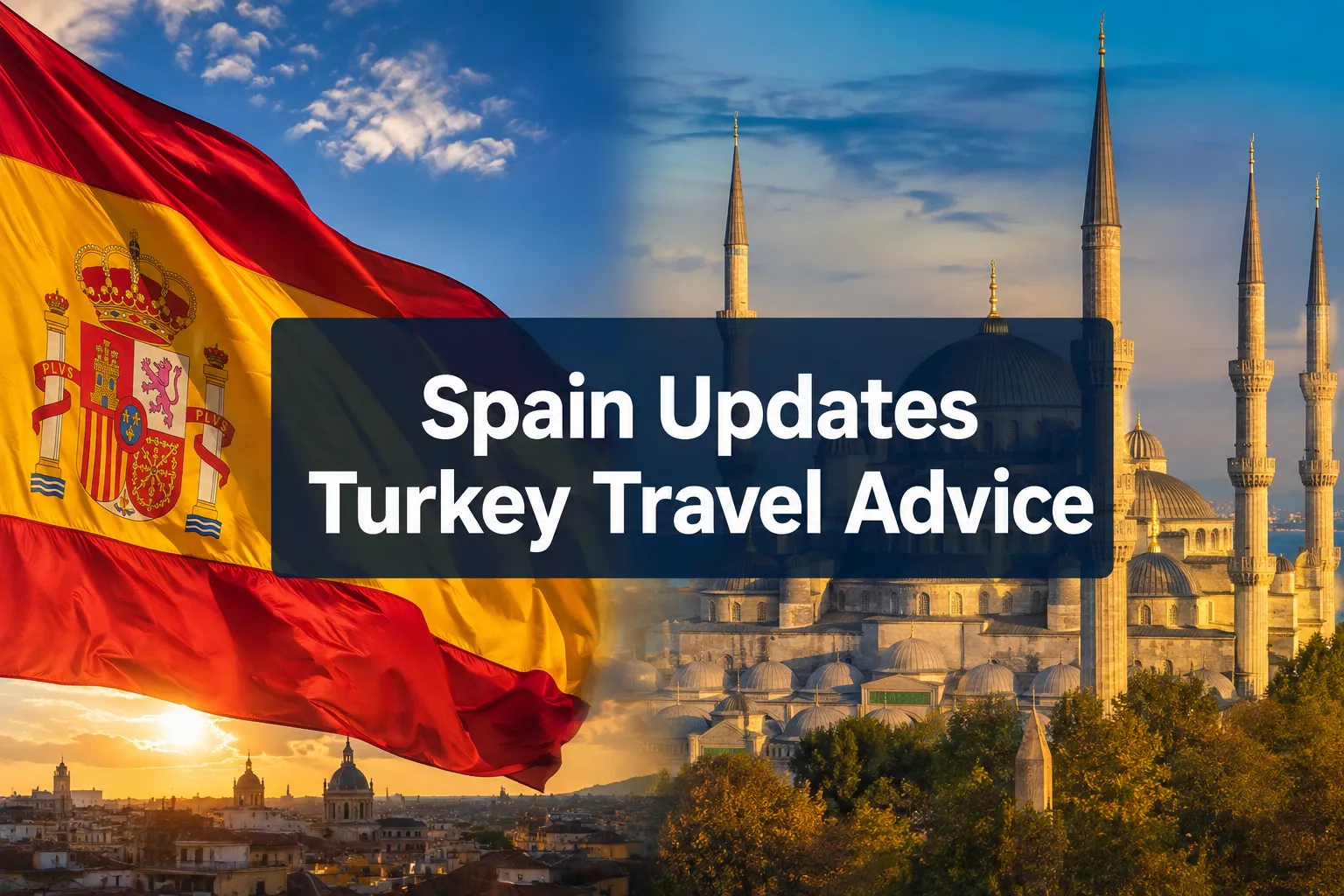
Spain has revised its official travel advice for citizens planning trips to Turkey throughout August 2026. Last updated: August 2, 2026
Quick Answer: As August 2026 kicks off, Spanish travelers eyeing Turkey for their summer holidays should take note of the latest guidance from their government. The Spanish Ministry of Foreign Affairs (Ministerio de Asuntos Exteriores) published updated travel recommendations on August 1, 2026, providing crucial safety and logistical information for Spanish citizens visiting Turkey. The advisory maintains a two-tier approach: tourist hotspots remain open for travel, while border regions carry serious restrictions. [1]
Key Takeaways
- The Spanish Ministry of Foreign Affairs updated its Turkey travel advisory on August 1, 2026, via exteriores.gob.es [1]
- Popular tourist zones, Istanbul, Cappadocia, the Aegean coast, Antalya, carry a standard “exercise normal precautions” rating
- Southeastern provinces bordering Syria and Iraq are flagged as high-risk; travel is strongly discouraged there [1]
- Spanish citizens do not currently need a visa for short stays in Turkey of up to 90 days, but requirements can change, always verify before departure [6]
- Travel insurance with medical evacuation cover is strongly recommended for all Turkey-bound travelers
- Routine vaccinations should be up to date; no mandatory vaccines are required for Turkey entry, but hepatitis A and typhoid are commonly advised [4]
- Spain’s advisory broadly aligns with those from the UK and US, though specific zone classifications may differ [7]
- Petty crime, transport scams, and aggressive street sales are the most commonly reported issues for Spanish tourists [3]

What Did Spain Change About Turkey Travel Advice in August 2026?
Spain’s August 2026 update refines geographic risk classifications and adds practical guidance on civil unrest precautions and health preparedness. The Spanish Ministry of Foreign Affairs published the revised “Recomendaciones de viaje” for Turkey on August 1, 2026, on its official portal at exteriores.gob.es. [1]
Here’s what’s new or reinforced in this update:
- Geographic risk zones are more clearly delineated, with southeastern provinces near the Syrian and Iraqi borders explicitly flagged as high-risk areas where travel is strongly discouraged
- Heightened awareness around large public gatherings and demonstrations is now specifically mentioned, reflecting regional political sensitivities
- Health section updates include reminders about summer heat precautions and access to medical facilities in rural areas
- Consular contact details for the Spanish Embassy in Ankara and Consulate in Istanbul have been refreshed [2]
The core advisory level for mainstream tourist destinations has not changed, Turkey remains accessible and welcoming for the vast majority of Spanish holiday plans.
Is Turkey Safe to Visit Right Now According to Spain?
Yes, for the overwhelming majority of tourist destinations, Spain’s advisory considers Turkey safe to visit. The Spanish Ministry of Foreign Affairs does not advise against travel to Istanbul, Izmir, Antalya, Cappadocia, Bodrum, or the Aegean and Mediterranean coasts. [1]
The nuance is geographic. Think of Turkey as a country with two very different travel realities running simultaneously:
- Green light zones: Istanbul, the Turquoise Coast, Cappadocia, Ephesus, Pamukkale, all considered suitable for standard tourism
- Amber/red zones: Provinces bordering Syria (Hatay, Gaziantep, Kilis, Şanlıurfa) and Iraq (Şırnak, Hakkari), travel strongly discouraged due to conflict spillover risks [3]
For the millions of Spanish tourists who visit Turkey’s coastal resorts and cultural sites each year, the advisory is essentially business as usual. Turkish hospitality is no joke, and the country’s main tourism infrastructure is well-equipped for European visitors. [4]
Spain Turkey Travel Warning: What Areas to Avoid
The clearest warnings in Spain’s updated advisory apply to Turkey’s southeastern and eastern border regions. Spanish citizens are strongly advised against non-essential travel to provinces adjacent to Syria and Iraq. [1]
Areas to avoid or approach with extreme caution:
| Region | Risk Level | Reason |
|---|---|---|
| Hatay, Kilis, Gaziantep (border areas) | High | Proximity to Syrian conflict |
| Şırnak, Hakkari, Şırnak | High | PKK activity, Iraqi border instability |
| Parts of Diyarbakir, Mardin | Elevated | Periodic civil unrest |
| Eastern Anatolia remote areas | Moderate | Limited consular access |
The rest of Turkey, which covers the vast majority of tourist itineraries, carries standard travel precautions comparable to any popular European destination. [1][3]
Do I Need Vaccines for Turkey? Spain’s Recommendations
No vaccines are mandatory for entry into Turkey, but Spain’s health guidance (aligned with standard European travel medicine advice) recommends ensuring routine vaccinations are current before departure. [4]
Recommended vaccines for Turkey travel:
- Hepatitis A (food and water transmission risk)
- Typhoid (particularly for adventurous eaters, and you will be eating adventurously, because Turkish food is ridiculously good)
- Tetanus/diphtheria booster if overdue
- Hepatitis B for longer stays or medical tourism purposes
No malaria prophylaxis is required for standard tourist destinations. August heat in Turkey is serious, think 35-40°C in coastal areas, so hydration and sun protection are as important as any vaccine.
Turkey Visa Requirements for Spanish Citizens in 2026
Spanish citizens currently do not need a visa for tourist stays in Turkey of up to 90 days within a 180-day period, under the existing bilateral agreement. [6] This applies to holders of valid Spanish passports.
Key points to confirm before travel:
- Passport must be valid for at least 6 months beyond the planned departure date from Turkey
- The 90-day limit is cumulative across the 180-day window, not per trip
- E-visa is not required for Spanish passport holders for short stays, but verify current status at the Turkish Ministry of Foreign Affairs portal before booking [10]
- Working or studying in Turkey requires a separate visa category
Pro move: always check the Turkish MFA website directly in the weeks before travel, as visa arrangements can change with limited notice. [10]
What’s the Difference Between Spain’s Old and New Turkey Advice?
The August 2026 update builds on previous advisories rather than replacing them wholesale. The most meaningful changes are in specificity and emphasis rather than a wholesale elevation of risk. [1][2]
Previous advisory (pre-August 2026): General warnings about southeastern border areas, standard crime precautions, and consular registration encouragement.
August 2026 update adds:
- More granular province-level risk mapping for eastern Turkey
- Explicit mention of monitoring local news for civil unrest developments
- Updated health section covering summer heat and hospital access in rural areas
- Refreshed emergency contact information for Spanish diplomatic missions in Turkey [2]
The overall advisory level for tourist zones has not been elevated. This is an update, not an alarm.
Turkey Travel Insurance: Spain’s Requirements for August 2026
Spain does not legally mandate travel insurance for Turkey trips, but the Ministry of Foreign Affairs strongly recommends comprehensive coverage for all travelers. [1] Given that Turkey is outside the EU, the European Health Insurance Card (EHIC) does not apply.
What your policy should cover:
- Emergency medical treatment and hospitalization
- Medical evacuation (costs can be substantial from remote areas)
- Trip cancellation and interruption
- Baggage loss or theft
- 24-hour assistance in Spanish or English
Fair warning: basic travel insurance policies sometimes exclude adventure activities. If there’s any chance of paragliding in Fethiye (and there absolutely should be), confirm your policy covers it.
Which Parts of Turkey Are Safe to Visit in August 2026?
The vast majority of Turkey’s famous tourist destinations are considered safe for Spanish travelers in August 2026. [1][3]
Absolutely worth it, safe and spectacular:
- Istanbul: Hagia Sophia, the Grand Bazaar, Bosphorus cruises, the architecture alone is worth the flight
- Cappadocia: Hot air balloons, cave hotels, natural wonders that look genuinely extraterrestrial
- Aegean Coast: Izmir, Bodrum, Kusadasi, Ephesus, history buffs, this is your paradise
- Antalya/Belek: Mediterranean beaches, world-class resorts, golf courses that’ll make you forget you’re supposed to be sightseeing
- Ankara: Underrated capital with rich traditional culture worth a dedicated day or two

How Does Spain’s Turkey Advice Compare to Other Countries?
Spain’s advisory broadly aligns with those issued by the UK and US governments, all of which maintain the same core structure: safe for tourist areas, restricted for southeastern border zones. [7][3]
- UK (FCDO): Advises against all travel to areas within 10km of the Syrian border and parts of southeastern Turkey, closely mirrors Spain’s geographic warnings [7]
- US (State Department): Rates Turkey at Level 2 (“Exercise Increased Caution”) nationally, with Level 4 (“Do Not Travel”) for Hakkari and Sirnak provinces [3]
- Spain: Similar geographic restrictions with an emphasis on consular registration and insurance
The practical takeaway: no major Western government is advising against travel to Turkey’s tourist heartland. Spain’s August 2026 update is consistent with this international consensus.
Turkey Travel Costs and Budgets for Spanish Tourists
Turkey remains one of the most affordable Mediterranean-adjacent destinations for Spanish travelers in 2026. The Turkish lira’s exchange rate continues to favor European visitors, though inflation has affected local prices. [4]
Rough daily budget estimates (per person):
- Budget traveler: 40-60 EUR/day (hostels, local food, public transport)
- Mid-range: 80-130 EUR/day (3-star hotels, restaurant meals, guided tours)
- Comfort/luxury: 200+ EUR/day (boutique hotels, private tours, fine dining)
Istanbul and coastal resorts tend to run higher than inland destinations. Cappadocia cave hotels are a splurge that future you will absolutely thank present you for booking.
Common Problems Spanish Travelers Face in Turkey
The most frequently reported issues are minor and entirely manageable with basic awareness. [3][4]
Watch out for:
- Carpet and jewelry shop pressure: Friendly invitation for “just tea” that evolves into a two-hour sales session. Perfectly safe, just know your exit strategy
- Taxi overcharging: Always use the meter or agree on a price before entering. Apps like BiTaksi are a total game-changer
- Fake guides near major sites: Book tours through verified operators or your hotel
- Petty theft in crowded areas: Standard big-city precautions apply, keep bags close in the Grand Bazaar and on public transport
- Language barriers in rural areas: English is widely spoken in tourist zones; less so in eastern Turkey
Story time: the most common complaint from Spanish tourists in Turkey isn’t safety, it’s overeating. Consider yourself warned.
Do I Actually Need to Follow Spain’s Travel Advice for Turkey?
Spain’s travel advisories are official recommendations, not legal requirements. Spanish citizens are free to travel to Turkey regardless of advisory level, except in extreme cases where travel is prohibited by law (which does not currently apply to any part of Turkey for Spanish passport holders). [1]
That said, ignoring the advisory has practical consequences:
- Travel insurance policies may be voided if you travel to areas rated “do not travel”
- Consular assistance may be limited in high-risk zones
- Emergency evacuation costs without insurance in restricted areas can be devastating
For tourist-zone travel, following the advisory simply means staying informed, registering with the Spanish Embassy, and carrying adequate insurance. That’s genuinely sensible advice regardless of nationality.
Best Time to Visit Turkey If Not August
Here’s the magic: August is actually peak season in Turkey, which means crowds and heat at maximum intensity. If flexibility exists, consider these alternatives:
- April-May: Wildflowers in Cappadocia, comfortable temperatures, fewer crowds, seriously underrated
- September-October: Summer heat fades, sea is still warm, prices drop noticeably
- November-March: Istanbul in winter is atmospheric and crowd-free (and the fish markets are at their absolute best)
August travel is absolutely worth it if that’s what the calendar allows, just book accommodation early and plan outdoor activities for early morning or evening.
Alternative Destinations to Turkey: Similar Appeal, Different Concerns
For Spanish travelers whose specific plans involve restricted areas, or who simply want options, several destinations offer comparable experiences:
- Greece: Aegean culture, ancient history, similar coastal scenery, visa-free for Spanish citizens
- Croatia: Mediterranean coastline, historic old towns, slightly cooler August temperatures
- Morocco: North African culture, souks, and architecture at a shorter flight distance from Spain
- Jordan: Ancient ruins, desert landscapes, and some of the warmest hospitality in the region
Plot twist: most travelers who research alternatives end up going to Turkey anyway. The combination of history, food, coastline, and value is genuinely hard to replicate elsewhere.
Frequently Asked Questions
Has Spain raised its Turkey travel alert level in August 2026? No. Spain’s August 2026 update refined geographic details and health guidance but did not elevate the overall advisory level for Turkey’s main tourist destinations. [1]
Do Spanish citizens need a visa for Turkey in 2026? Spanish passport holders currently do not need a visa for tourist stays up to 90 days. Always verify current requirements at the Turkish MFA website before travel. [6][10]
Which Turkish cities are safe for Spanish tourists right now? Istanbul, Izmir, Antalya, Bodrum, Kusadasi, and Cappadocia are all considered safe for standard tourism under Spain’s current advisory. [1]
Is travel insurance mandatory for Turkey from Spain? Not legally mandatory, but strongly recommended by the Spanish Ministry of Foreign Affairs. The EHIC card does not apply outside the EU. [1]
What areas does Spain advise against visiting in Turkey? Southeastern provinces bordering Syria and Iraq, including Hatay, Kilis, Şırnak, and Hakkari, are flagged as high-risk. [1][3]
Where can Spanish travelers find the official Turkey advisory? The official source is exteriores.gob.es, specifically the Detalle Recomendaciones de Viaje page for Turkey. [1]
Does Spain’s Turkey advice differ significantly from the UK’s? Not significantly. Both advise against travel to southeastern border zones while permitting standard tourism to major destinations. [7]
Is it safe to visit Istanbul in August 2026 according to Spain? Yes. Istanbul is not subject to any travel restriction in Spain’s advisory and remains one of the most visited cities by Spanish tourists. [1][4]
What vaccinations do Spanish travelers need for Turkey? No vaccines are mandatory for entry. Hepatitis A and typhoid are commonly recommended. Routine vaccinations should be current. [4]
Can Spanish travelers get consular help in Turkey? Yes. The Spanish Embassy in Ankara and Consulate in Istanbul provide consular services. Registering your trip at exteriores.gob.es is recommended. [2]
Conclusion
Spain’s August 2026 travel advisory update for Turkey is an informational refinement, not a red flag. The Spanish Ministry of Foreign Affairs continues to support travel to Turkey’s world-class tourist destinations, from the domed skyline of Istanbul to the thermal pools of Pamukkale to the hot air balloon-dotted skies of Cappadocia. The restrictions that exist are geographically specific and consistent with international consensus.
Actionable next steps for Spanish travelers:
- Read the full official advisory at exteriores.gob.es before finalizing plans [1]
- Register your trip with the Spanish Embassy via the official portal [2]
- Purchase comprehensive travel insurance that covers medical evacuation and adventure activities
- Verify current visa status at the Turkish MFA website in the weeks before departure [10]
- Keep the Spanish Embassy in Ankara (+90 312 438 03 92) and Istanbul Consulate numbers saved in your phone [2]
- Plan outdoor activities for early morning to avoid August peak heat
- Bookmark the Explore More Turkey travel tips section for destination-specific planning
Turkey in August is hot, busy, and absolutely magnificent. Consider this your sign to go.
References
[1] Detalle Recomendaciones De Viaje – https://www.exteriores.gob.es/es/ServiciosAlCiudadano/Paginas/Detalle-recomendaciones-de-viaje.aspx?trc=Turqu%C3%ADa
[2] Recomendaciones De Viaje – https://www.exteriores.gob.es/Embajadas/ankara/es/ViajarA/Paginas/Recomendaciones-de-viaje.aspx
[3] Turkey Travel Warnings – https://hostelpunk.com/en/articles/turkey-travel-warnings/
[4] Is Turkey Safe For Spanish Travellers 2026 – https://myturkeyadventure.com/blog/is-turkey-safe-for-spanish-travellers-2026
[6] Turkey Visa Information – https://embassyinformation.com/visa/es/turkey/
[7] Spain – https://www.gov.uk/foreign-travel-advice/spain
[10] Visa Information For Foreigners – https://www.mfa.gov.tr/visa-information-for-foreigners.en.mfa