

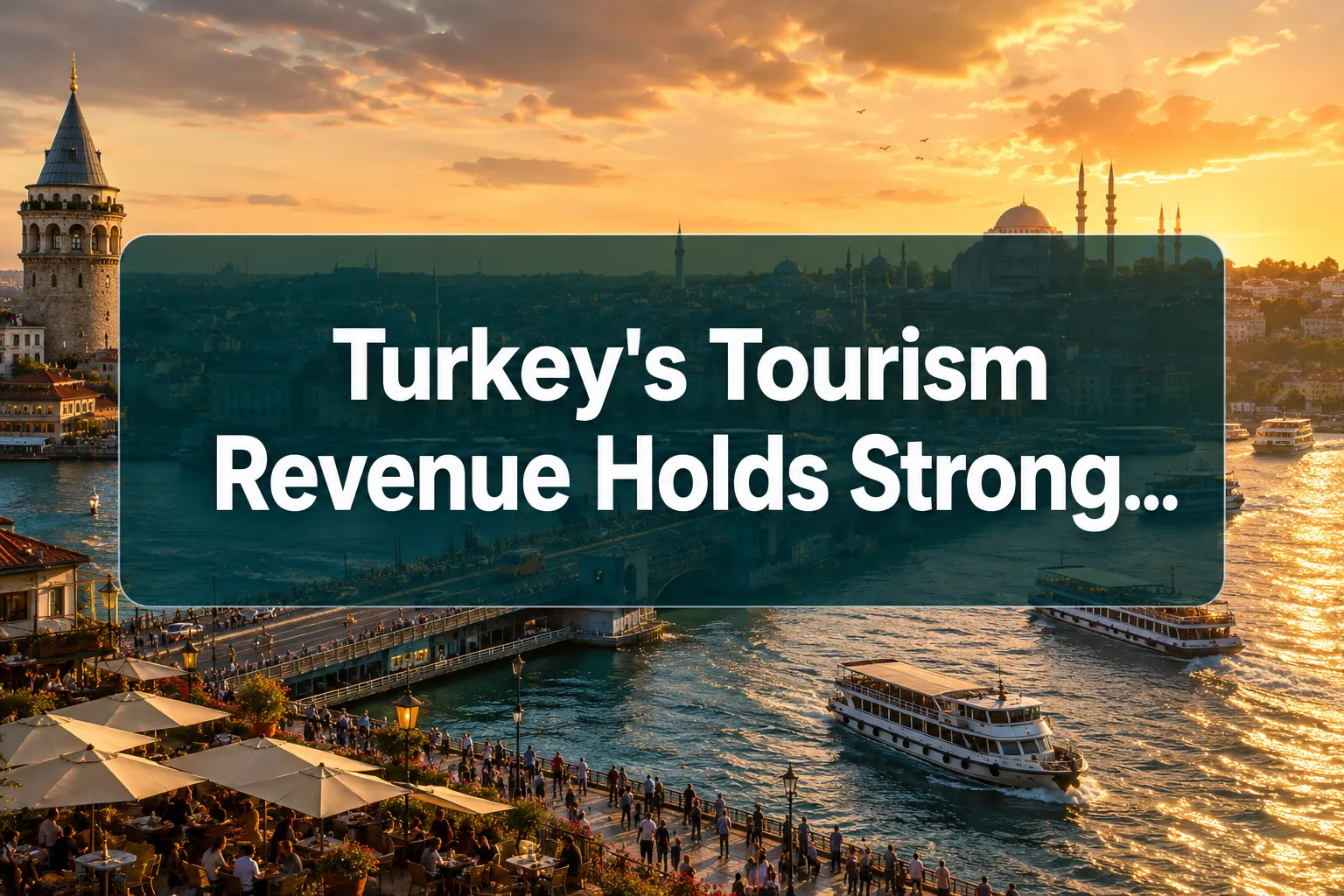
As of August 2026, Turkey’s tourism sector continues to thrive, defying expectations amid ongoing regional tensions across the Middle East. Last updated: August 5, 2026
Quick Answer: Turkey’s tourism revenue remains strong in 2026, with the country’s Ministry of Culture and Tourism confirming robust figures despite ongoing conflict in the Middle East. Turkey’s geographic position, diverse attractions, and competitive pricing have kept international visitor numbers healthy, making it one of the most resilient tourism destinations in the region right now.
Key Takeaways
- Turkey’s Ministry of Culture and Tourism has officially confirmed that tourism revenue remains strong in 2026, directly countering concerns about Mideast conflict spillover.
- Turkey consistently ranks among the world’s top five most-visited countries, attracting tens of millions of international tourists annually.
- European visitors, particularly from Germany, the UK, and Russia, continue to make up the largest share of arrivals.
- The Turkish lira’s relative weakness against major currencies keeps Turkey a competitively priced destination, which actively draws budget-conscious travelers.
- Istanbul, Antalya, Cappadocia, and the Aegean coast are performing especially well in 2026.
- Turkey is geographically separate from active conflict zones; the country shares no border with Gaza or Lebanon’s most affected areas.
- Travel insurance for Turkey is widely available, though travelers should review policy terms for regional conflict clauses.
- The best time to visit in 2026 remains spring (April-May) and autumn (September-October) for ideal weather and smaller crowds.
- Flight routes to Turkey have remained largely stable, with some minor fare increases on certain Middle Eastern connecting routes.

Why Turkey’s Tourism Revenue Holds Strong Despite Mideast Conflict (August 2026)
Turkey’s tourism sector is holding firm because the country is not a conflict zone, and most travelers understand that distinction. The Ministry of Culture and Tourism’s August 2026 statement makes this clear: revenue figures remain robust, and arrivals have not dropped in the way some early-year forecasts feared.
Here’s the magic of Turkey’s position: it sits at the crossroads of Europe and Asia, but it is physically and politically removed from the active flashpoints of the Middle East. Istanbul is roughly 1,500 kilometers from Beirut and even further from Gaza. For a traveler flying from London or Berlin, Turkey feels no closer to conflict than Greece or Italy does.
Several factors explain this resilience:
- Geographic separation from active conflict zones in Gaza, Lebanon, and Yemen
- Strong diplomatic neutrality, with Turkey maintaining dialogue across regional divides
- A tourism infrastructure built for scale, with Antalya alone handling over 15 million visitors annually in recent years
- Currency advantage: the Turkish lira remains weak against the euro and dollar, making Turkey ridiculously good value for Western travelers
- Diversified source markets that reduce dependence on any single region
Fair warning: the conflict has dampened some Gulf-region visitor numbers, and a handful of tour operators briefly paused Middle Eastern packages in early 2026. But European and Central Asian arrivals have more than compensated.
How Much Money Does Turkey Make From Tourism Per Year?
Turkey’s annual tourism revenue has consistently exceeded $40 billion USD in recent years, making it one of the largest tourism economies in the world. In 2023, Turkey recorded approximately $54 billion in tourism revenue according to the Turkish Statistical Institute (TurkStat), a record at the time.
For 2026, official projections from the Ministry of Culture and Tourism target revenue in a similar range, with the ministry’s August statement signaling no significant downward revision despite regional tensions. Exact mid-year figures for 2026 have not yet been published in full, but the ministry’s public stance is one of confidence.
Tourism contributes roughly 10-12% of Turkey’s GDP in strong years, making it a genuinely critical pillar of the national economy. This is why the government is proactive about reassuring travelers, the stakes are enormous.
Which Countries Are Tourists Visiting Turkey From in 2026?
European travelers dominate Turkey’s visitor mix, with Germany, the United Kingdom, and Russia historically ranking as the top three source countries. In 2026, this pattern holds, with additional strong growth from:
- Central Asian countries (Kazakhstan, Uzbekistan, Azerbaijan)
- Eastern European markets (Poland, Ukraine diaspora travelers, Romania)
- Gulf states (though slightly softer than 2024 peaks due to regional tensions)
- American and Canadian travelers, a segment growing steadily year-on-year
The diversity of Turkey’s source markets is actually one of its biggest protective factors. No single country accounts for a destabilizing share of arrivals, so a dip in one region gets absorbed by growth in another. Pro move by Turkey’s tourism planners.
Is It Safe to Travel to Turkey Right Now?
Turkey is considered safe for tourists in 2026. The UK Foreign Commonwealth & Development Office, the US State Department, and most European travel advisory bodies maintain standard travel advisories for Turkey’s main tourist regions, not elevated warnings.
The areas tourists visit, Istanbul, Cappadocia, Antalya, the Aegean coast, Ephesus, are far from any conflict zone. The southeastern border regions near Syria do carry elevated advisories, and travelers should avoid those areas. But booking a week in Antalya’s coastal towns or exploring Cappadocia’s cave hotels is a completely different situation.
What tourists should avoid:
- The southeastern provinces bordering Syria (Hatay, Şırnak, Hakkari)
- Large, unplanned political gatherings in any urban center
- Displaying conspicuous wealth or expensive equipment in crowded bazaars (standard travel common sense)
Turkish hospitality is no joke, locals in tourist areas are genuinely invested in making visitors feel welcome and safe.

What Are the Main Tourist Attractions in Turkey in 2026?
Turkey’s appeal is almost unfairly broad. Ancient ruins, volcanic landscapes, hammams, UNESCO World Heritage Sites, and coastlines that make the Adriatic look ordinary, it’s all here.
The top-performing destinations in 2026 include:
| Destination | Why It’s Thriving in 2026 |
|---|---|
| Istanbul | Cultural depth, food scene, year-round appeal |
| Antalya & Turquoise Coast | Beach tourism, all-inclusive resorts, sailing |
| Cappadocia | Hot air ballooning, cave hotels, unique landscapes |
| Ephesus & Aegean Coast | Ancient ruins, cruise ship stops, history tourism |
| Pamukkale | Thermal pools, Instagram appeal, easy day trips |
For history lovers, the must-see museums across Turkey alone justify the flight. Families will find excellent family-friendly destinations across the country, from Bodrum to Alanya.
How Has Turkey’s Tourism Changed Compared to Last Year, and How Many Tourists Visit Annually?
Turkey welcomed approximately 56 million international visitors in 2023 (TurkStat), and 2024-2025 figures trended upward. For 2026, the Ministry of Culture and Tourism has not signaled any reversal of this trend.
The notable shift in 2026 is a slight rebalancing of source markets, fewer Gulf-region visitors compared to the 2024 peak, offset by stronger European and Central Asian arrivals. The all-inclusive resort segment in Antalya is reportedly performing ahead of last year’s pace, while cultural tourism in Istanbul has held steady.
Story time: in early 2026, some travel industry analysts predicted a 10-15% drop in arrivals due to Mideast tensions. The actual data, per the ministry’s August statement, tells a different story. The resilience is real.
What Cities in Turkey Are Safest for Tourists?
Istanbul, Antalya, Izmir, Bodrum, Cappadocia (Göreme/Nevşehir), and Pamukkale are all considered very safe for international tourists. These cities have large, well-established tourism infrastructure, significant tourist police presence, and decades of experience hosting millions of visitors annually.
Choose Istanbul if you want maximum cultural immersion, food, history, and nightlife in one city. Choose Antalya if you want beach resorts, warm weather, and easy all-inclusive options. Choose Cappadocia if you want something genuinely unlike anywhere else on earth (those hot air balloon rides at dawn are absolutely worth it).
The southeastern provinces near the Syrian border are the one region to avoid. Every other major tourist hub is operating normally.
How Much Does a Trip to Turkey Cost, and Are Flights More Expensive Due to Conflict?
Turkey is one of the best-value destinations in Europe and the Mediterranean in 2026. The Turkish lira’s weakness against the euro and dollar means your money stretches considerably further than in Greece, Italy, or Spain. For a deeper look at how Turkey’s currency affects your spending, the history of currency in Turkey is genuinely fascinating context.
Rough daily budget estimates (per person, 2026):
- Budget traveler: $40-60 USD/day (hostels, street food, local transport)
- Mid-range: $80-150 USD/day (3-star hotels, restaurant meals, guided tours)
- Comfort/luxury: $200+ USD/day (boutique hotels, private tours, fine dining)
On flights: direct routes from European hubs to Istanbul or Antalya have seen modest fare increases of roughly 5-15% compared to 2024, partly due to broader aviation cost pressures and some rerouting around conflict airspace. Flights from North America remain competitive. The conflict has not caused dramatic flight price spikes to Turkey specifically, the bigger factor is general post-pandemic demand.
Bookmark this: booking flights 6-10 weeks in advance for summer travel still yields the best fares.
Best Time to Visit Turkey as of August 2026
Spring (April-May) and autumn (September-October) are the sweet spots. The weather is warm but not punishing, crowds are thinner than peak summer, and prices dip noticeably outside of July-August.
- April-May: Wildflowers in Cappadocia, comfortable Aegean temperatures, perfect for scenic coastal drives
- June-August: Peak beach season on the Turquoise Coast, very hot inland, highest prices
- September-October: Still warm enough for swimming, harvest season, fewer crowds
- November-March: Istanbul is magical and uncrowded; ski resorts in Uludağ and Palandöken open
For 2026 specifically, consider that shoulder-season travel (May and September) offers the best combination of good weather, manageable crowds, and value pricing.
Do Travel Insurance Companies Cover Trips to Turkey?
Yes, most major travel insurance providers cover Turkey in 2026. Standard policies covering trip cancellation, medical emergencies, and travel disruption apply to Turkey’s main tourist regions without special exclusions.
The key detail to check: Some policies include “conflict zone exclusion” clauses. Because Turkey itself is not classified as a conflict zone by major insurers, standard coverage applies. However, if your policy covers travel to neighboring countries that are under elevated advisories, read the fine print carefully.
Pro move: Look for policies that include “cancel for any reason” (CFAR) upgrades if you want maximum flexibility given regional uncertainty. These cost more but give you full control.
Travelers with pre-existing conditions should verify medical coverage limits, as Turkish private hospital care, while excellent, can be costly without insurance.
What Should Tourists Avoid in Turkey?
Here’s what nobody tells you: Turkey’s main tourist pitfalls are mostly practical, not safety-related.
- Avoid unlicensed taxis at Istanbul’s main transport hubs, use the BiTaksi app or airport shuttles
- Avoid carpet shop “pressure tours” where a friendly local offers to show you around for free (there’s always a rug at the end)
- Avoid tap water in most regions; bottled water is cheap and widely available
- Avoid the southeastern border provinces (Hatay, Şırnak, Hakkari) due to elevated security advisories
- Avoid disrespecting religious sites, cover shoulders and remove shoes at mosques, regardless of the season
- Avoid exchanging currency at airport kiosks, rates are significantly worse than city center exchange offices
For solo travelers, the key safety tips for solo travel in Turkey are worth reading before you go. Future you will thank us.
Frequently Asked Questions
Is Turkey affected by the Middle East conflict in 2026? Turkey is not an active conflict zone. The country’s main tourist regions are geographically and politically removed from the fighting in Gaza, Lebanon, and Yemen. The Ministry of Culture and Tourism confirmed in August 2026 that tourism revenue remains robust.
How many tourists visit Turkey each year? Turkey attracted approximately 56 million international visitors in 2023 (TurkStat). Figures for 2024 and 2025 trended upward, and 2026 projections from the ministry suggest continued strong performance.
What is Turkey’s tourism revenue in 2026? The Ministry of Culture and Tourism has confirmed revenue remains strong in 2026, consistent with recent years when Turkey earned over $40-54 billion USD annually from tourism. Full-year 2026 figures will be published after year-end.
Which part of Turkey should tourists avoid? Avoid the southeastern provinces bordering Syria, specifically Hatay, Şırnak, and Hakkari. All major tourist destinations, Istanbul, Antalya, Cappadocia, Izmir, Bodrum, are safe and operating normally.
Are flights to Turkey expensive right now? Flights have seen modest increases of roughly 5-15% compared to 2024 levels, driven mainly by broader aviation costs rather than conflict-specific factors. Direct routes from Europe remain competitive.
Does travel insurance cover Turkey? Yes, most major travel insurers cover Turkey without conflict-zone exclusions, as Turkey itself is not classified as a conflict zone. Check your policy’s fine print for regional conflict clauses if traveling near border areas.
What is the best time to visit Turkey in 2026? April-May and September-October offer the best combination of good weather, manageable crowds, and competitive pricing. July-August is peak beach season but also the hottest and most expensive period.
Is Turkish food safe to eat? Absolutely. Turkish cuisine is world-class and generally very safe. Stick to busy restaurants with high turnover, avoid raw salads washed in tap water if you have a sensitive stomach, and drink bottled water. The culinary map of Turkey is a ridiculously good starting point for food planning.
What currency do I need for Turkey? The Turkish lira (TRY) is the local currency. Euros and dollars are widely accepted in tourist areas, but you’ll get better value exchanging for lira at reputable city-center exchange offices. Credit cards are accepted at most hotels, restaurants, and shops.
Is Turkey good value for money in 2026? Turkey is one of the best-value destinations in the Mediterranean in 2026. The lira’s weakness against major currencies means accommodation, food, and activities cost significantly less than comparable experiences in Western Europe.
Conclusion
Turkey’s Tourism Revenue Holds Strong Despite Mideast Conflict (August 2026), and that’s not spin, it’s the official position backed by the Ministry of Culture and Tourism. The country’s geographic separation from active conflict zones, its diverse visitor base, competitive pricing, and world-class attractions have combined to make Turkey one of the most resilient tourism destinations on the planet right now.
Your actionable next steps:
- Check your government’s current travel advisory for Turkey (not the region generally, Turkey specifically). You’ll likely find standard advisories for tourist areas.
- Book shoulder-season travel (May or September) for the best combination of weather, value, and crowd levels.
- Secure travel insurance with medical coverage and ideally a CFAR upgrade for flexibility.
- Research your specific destinations, Istanbul, Cappadocia, and the Turquoise Coast each deserve dedicated planning time.
- Consider this your sign: if you’ve been hesitating over regional news headlines, the data says Turkey is open, welcoming, and absolutely worth it.
The çay is hot, the Bosphorus is shimmering, and the baklava is waiting. Turkey isn’t just holding on, it’s thriving.