

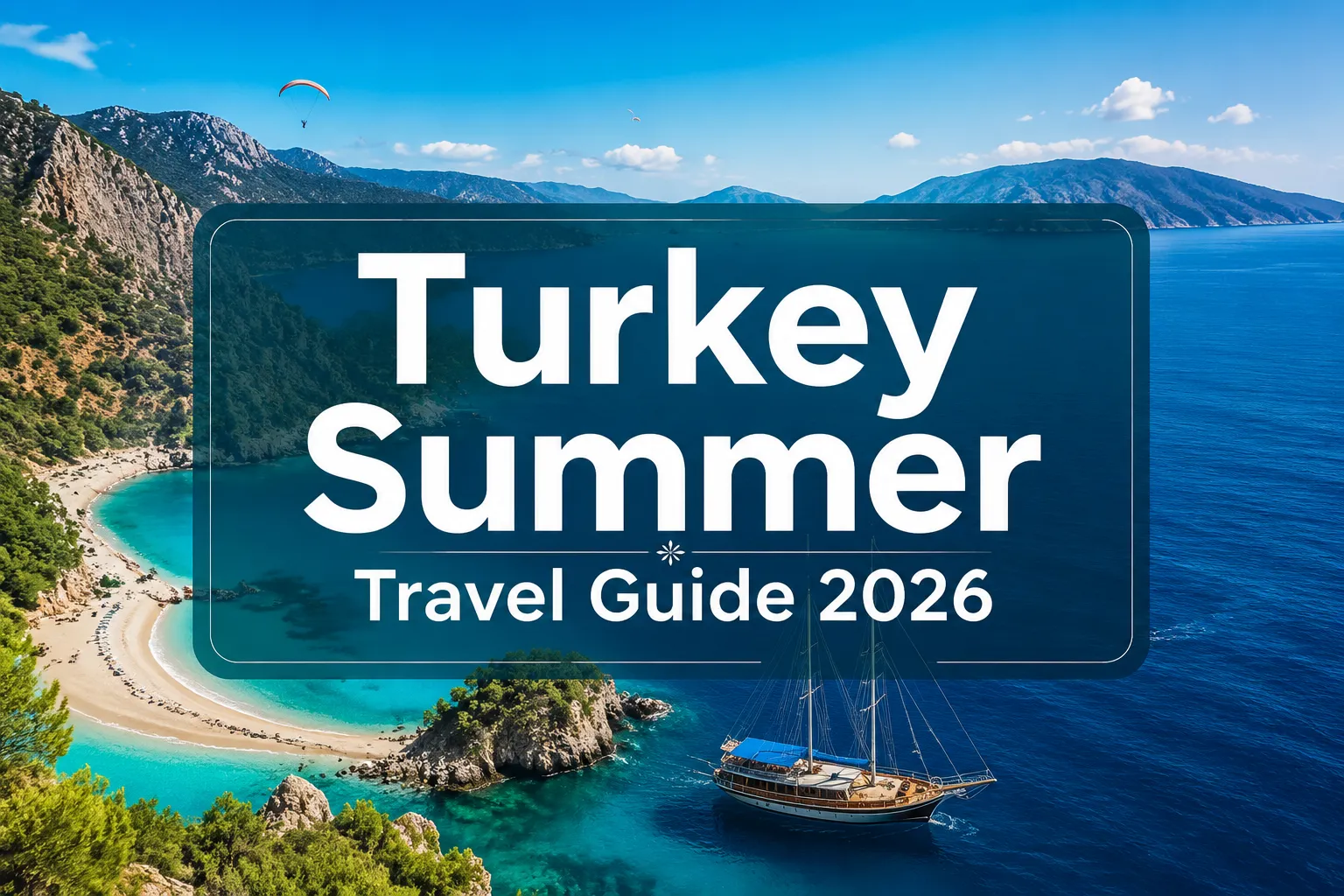

This turkey summer travel guide reveals the best experiences awaiting you in 2026’s most captivating Mediterranean destination. Last updated: July 23, 2026
Quick Answer: Turkey is one of the best-value summer destinations in 2026, offering world-class beaches, ancient ruins, and vibrant cities across a country that welcomed 62 million visitors in 2024 alone [1]. Summer runs hot, especially July and August, but smart planning, coastal bases, and early-morning sightseeing make it very manageable. This Turkey summer travel guide (2026) covers the best regions, costs, visas, packing, and a ready-to-use 7-day itinerary.
Key Takeaways
- Best months: June and September offer the best balance of warm weather and smaller crowds; July, August are peak season and very hot inland.
- Budget: A comfortable mid-range trip costs roughly $60,$120 USD per person per day, including accommodation, food, and transport.
- Visa: Many nationalities can get an e-Visa online in minutes; some countries now enter visa-free. Always check before you travel.
- Top beaches: Ölüdeniz, Kaputaş, Patara, and Bodrum’s Bitez Beach are standouts for summer 2026.
- Crowds: Coastal resorts peak in July, August; Istanbul and Cappadocia are busy all summer but manageable with early starts.
- Packing essentials: High-SPF sunscreen, lightweight linen clothing, a reusable water bottle, and a scarf for mosque visits.
- Book early: Flights and hotels in Antalya, Bodrum, and Fethiye sell out fast, aim to book 3-4 months ahead for peak weeks.
- Stay cool: Sea breezes on the Aegean and Mediterranean coasts make coastal towns far more comfortable than central Anatolia in July.

Best Time to Visit Turkey in Summer 2026
June and early September are the sweet spots for a summer trip to Turkey. Temperatures are warm but not brutal, crowds are thinner than in peak season, and prices drop noticeably compared to July and August.
Here’s a quick month-by-month breakdown for summer:
| Month | Avg. Temp (Coast) | Avg. Temp (Istanbul) | Crowd Level | Notes |
|---|---|---|---|---|
| June | 27-30°C (81-86°F) | 24°C (75°F) | Moderate | Great weather, good value |
| July | 32-36°C (90-97°F) | 28°C (82°F) | Very High | Peak season, book early |
| August | 33-37°C (91-99°F) | 29°C (84°F) | Very High | Hottest month, busiest beaches |
| September | 28-32°C (82-90°F) | 25°C (77°F) | Moderate | Excellent, warm sea, fewer crowds |
Choose June if you want the full summer experience without fighting for sunbeds. Choose September if you want warm water, lower prices, and a more relaxed pace [7].
Is Your Turkey Summer Travel Guide Complete for July and August Heat?
It depends on where you go. Coastal towns like Bodrum, Fethiye, and Antalya benefit from sea breezes that make 35°C (95°F) feel bearable. Inland cities like Ankara and Konya, and especially Cappadocia, can feel punishing in peak heat.
Practical tips for visiting in July or August:
- Start sightseeing before 9 a.m. and take a midday break (2-4 p.m.) during the hottest hours.
- Stay in coastal or elevated areas, Cappadocia sits at around 1,000 meters, which helps slightly.
- Book air-conditioned accommodation; it’s not optional in August.
- Drink at least 2-3 liters of water daily. Tap water in Turkey is generally not recommended for drinking, carry a reusable bottle and refill from large water dispensers (widely available and cheap).
“The Turkish coast in August is hot, yes, but a swim in the Aegean at sunset makes you forget all of it.”
Best Beaches in Turkey for Summer 2026
Turkey’s Aegean and Mediterranean coastlines have some of Europe’s most beautiful beaches, and they’re genuinely accessible without a huge budget. The turquoise waters along Turkey’s best beaches range from wide sandy bays to dramatic coves tucked between limestone cliffs.
Top picks for summer 2026:
- Ölüdeniz (Fethiye): The iconic blue lagoon. Arrive before 10 a.m. to beat the crowds. Butterfly Valley nearby is worth a half-day trip.
- Kaputaş Beach: A short drive from Kaş, steep stairs down to a stunning turquoise cove. Not ideal for families with toddlers, but spectacular.
- Patara Beach: 18 km of undeveloped sand backed by ancient ruins. One of the least crowded long beaches on the Mediterranean.
- Bitez Beach (Bodrum): Calmer waters than central Bodrum, good for windsurfing and families.
- Cleopatra Beach (Alanya): Fine sand, clear water, and easy access from Alanya’s center.
Common mistake: Skipping the lesser-known coastal towns along Turkey’s itinerary in favor of only the famous spots. Smaller bays near Kas, Göcek, and Datça are often far quieter and just as beautiful.
Do I Need a Visa to Visit Turkey in Summer 2026?
Most visitors need either an e-Visa or can enter visa-free, depending on their passport. The Turkish e-Visa is available online and takes about 10-15 minutes to apply for. Check Turkey’s updated visa-free travel agreements before you travel, as the list of eligible nationalities has expanded in recent years.
Key points:
- e-Visa: Available for citizens of many countries including the USA, UK, Australia, and Canada. Cost is typically $50,$55 USD. Apply at the official Turkish government e-Visa portal (evisa.gov.tr).
- Visa-free: Citizens of EU member states and several other countries can enter without a visa for stays up to 90 days.
- Passport validity: Your passport must be valid for at least 6 months beyond your entry date.
- Always check: Visa rules change. Verify your specific nationality’s requirements at your country’s official foreign travel advice page before booking [4].
How Much Does a Summer Trip to Turkey Cost?
Turkey remains one of the most affordable summer destinations for Western travelers in 2026, though costs have risen with inflation. A mid-range budget of $70,$100 USD per person per day covers comfortable accommodation, meals at good local restaurants, and transport.
Rough daily cost estimates (per person):
- 🏨 Budget traveler: $35,$55/day (hostel or guesthouse, street food, local buses)
- 🏨 Mid-range: $70,$120/day (3-star hotel, sit-down meals, occasional taxi)
- 🏨 Comfort/luxury: $150,$300+/day (4-5 star resort, fine dining, private transfers)
Where your money goes furthest:
- Food: A full meal at a local lokanta (canteen) costs $4,$8. Tourist restaurants in Istanbul’s Sultanahmet are 2-3x more expensive.
- Transport: Intercity buses (e.g., Istanbul to Cappadocia) cost $15,$25. Domestic flights can be $30,$70 if booked in advance.
- Entrance fees: Major sites like Hagia Sophia (free for the mosque area), Topkapi Palace (
$20), and Ephesus ($25) add up, budget $50,$80 for a week of sightseeing.
Note: 2026 summer reservations have shown some softening due to regional geopolitical uncertainty, which may mean better last-minute deals are available in some areas [8]. That said, popular coastal resorts still fill up fast.
Cheapest Places to Visit in Turkey During Summer
The cheapest destinations in Turkey during summer are smaller inland cities, Black Sea towns, and less-touristy Aegean spots, places where international tourism hasn’t driven up prices the way it has in Bodrum or Istanbul.
Top budget-friendly picks:
- Şanlıurfa: Near Göbekli Tepe, fascinating history, very affordable.
- Trabzon and the Black Sea coast: Lush, green, cool in summer, and rarely crowded with foreign tourists. See unmissable spots in the Black Sea region.
- Ankara: Turkey’s capital is often overlooked but offers great museums, excellent food, and lower prices than Istanbul. Discover traditional life in Ankara for a more authentic experience.
- Pamukkale: Affordable base town, stunning travertine terraces, and ancient Hierapolis, a full day costs very little. Read about what makes Pamukkale unique.
- Amasya and Safranbolu: Ottoman-era towns with low accommodation costs and almost no mass tourism.
Turkey Summer Travel Itinerary: 7 Days
A 7-day Turkey summer itinerary works best as a split between Istanbul and the Aegean or Mediterranean coast. This covers the country’s highlights without rushing.
Day-by-day plan:
- Day 1, Istanbul: Arrive, check in, evening stroll around Sultanahmet. Hagia Sophia, Blue Mosque. See the top must-see sites in Istanbul.
- Day 2, Istanbul: Grand Bazaar, Topkapi Palace, Bosphorus ferry cruise. Try Turkish street food in Karaköy.
- Day 3, Fly to Izmir or Bodrum: Afternoon at the beach. Settle into your coastal base.
- Day 4, Ephesus day trip: One of the best-preserved ancient cities in the world. Go early (gates open at 8 a.m.) to beat the heat and crowds.
- Day 5, Pamukkale or Ölüdeniz: Either the cotton-castle terraces or the blue lagoon beach, both are day-trip distance from the Aegean coast.
- Day 6, Boat trip or coastal town: A Blue Voyage gulet day trip, or explore a smaller coastal town like Kas or Göcek.
- Day 7, Departure: Morning swim, last Turkish breakfast, head to the airport.
Edge case: If you have 10 days, add 2 nights in Cappadocia (fly from Istanbul or the coast). It’s one of the most visually dramatic places in Turkey and worth the extra time.
Is Cappadocia Worth Visiting in Summer?
Yes, Cappadocia is absolutely worth visiting in summer, but go in June or September rather than July, August if you can. The fairy chimneys and hot air balloon rides are stunning year-round, but summer heat (30-35°C) plus large tour groups can make midday uncomfortable.
What to know:
- Hot air balloon flights launch at dawn (around 5-5:30 a.m.), which is actually the coolest and most beautiful time of day. Book at least 2-3 months ahead for peak summer.
- The underground cities of Derinkuyu and Kaymakli stay cool underground, a perfect midday activity in summer heat.
- Stay in a cave hotel for the full experience; they’re naturally cooler than standard rooms.
- Horseback riding in Cappadocia at sunset is a popular and genuinely spectacular activity.
What to Do in Istanbul in Summer Heat
Istanbul in summer is hot and crowded, but manageable with the right strategy. The city’s ferry network is your best friend, Bosphorus ferries are breezy, cheap, and give you spectacular views.
Beat the heat in Istanbul:
- Take a ferry: The public Bosphorus ferry from Eminönü to Anadolu Kavağı costs a few lira and takes 90 minutes each way, it’s one of the best value experiences in the city.
- Visit museums midday: The Istanbul Archaeology Museums and the Topkapi Palace harem are air-conditioned and less crowded than outdoor sites at noon.
- Explore at night: Istanbul’s waterfront neighborhoods (Karaköy, Bebek, Moda) come alive after 8 p.m. when temperatures drop.
- Hamam break: A traditional Turkish bath is a surprisingly refreshing midday activity. See how important hamams are in Turkish culture.
- Head to the Asian side: Less touristy, cooler vibe, great street food in Kadıköy.
Turkey Summer Festivals and Events 2026
Turkey’s summer calendar is packed with music festivals, cultural events, and local celebrations. The exotic fruit festivals of Turkey are a highlight for food lovers, and the Istanbul Fireworks Festival draws large crowds each summer.
Key 2026 summer events to look for:
- Istanbul Music Festival (June): Classical and world music performances at historic venues.
- Aspendos Opera and Ballet Festival (June, July): Performances inside the 2,000-year-old Aspendos Roman theater near Antalya, one of the most atmospheric events in Turkey.
- Bodrum Ballet Festival (August): Outdoor performances at Bodrum Castle.
- Local harvest and fruit festivals: Scattered across Aegean and Mediterranean towns throughout July and August.
Check local tourism boards and event listings as dates shift year to year.
What to Pack for a Turkey Summer Vacation
Pack light, breathable, and modest. Turkey’s summer heat demands natural fabrics, and religious sites require covered shoulders and knees.
Essential packing list:
- ☀️ Sunscreen SPF 50+ (buy more there, it’s affordable)
- 👕 Lightweight linen or cotton shirts and trousers
- 🧣 A light scarf or shawl (for mosques and cooler evenings)
- 👟 Comfortable walking shoes and sandals
- 💧 Reusable water bottle
- 🔌 Universal travel adapter (Turkey uses Type F plugs)
- 💊 Basic first aid kit and any prescription medication
- 📱 Offline maps downloaded (Google Maps works well offline)
- 💳 Notify your bank before travel; cards are widely accepted but carry some cash for markets and small towns
Common mistake: Packing heavy jeans or dark colors. Stick to light colors and loose fits, you’ll thank yourself by Day 2.
Turkey Summer Crowds: When Is It Least Busy?
The least busy summer period is early June (before European school holidays) and the first two weeks of September. July 15 to August 20 is the absolute peak, airports, beaches, and major sites are at maximum capacity [7].
If you’re flexible:
- Early June offers nearly full summer weather with noticeably fewer crowds and lower prices.
- Late September is arguably the best overall time: warm sea temperatures (still 24-26°C), far fewer tourists, and excellent deals on accommodation.
- Weekdays are always calmer than weekends at popular sites like Pamukkale and Ephesus.
Best Time to Book Turkey Summer Flights and Hotels
Book 3-4 months in advance for peak July, August travel, especially for coastal resorts and Cappadocia cave hotels. For June or September trips, 6-8 weeks out is usually sufficient, though early booking still gets better prices.
Practical booking tips:
- Flights: Turkish Airlines, Pegasus, and SunExpress all offer competitive fares. Midweek flights (Tuesday, Wednesday) are typically cheaper than weekend departures.
- Hotels: Coastal resorts in Bodrum, Antalya, and Fethiye fill up fast. Book refundable rates if your plans are flexible.
- All-inclusive resorts: Turkey’s all-inclusive market is large and often very good value, particularly along the Antalya coast (Belek, Side, Alanya).
- Last-minute deals: As noted earlier, 2026 has seen some softening in advance bookings due to regional factors [8], so last-minute deals may appear, but don’t count on it for the most popular properties.
How to Stay Cool Traveling Turkey in Summer
The single most effective strategy is to base yourself on the coast and shift your schedule to early mornings and evenings. Midday (12-4 p.m.) is best spent at the beach, in a cool café, or in an air-conditioned museum.
Additional cooling strategies:
- Eat cold: Turkish cuisine has excellent cold options, cacık (yogurt with cucumber), ayran (cold yogurt drink), and fresh melon are everywhere and refreshing.
- Use the sea: Even a 20-minute swim resets your body temperature for hours.
- Choose elevated destinations: Cappadocia (1,000m), the Taurus Mountains, and the Black Sea highlands are 5-8°C cooler than the coast.
- Stay hydrated with local drinks: Ayran and fresh-squeezed pomegranate juice are sold on almost every street corner.

Conclusion
Turkey in summer 2026 rewards travelers who plan ahead and stay flexible. The country’s combination of ancient history, world-class beaches, vibrant cities, and genuinely warm hospitality is hard to match at this price point.
Your actionable next steps:
- Decide your base: Coast (Bodrum, Fethiye, Antalya) for beach-first trips; Istanbul + Cappadocia for culture-first.
- Check your visa: Visit evisa.gov.tr or your government’s travel advice page now [4].
- Book flights and accommodation: Aim for 3-4 months ahead for July, August; 6-8 weeks for June or September.
- Pack smart: Linen, sunscreen, a scarf, and a reusable water bottle cover 90% of your needs.
- Plan your days around the heat: Early mornings for sightseeing, midday for beaches or cool interiors, evenings for dining and exploring.
Turkey is one of those destinations that genuinely delivers on its promise. Whether you’re after ancient ruins, turquoise bays, or the chaos and charm of Istanbul’s bazaars, this Turkey summer travel guide (2026) has everything you need to make it happen.
FAQ
Q: Is Turkey safe to visit in summer 2026?
Turkey is generally safe for tourists. Standard precautions apply, be aware of your surroundings in crowded areas, follow your government’s travel advice, and avoid areas near the Syrian border [4][9].
Q: What currency does Turkey use, and should I exchange money before I go?
Turkey uses the Turkish Lira (TRY). ATMs are widely available and usually offer better rates than airport exchanges. Notify your bank before travel. Cards are accepted at most hotels and restaurants.
Q: How do I get around Turkey in summer?
Intercity buses (operated by companies like Flixbus Turkey, Metro Turizm) are comfortable and affordable. Domestic flights save time for longer routes. For coastal areas, ferry travel in Turkey is a scenic and practical option.
Q: Is Turkish food good for vegetarians?
Yes. Turkish cuisine has a wide range of vegetable-based dishes, meze platters, stuffed peppers, lentil soups, and grilled vegetables are standard at most restaurants.
Q: Do I need travel insurance for Turkey?
Yes, strongly recommended. Ensure your policy covers medical evacuation and trip cancellation. Turkey has good private hospitals in major cities, but costs can be high without insurance.
Q: Can I drink alcohol in Turkey?
Yes, alcohol is widely available in tourist areas, coastal resorts, and most restaurants. It’s more restricted in conservative inland towns. Prices have risen due to high alcohol taxes.
Q: What language do people speak, and will English get me by?
Turkish is the official language. English is widely spoken in tourist areas, hotels, and major cities. In smaller towns, basic Turkish phrases go a long way. See our guide on learning basic Turkish phrases quickly.
Q: Is Ephesus worth visiting in summer?
Absolutely, it’s one of the best-preserved ancient cities in the world. Go at opening time (8 a.m.) to beat the heat and tour groups. Bring water and a hat; there’s very little shade.
Q: How many days do I need in Istanbul?
Two to three full days covers the main highlights. Four to five days lets you explore neighborhoods like Balat, Karaköy, and the Asian side at a relaxed pace.
Q: Are there good options for family travel in Turkey?
Yes. Turkey is very family-friendly. See our guide to the best family-friendly destinations in Turkey for resort and activity recommendations suited to kids.
References
[1] Turkey Welcomed 62 Million International Tourists Who Together Spent 61 Billion In 2024 – https://tripbytrip.org/2025/02/08/turkey-welcomed-62-million-international-tourists-who-together-spent-61-billion-in-2024/
[4] Turkey – https://www.gov.uk/foreign-travel-advice/turkey
[7] Turkey Best Time Visit 2026 Seasonal Planning Guide – https://www.machupicchu.org/turkey-best-time-visit-2026-seasonal-planning-guide.htm
[8] The Shadow Of War Over Turkish Tourism 2026 Summer Season Reservations Lose Momentum Analysis – https://www.eurasiareview.com/15062026-the-shadow-of-war-over-turkish-tourism-2026-summer-season-reservations-lose-momentum-analysis/
[9] Is It Safe To Travel To Turkey Right Now – https://www.onenationtravel.com/is-it-safe-to-travel-to-turkey-right-now/
Tags: Turkey summer travel guide 2026, Turkey travel tips, best beaches Turkey, Cappadocia summer, Istanbul summer, Turkey itinerary, Turkey visa 2026, Aegean coast Turkey, Turkey travel costs, Mediterranean travel, Turkey festivals, summer travel planning