

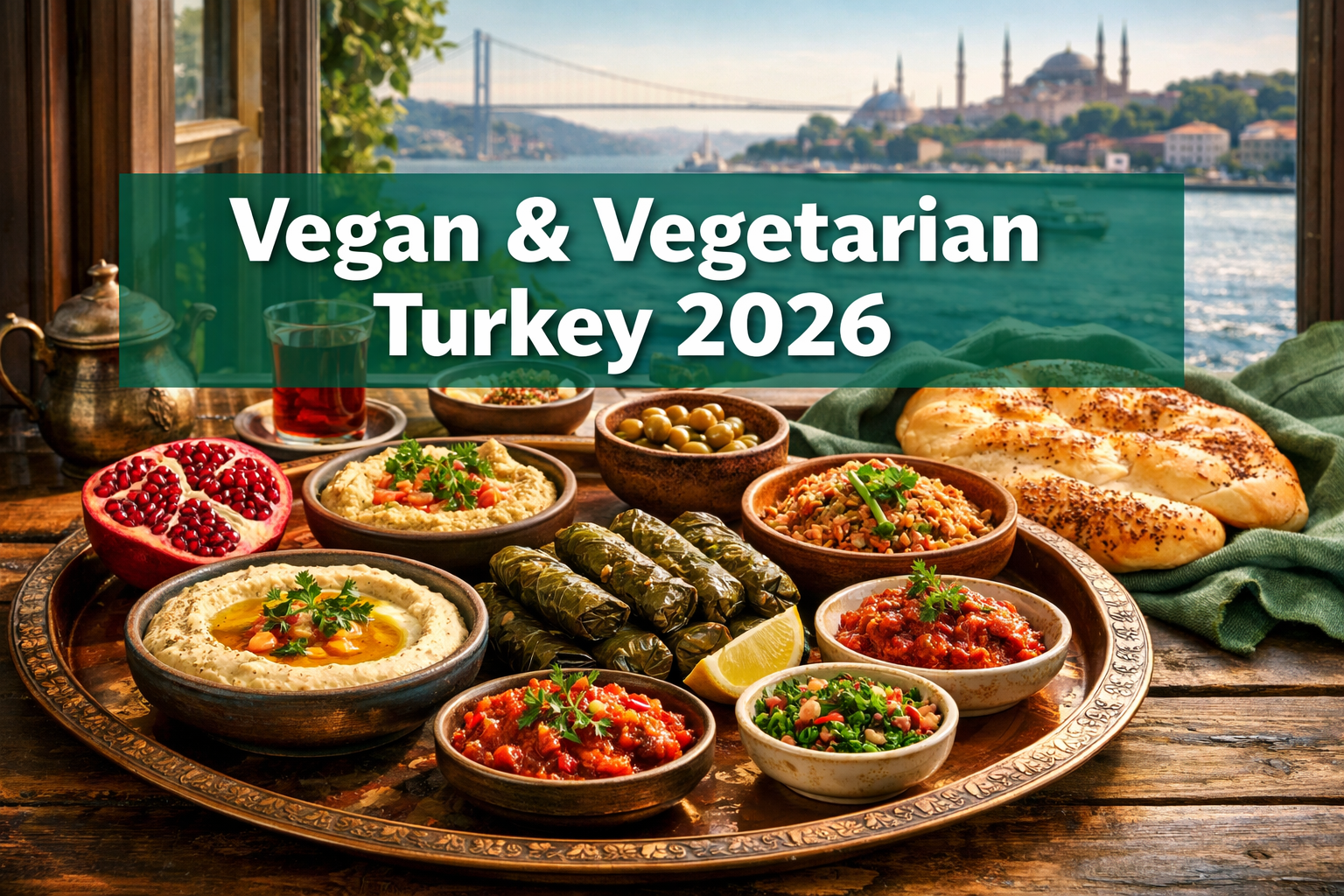

Discovering delicious vegan and vegetarian Turkey options has never been easier, with plant-based cuisine flourishing across the country. Last updated: May 1, 2026
Quick Answer: Turkey is one of the most naturally plant-friendly food destinations in the world, with hundreds of traditional dishes that happen to be vegan or vegetarian without any modification. From olive oil-braised vegetables (zeytinyağlılar) to hearty lentil soups and stuffed grape leaves, you can eat extraordinarily well across every Turkish city without touching meat. This guide to vegan and vegetarian Turkey in 2026 covers what to eat, where to find the best restaurants, and how to navigate each major city with confidence.
Key Takeaways
- Turkish cuisine has an entire category of dishes cooked in olive oil (zeytinyağlılar) that are traditionally vegan
- Istanbul, Izmir, and Antalya have the most dedicated vegan/vegetarian restaurants, but every city offers plant-based options
- Learn the phrase “etsiz” (without meat) and “sütsüz” (without dairy) — these two words are a total game-changer
- Traditional Turkish breakfast (serpme kahvaltı) is roughly 70-80% plant-based by default
- Meze culture means you can build an entire meal from small plant-based plates at almost any restaurant
- Street food like simit, roasted chestnuts, and corn on the cob are naturally vegan
- The Aegean coast is particularly rich in vegetable-forward cooking traditions
- Budget-friendly: plant-based eating in Turkey costs significantly less than meat-based meals
What Traditional Turkish Dishes Are Already Vegan or Vegetarian?
Here’s what nobody tells you about Turkish food: a massive portion of it was plant-based long before “vegan” became a lifestyle label. The Ottoman kitchen developed hundreds of vegetable dishes cooked slowly in olive oil, served at room temperature, and considered their own respected food category.
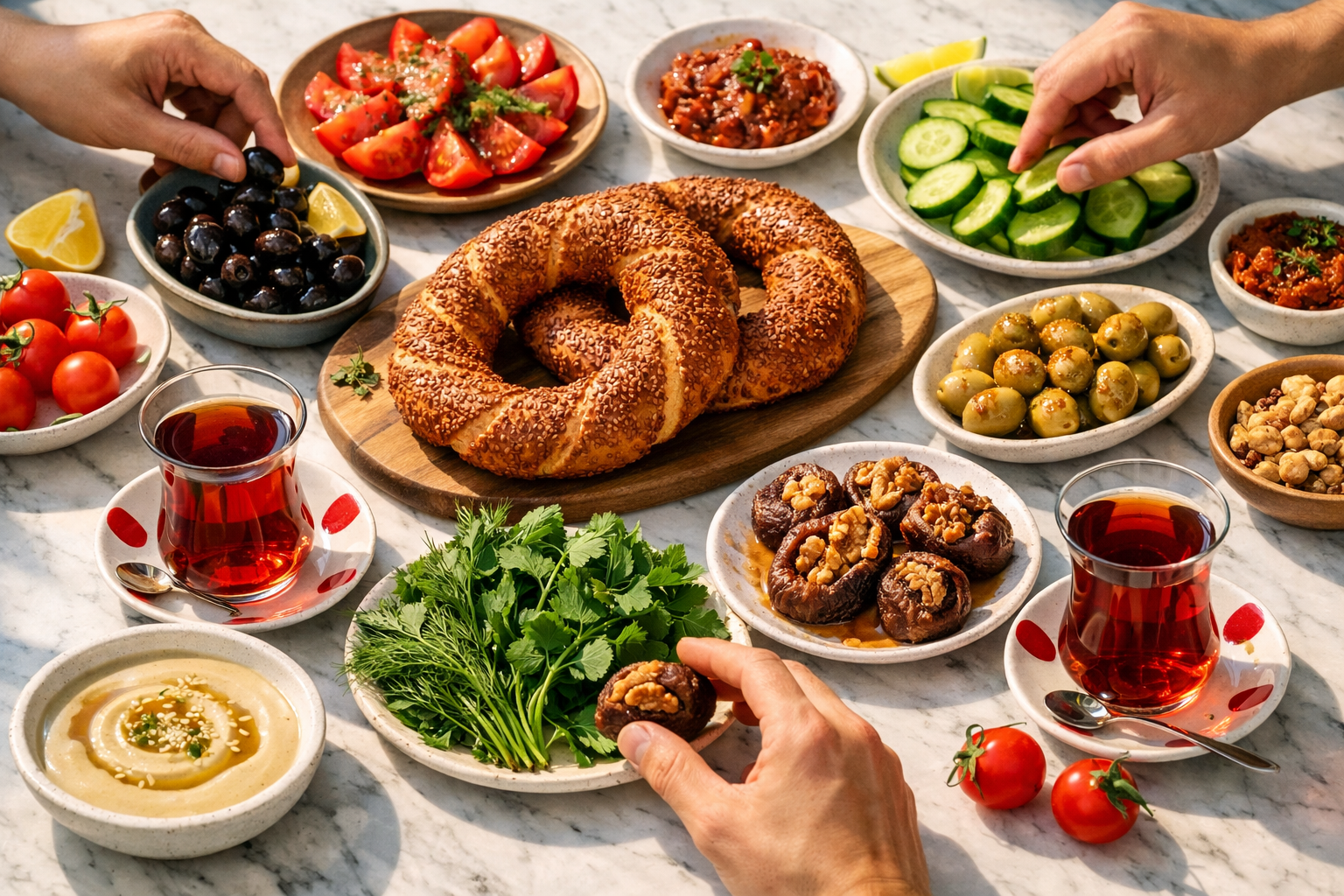
Naturally vegan Turkish dishes to seek out:
- Mercimek çorbası — Red lentil soup, served everywhere, ridiculously good, and almost always vegan (ask about butter)
- İmam bayıldı — Stuffed eggplant braised in olive oil with tomatoes and onions
- Kuru fasulye — White bean stew (the meatless version is common)
- Yaprak sarma — Stuffed grape leaves with rice, pine nuts, and currants
- Kısır — Bulgur salad with pomegranate molasses and fresh herbs
- Piyaz — White bean salad dressed with olive oil and sumac
- Zeytinyağlı fasulye — Green beans slow-cooked in olive oil and tomato
- Çiğ köfte — Spiced bulgur “meatballs” (the street version is always vegan — trust us on this)
Vegetarian (includes dairy/eggs):
- Menemen — Scrambled eggs with tomatoes and peppers
- Gözleme — Stuffed flatbread with cheese, spinach, or potato
- Su böreği — Layered pastry with cheese
- Mücver — Zucchini fritters
Pro move: At any traditional restaurant, ask for the “zeytinyağlılar” section of the menu. This entire category is your plant-based paradise.
For a deeper dive into traditional options, check out our complete vegan and vegetarian eating guide for Turkey.
Which Cities Are Best for Vegan & Vegetarian Dining in Turkey in 2026?
Istanbul leads the pack with the most dedicated plant-based restaurants, but Izmir and the Aegean coast offer the richest traditional vegetable cuisine. Here’s your city-by-city breakdown.
Istanbul
The secret sauce of Istanbul’s vegan scene is its sheer variety. You’ll find everything from raw food cafés in Kadıköy to traditional lokanta restaurants in Fatih where the daily specials include five or six plant-based options without even trying.
Top neighborhoods for plant-based eating:
- Kadıköy (Asian side) — The highest concentration of dedicated vegan spots
- Beyoğlu/Cihangir — Trendy cafés with vegan menus
- Moda — Health-conscious brunch culture
- Beşiktaş — Mix of traditional and modern options
Bookmark this: The Tuesday market in Kadıköy is where you’ll find seasonal produce that explains why Turkish vegetable dishes taste so alive. Pair your market visit with a stop at one of the neighborhood’s vegan cafés for lunch.
Izmir and the Aegean Coast
Seriously underrated for plant-based travelers. The Aegean region’s cuisine is built on wild herbs (ot yemekleri), olive oil, and seasonal vegetables. Villages here serve dishes made from foraged greens that you won’t find anywhere else in the country. Our culinary journey through Turkey’s Aegean region covers this in beautiful detail.
Antalya
A surprise gem for vegans. The city’s tourism infrastructure means restaurants are accustomed to dietary requests, and the local cuisine features outstanding citrus-dressed salads and vegetable casseroles.
Cappadocia
Fewer dedicated restaurants, but the pottery kebab tradition includes vegetable-only versions, and most cave hotels serve elaborate breakfasts that are largely plant-based.
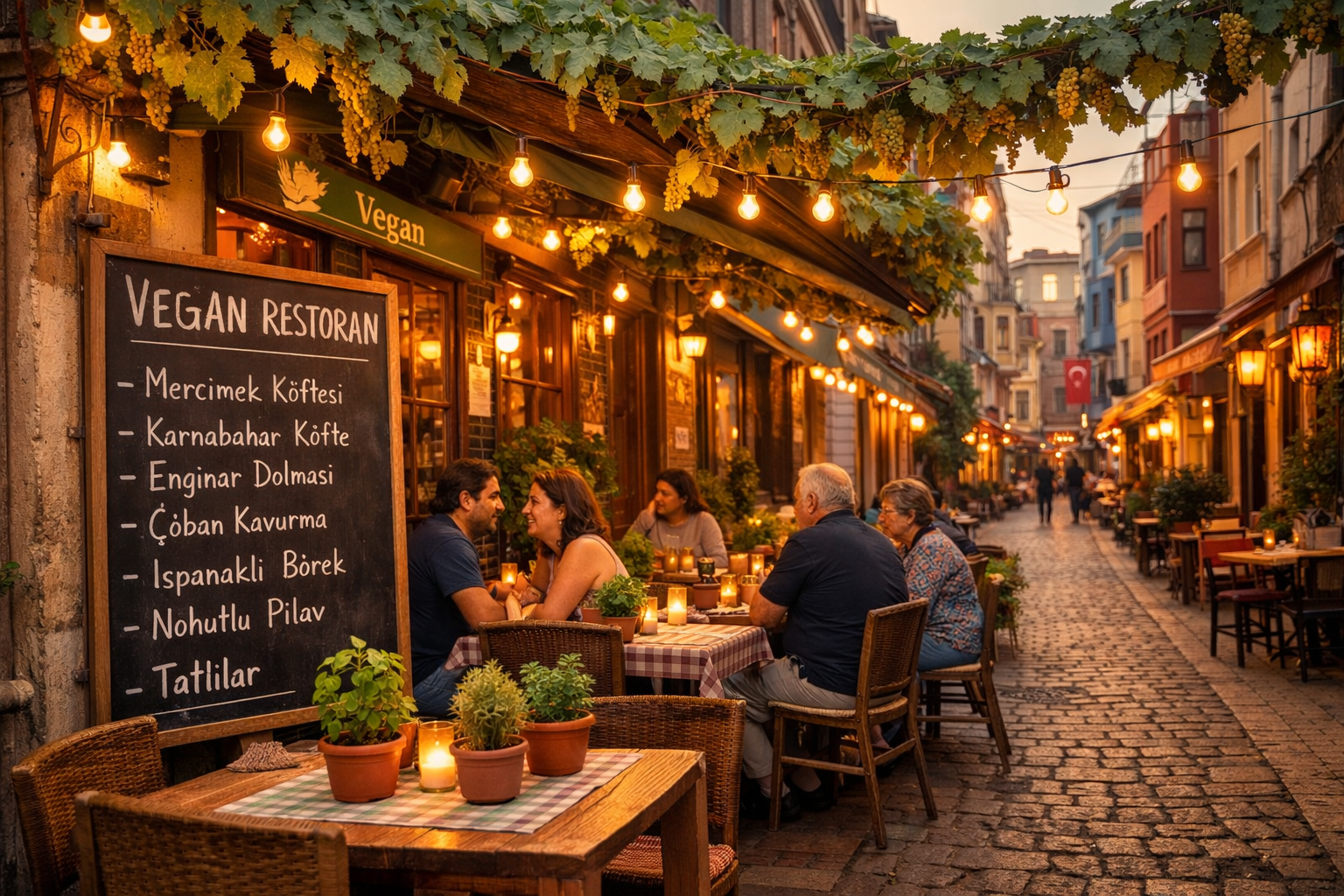
What Are the Best Vegan & Vegetarian Restaurants in Turkey for 2026?
Turkey’s dedicated plant-based restaurant scene has grown significantly. Here are standout spots across the country:
| City | Restaurant | Style | Price Range |
|---|---|---|---|
| Istanbul | Vegan Istanbul (Kadıköy) | Fully vegan Turkish & international | $$ |
| Istanbul | Bi Nevi Deli (Cihangir) | Plant-forward café, mostly vegan | $$ |
| Istanbul | Parsifal (Beyoğlu) | Vegetarian, long-established | $$ |
| Izmir | Vegan Dünya | Fully vegan comfort food | $ |
| Antalya | Green House Vegan | Vegan Mediterranean | $$ |
| Bodrum | Satsuma | Plant-based, seasonal menu | $$$ |
| Ankara | Zencefil Café | Vegetarian with vegan options | $$ |
For our full curated list, see the best vegan and vegetarian restaurants in Turkey.
Fair warning: Restaurant scenes change fast. Always check current hours on Google Maps or HappyCow before making a special trip. Many smaller vegan spots close on Mondays.
How Do You Order Vegan or Vegetarian Food in Turkish?
Communication is easier than you’d expect. Turkish hospitality is no joke — most restaurant staff will go out of their way to help once they understand what you need.
Essential phrases:
- “Ben veganım” — I am vegan
- “Et yemiyorum” — I don’t eat meat
- “Etsiz var mı?” — Do you have anything without meat?
- “Süt ve yumurta yemiyorum” — I don’t eat dairy or eggs
- “Tereyağı var mı?” — Does it contain butter? (crucial — many dishes get a butter finish)
- “Tavuk suyu var mı?” — Does it contain chicken broth? (the hidden ingredient in many soups)
Common mistake: Assuming “vegetarian” means the same thing everywhere. In Turkey, some people consider chicken or fish stock as vegetarian. Always specify if you want no animal products at all.
Steal this tip: Screenshot your dietary needs in Turkish on your phone. Show it to the waiter. Works every single time.
What Street Food Can Vegans Eat in Turkey?
Turkish street food offers more vegan options than most travelers realize. Here’s your safe list:
- Simit — Sesame-crusted bread rings (vegan, ubiquitous, costs about 10-15 TL)
- Çiğ köfte dürüm — Spiced bulgur wrap with lettuce, pomegranate syrup, and lemon (chef’s kiss)
- Kumpir — Baked potato loaded with toppings (choose corn, olives, pickles, mushrooms — skip the butter and cheese)
- Roasted chestnuts (kestane) — Seasonal, found on every corner in autumn/winter
- Mısır — Grilled corn on the cob
- Kokoreç-free lahmacun alternative: Look for “fındık lahmacun” made with walnut filling at some progressive spots
Wander through Turkey’s vibrant street markets for fresh fruit, nuts, and dried goods that make perfect plant-based snacking. And while you’re exploring food markets, the spice bazaars are absolutely worth a visit for sumac, pul biber, and other flavor essentials.
Is Turkish Breakfast Vegan-Friendly?
Prepare to be obsessed. The traditional Turkish breakfast spread (serpme kahvaltı) is one of the most generous meals you’ll encounter anywhere, and the majority of it is plant-based.
Typically vegan items on a Turkish breakfast table:
- Fresh tomatoes, cucumbers, and peppers
- Olives (multiple varieties)
- Tahini and pekmez (grape molasses)
- Honey (vegetarian, not vegan — but easily skipped)
- Jams and preserves
- Simit or fresh bread
- Walnuts and dried fruits
- Fresh herbs
What to watch for: Butter is standard. Ask for extra olive oil instead. Kaymak (clotted cream) and various cheeses will be present but are easy to skip when the rest of the spread is so generous.
How Does Eco-Conscious Travel Connect with Plant-Based Eating in Turkey?
Choosing plant-based meals while traveling in Turkey aligns naturally with the country’s growing eco-tourism movement. Many organic farms and sustainable accommodations now offer plant-forward menus sourced from their own gardens. If this resonates with you, explore our guide to eco-tourism best practices in Turkey and discover sustainable eating at organic farms.
FAQ
Q: Is Turkey difficult for vegans?
A: No. Traditional Turkish cuisine includes hundreds of plant-based dishes. The main challenge is hidden butter or yogurt, not a lack of options.
Q: Can I find vegan food outside major cities?
A: Yes. Small-town lokantas (casual restaurants) always have lentil soup, rice, bread, and olive oil vegetable dishes. You won’t go hungry.
Q: Is Turkish bread vegan?
A: Almost always. Standard ekmek (bread) and simit are made without dairy or eggs. Pastries (börek, poğaça) typically contain butter or cheese.
Q: Do Turkish restaurants understand “vegan”?
A: In tourist areas and big cities, yes. In rural areas, explaining “no meat, no dairy, no eggs” in Turkish works better than using the word “vegan.”
Q: What about Turkish delight — is it vegan?
A: Traditional lokum (Turkish delight) made with starch and sugar is vegan. Some varieties contain gelatin or dairy — ask before buying.
Q: Are there vegan Turkish cooking classes?
A: Yes, particularly in Istanbul and Cappadocia. Several operators now offer plant-based Turkish cooking workshops. Check out cooking classes for foodies in Turkey for options.
Q: What’s the cheapest vegan meal in Turkey?
A: Mercimek çorbası (lentil soup) with bread — available everywhere for 40-80 TL (roughly $1-2 USD in 2026).
Q: Is Turkish coffee vegan?
A: Yes. Traditional Turkish coffee is just finely ground coffee and water. No milk unless you specifically request it.
Conclusion
Turkey in 2026 is one of the most rewarding destinations for plant-based travelers — not despite its food culture, but because of it. The country’s culinary traditions were built on vegetables, grains, legumes, and olive oil centuries before the modern vegan movement existed. Your job isn’t to find food; it’s to choose among an embarrassment of delicious riches.
Your action plan:
- Learn five key Turkish phrases for dietary needs (screenshot them on your phone)
- Seek out zeytinyağlılar on every menu
- Build meals from meze plates when dedicated vegan restaurants aren’t available
- Download HappyCow before your trip for real-time restaurant finding
- Embrace the Turkish breakfast spread — future you will thank us
Consider this your sign to book that trip. The lentil soup is waiting.