

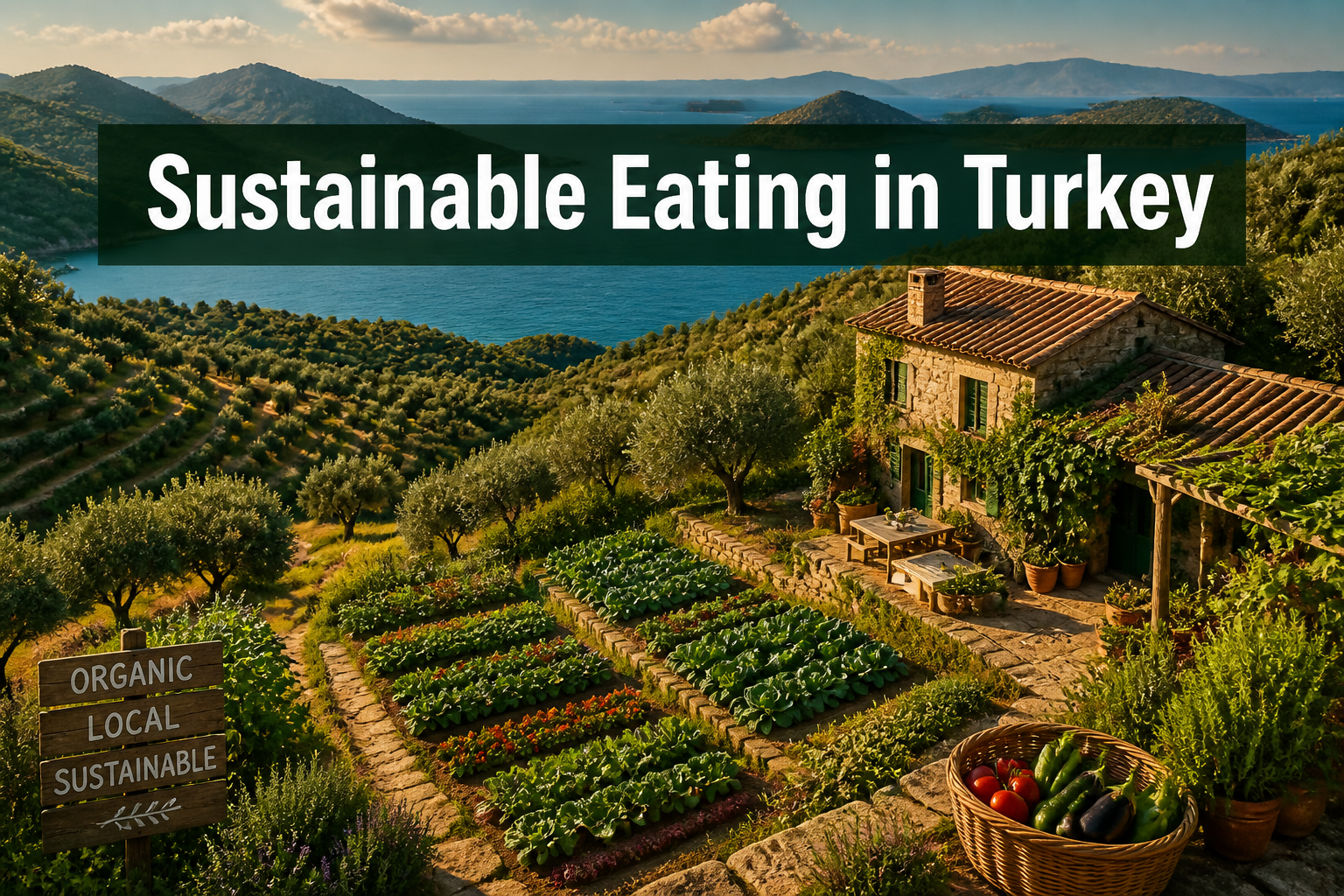

Discovering sustainable eating in Turkey reveals a thriving movement of organic farms and eco-conscious restaurants reshaping the country’s culinary landscape. Last updated: May 3, 2026
Quick Answer: Turkey’s food scene has quietly become one of the most exciting places in the world for sustainable eating. From certified organic markets backed by the Turkish government to WWF-certified eco restaurants and immersive farm-stay programs, Sustainable Eating in Turkey: Organic Farms, Eco Restaurants & Food Trails covers a growing ecosystem that’s genuinely worth exploring — whether you’re a traveler, a food lover, or someone rethinking how they eat.
Key Takeaways
- Turkey’s 100% Ecological Markets are the country’s only formally certified organic produce markets, operating with direct support from municipalities and the Ministry of Agriculture [1]
- The Green Generation Restaurants project, led by WWF Turkey in partnership with Boğaziçi University and others, certifies restaurants across six sustainability categories [4]
- Turkey’s restaurant industry wastes an estimated 325,000 tons of food annually across roughly 77,000 establishments — making the push for eco dining more urgent than ever [4]
- The TaTuTa farm-stay program (Turkey’s WWOOF branch) lets you volunteer on organic farms for around €30 per year in membership fees [2]
- Destinations like Narköy combine eco-hotels, organic farms, and nature education in one place [2]
- Slow Food’s Food Trails project connects local food producers with tourism routes across European and neighboring regions, with Turkey-adjacent initiatives gaining traction [5]
- Sustainable dining in Turkey is no longer niche — chefs like Makşut Askar (Neolokal) are publicly championing the Food Made Good Standard for Turkish hospitality [9]
- Eco-tourism in Turkey is growing fast, with regions like the Aegean, Cappadocia, and the Black Sea coast leading in farm-to-table experiences [6]
What Does Sustainable Eating in Turkey Actually Look Like?
Sustainable eating in Turkey means sourcing food locally, reducing waste, supporting small farmers, and choosing restaurants that operate with environmental accountability. It’s not just a trend here — it’s increasingly a structured movement with certifications, government partnerships, and international NGO backing.
Turkey sits at a unique crossroads. The country has one of the most biodiverse agricultural landscapes in the world, with fertile river valleys, Aegean olive groves, Black Sea tea gardens, and Anatolian grain plains all within its borders. That natural richness gives sustainable food efforts a strong foundation to build on.
For travelers and locals alike, this translates into:
- Organic farmers markets in major cities like Istanbul, Ankara, and Izmir
- Certified eco restaurants that track water use, waste, and sourcing
- Farm-stay programs where you can work and eat directly on organic land
- Food trails that route you through villages, vineyards, and artisan producers
How Do Turkey’s Organic Markets Work?
Turkey’s 100% Ecological Markets are the most structured entry point into sustainable eating in the country. These markets are the only formally certified organic produce markets in Turkey, and they operate through direct cooperation with local municipalities and the Ministry of Agriculture [1].
What sets them apart from a typical weekend market:
- Producers must hold official organic certification
- Municipalities verify vendor compliance regularly
- The Ministry of Agriculture oversees standards nationally
- Products range from heirloom vegetables and cold-pressed oils to artisan cheeses and heritage grains
🛒 Practical tip: Istanbul has several 100% Ecological Market locations. If you’re visiting, check the schedule in advance — most run on specific days of the week and sell out early.
These markets also serve a social function. They connect urban consumers directly with rural producers, cutting out middlemen and keeping more money with the farmers. That’s a big deal in a country where small-scale agriculture still employs a significant share of the rural population [1].

Which Eco Restaurants in Turkey Are Worth Knowing About?
The Green Generation Restaurants program is the most credible framework for identifying genuinely sustainable restaurants in Turkey. Launched by WWF Turkey in partnership with Boğaziçi University, the Turkish Restaurant Association, Beşiktaş Municipality, and Unilever Food Solutions, it certifies restaurants across six categories [4]:
| Certification Category | What It Covers |
|---|---|
| Water Efficiency | Reducing water use in kitchens and dining |
| Waste Reduction & Recycling | Food waste systems, composting, recycling |
| Sustainable Food Sourcing | Local, seasonal, and certified organic ingredients |
| Energy Use | Energy-efficient equipment and practices |
| Disposables Management | Reducing single-use plastics and packaging |
| Chemical & Pollution Reduction | Cleaning products, kitchen emissions |
The scale of the problem these restaurants are trying to solve is real. Turkey’s restaurant industry generates an estimated 325,000 tons of food waste per year across around 77,000 establishments [4]. That’s a massive environmental footprint, and the Green Generation program is one of the few structured efforts to address it.
Beyond certification programs, individual chefs are driving change. Makşut Askar of Neolokal in Istanbul has been vocal about adopting the Food Made Good Standard, a global framework for responsible hospitality [9]. Emre Şen of Casa Lavanda and Melda Tuna from BTA Food & Services have also been part of public conversations about what sustainable dining means for Turkish operators [9].
Choose a Green Generation certified restaurant if you want confidence that a restaurant’s sustainability claims are verified rather than just marketing language.
What Is the TaTuTa Farm-Stay Program and Is It Worth It?
TaTuTa is Turkey’s branch of WWOOF (World Wide Opportunities on Organic Farms), and it’s one of the most accessible ways to experience sustainable agriculture firsthand. For an annual membership of around €30, you get access to a network of organic farms across Turkey that welcome volunteers in exchange for food and accommodation [2].
Here’s how it typically works:
- Join TaTuTa and pay the annual membership fee
- Browse the farm listings — farms vary by region, size, and type of work
- Contact a host farm and agree on dates and expectations
- Arrive and contribute — tasks range from harvesting and planting to cooking and animal care
- Eat what the farm produces — this is where the sustainable eating experience becomes very real
Narköy is one of the standout destinations in this space. It operates as an integrated eco-tourism destination combining an eco-hotel, a nature education center, and a working organic farm [2]. It’s a good option if you want the farm experience without the full volunteer commitment.
Common mistake: People assume TaTuTa farms are like hotels. They’re not. You’re expected to work a few hours each day. If you want a passive experience, an eco-hotel like Narköy is a better fit.
What Are Food Trails and Do Any Run Through Turkey?
Food trails are curated tourism routes that connect travelers with local food producers, traditional recipes, and regional ingredients. Slow Food’s Food Trails project has been building this model across Europe and neighboring regions, linking farms, restaurants, markets, and artisan producers into navigable itineraries [5].
Turkey itself has rich regional food identities that lend themselves naturally to this format:
- Aegean coast: Olive oil, wild herbs, fresh seafood, and Aegean wine
- Cappadocia: Underground cellars, local wines, and pottery-cooked lamb dishes
- Black Sea region: Tea, hazelnuts, anchovies, and corn-based breads
- Southeast Anatolia: Pistachios, pomegranates, kebab culture, and baklava heritage
Several eco-tourism operators now offer structured food-focused itineraries through these regions [6][8]. These aren’t just restaurant tours — they include farm visits, cooking with local families, and market walks with producers.
🌿 Why this matters for sustainable eating: Food trails keep tourist spending inside local communities and create economic incentives for farmers to maintain traditional, lower-impact growing methods.
How Is Sustainable Eating in Turkey Evolving in 2026?
Sustainable Eating in Turkey: Organic Farms, Eco Restaurants & Food Trails is no longer a fringe conversation. In 2026, it’s becoming part of how Turkey positions itself as a travel and food destination.
A few trends worth watching:
- International standards adoption: More Turkish restaurants are exploring frameworks like the Food Made Good Standard, which provides a globally recognized benchmark [9]
- Urban organic retail growth: The 100% Ecological Markets model is expanding, with more municipalities seeking to replicate the certified market format [1]
- Farm-to-table tourism packages: Eco-tourism operators are bundling farm visits, sustainable restaurant meals, and food trail experiences into single itineraries [6][8]
- Chef-led advocacy: High-profile chefs are using their platforms to push for better sourcing standards across the industry [9]
The challenge is scale. Turkey’s food system is large and complex, and certification programs like Green Generation Restaurants are still reaching a relatively small share of the country’s 77,000 restaurants [4]. But the infrastructure is being built, and the momentum is real.

Where Should You Start If You Want to Eat Sustainably in Turkey?
Start with what’s most accessible based on how you’re engaging with Turkey — as a visitor, a resident, or someone planning a trip.
If you’re visiting Turkey:
- Book a meal at a Green Generation certified restaurant in Istanbul or Izmir
- Visit a 100% Ecological Market on a weekend morning
- Add one food trail day to your itinerary, especially in the Aegean or Cappadocia
If you’re living in Turkey:
- Join TaTuTa for €30 and spend a weekend on an organic farm
- Shop at certified ecological markets instead of supermarkets when possible
- Follow chefs like Makşut Askar who are publicly advocating for sustainable sourcing
If you’re planning a longer trip:
- Consider a multi-day eco-tourism package that combines farm stays, food trails, and eco-hotel accommodation [6][8]
- Look for operators that work with Slow Food Turkey or have Green Generation partnerships
Edge case: If you have dietary restrictions, confirm with farm-stay hosts in advance. TaTuTa farms serve what they grow, and menus aren’t customizable the way a restaurant’s would be.
Frequently Asked Questions About Sustainable Eating in Turkey
What are 100% Ecological Markets in Turkey?
They’re Turkey’s only formally certified organic produce markets, operating with support from local municipalities and the Ministry of Agriculture. Vendors must hold official organic certification to participate. [1]
How do I find Green Generation certified restaurants in Turkey?
WWF Turkey maintains information on the program. You can also look for the Green Generation certification displayed at restaurant entrances or ask staff directly. [4]
Is the TaTuTa farm-stay program safe for solo travelers?
Generally yes. TaTuTa hosts are vetted through the WWOOF network. Reading reviews from previous volunteers and communicating with hosts before arrival is standard practice. [2]
What does the Food Made Good Standard mean for a restaurant?
It’s a global sustainability framework for hospitality businesses covering sourcing, society, and environment. Turkish restaurants adopting it are benchmarking against international standards, not just local ones. [9]
Are organic products at Turkish eco markets expensive?
They tend to cost more than conventional supermarket produce, but prices are generally lower than organic products in Western European markets. Buying directly from farmers at certified markets also cuts out retail markup.
Which regions of Turkey are best for sustainable food tourism?
The Aegean coast, Cappadocia, and the Black Sea region are the strongest options right now, each with distinct food identities and growing eco-tourism infrastructure. [6][8]
Can I do a food trail in Turkey without a tour operator?
Yes, but a self-guided approach requires more research. Slow Food Turkey and local tourism boards publish some route information. Hiring a local guide adds context and access to producers who don’t advertise in English. [5]
How serious is Turkey’s food waste problem?
Significant. The restaurant sector alone generates an estimated 325,000 tons of food waste annually. The Green Generation Restaurants program is one of the main structured responses to this. [4]
Conclusion: Your Next Steps for Sustainable Eating in Turkey
Turkey has the ingredients for a world-class sustainable food movement — literally. The biodiversity, the culinary heritage, the growing network of certified markets and eco restaurants, and the chefs willing to lead the conversation are all there.
Here’s what to do next:
- Plan one concrete sustainable food experience on your next visit — a certified market, an eco restaurant, or a farm-stay day
- Check the Green Generation Restaurants list before booking dinner in Istanbul or Izmir
- Look into TaTuTa if you want a deeper, more immersive connection to Turkish organic farming
- Follow the Food Trails model when designing your travel route — eat regionally, eat seasonally, and spend money with the producers directly
Sustainable eating in Turkey isn’t about perfection. It’s about making slightly better choices at each meal, supporting the farmers and chefs who are doing the work, and enjoying one of the world’s great food cultures in a way that keeps it alive for the next generation.
References
[1] Organic Growth How Turkeys Eco Markets Took Root – https://tol.org/client/article/organic-growth-how-turkeys-eco-markets-took-root.html
[2] City Field Learning Growing Turkish Organic Farm Tatuta – https://yabangee.com/city-field-learning-growing-turkish-organic-farm-tatuta/
[3] Sustaining And Supporting – https://www.turkishflavours.com/sustaining-and-supporting/
[4] Green Generation Restaurants In Turkey – https://thesolutionsjournal.com/green-generation-restaurants-in-turkey/
[5] The Food Trails Project Is Two Years Old – https://www.slowfood.com/blog-and-news/the-food-trails-project-is-two-years-old/
[6] Sustainable Tourism Turkey – https://ecobnb.com/blog/2023/05/sustainable-tourism-turkey/
[7] The Sheer Luxury Of Eating Green Turkey – https://luxebeatmag.com/the-sheer-luxury-of-eating-green-turkey/
[8] Into The Wild Eco Tourism Adventures In Turkey – https://www.turkeyivisa.org/into-the-wild-eco-tourism-adventures-in-turkey
[9] Watch – https://www.youtube.com/watch?v=X6zHXppU2Ek
Tags: sustainable eating Turkey, organic farms Turkey, eco restaurants Istanbul, Green Generation Restaurants, TaTuTa farm stay, food trails Turkey, Turkish organic markets, eco tourism Turkey, farm to table Turkey, sustainable food travel, Slow Food Turkey, WWF Turkey dining
Related Turkey food and planning guides: For food-focused travel, also see our Turkey budget travel guide, 7-day Turkey itinerary, 10-day Turkey itinerary, and must-do Turkey experiences.