


Last updated: September 5, 2026
Quick Answer
Winter in Turkey runs roughly from December through February and looks wildly different depending on where you land. Istanbul and the Aegean coast see cool, rainy days averaging 8-12°C, while inland Cappadocia and eastern Anatolia get proper snow and freezing nights. This complete travel guide to winter in Turkey covers weather by region, ski resorts, packing lists, costs, crowd levels, and safety so you can pick the right trip for the right season.
Key Takeaways
- Weather varies by region: coastal cities stay mild (8-15°C), while Cappadocia, Anatolia, and mountain resorts drop below freezing.
- Skiing is real here: Uludağ, Palandöken, and Kartalkaya offer legit slopes from December through March.
- Winter is the cheapest season to visit, with flights and hotels dropping noticeably outside Istanbul’s holiday spike.
- Crowds thin out dramatically, especially in Cappadocia and along the Turquoise Coast.
- Swimming isn’t realistic in winter, except maybe a brave dip in a heated pool or thermal spring.
- Istanbul in winter is genuinely lovely for museum-hopping, hammams, and moody Bosphorus views.
- Turkey’s tourism sector hit record numbers in 2024, with over 52 million visitors and $61 billion in revenue, signaling strong infrastructure and services even in shoulder seasons [1][6].
- Pack in layers: a warm coat for Cappadocia mornings, lighter layers for Antalya afternoons.
What’s the Weather Like in Turkey During Winter? (Is It Cold or Mild?)
Turkey’s winter weather depends entirely on geography, and that’s honestly the whole plot twist of this country. The Aegean and Mediterranean coasts stay mild, hovering around 8-15°C, while central and eastern Turkey turn genuinely cold, with Cappadocia and Anatolia regularly dipping below freezing at night.

Here’s the breakdown by region:
| Region | Typical Winter Temps (Dec, Feb) | What to Expect |
|---|---|---|
| Istanbul | 4-10°C | Overcast, rainy, occasional light snow |
| Antalya & Aegean coast | 8-15°C | Mild days, cool nights, some rain |
| Cappadocia | -3 to 8°C | Frosty mornings, occasional snow, clear blue skies |
| Eastern Anatolia (Erzurum, Kars) | -15 to -5°C | Serious snow, deep winter conditions |
| Uludağ / mountain resorts | Below freezing | Reliable snowpack for skiing |
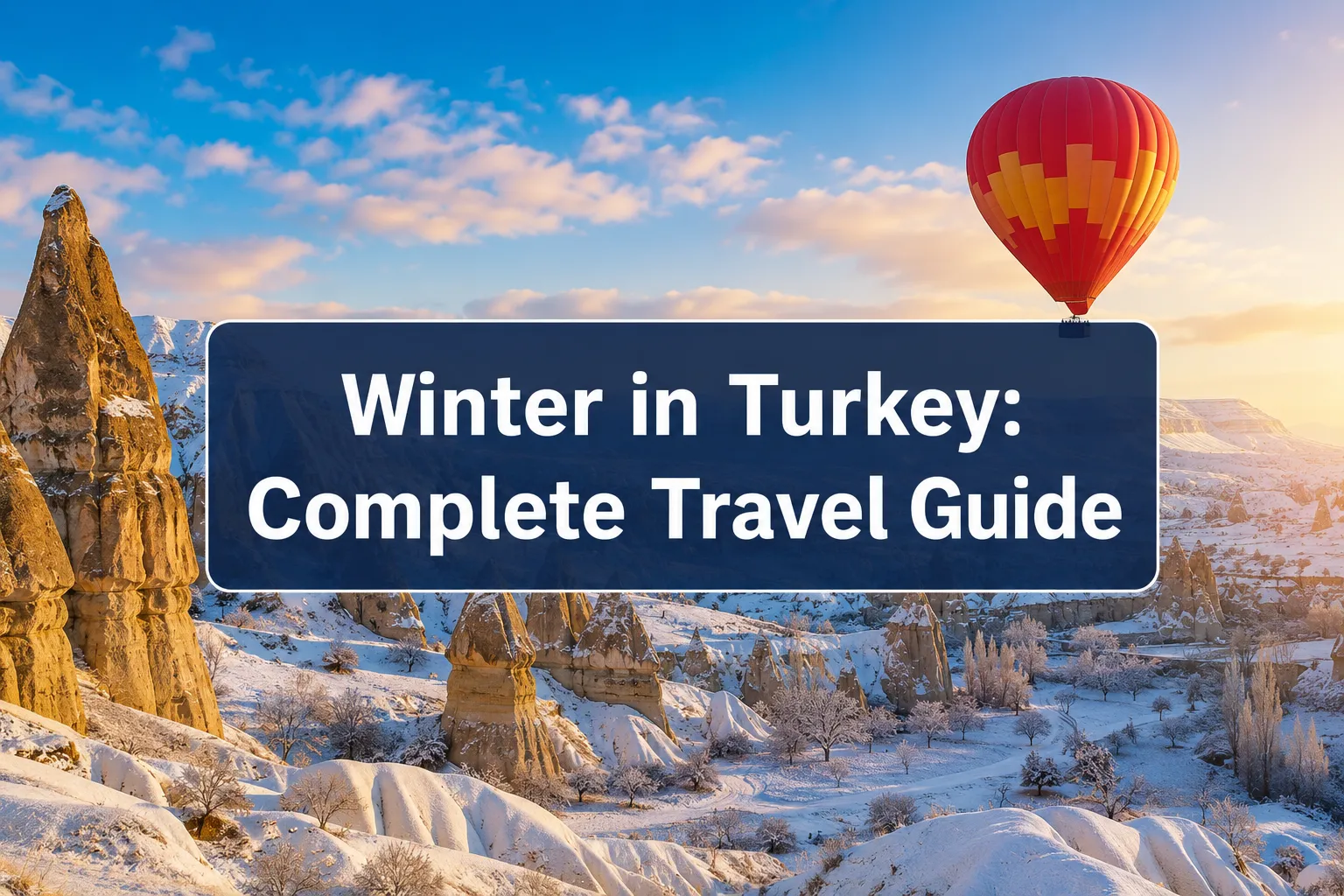
Decision rule: choose the coast if you want mild, walkable weather. Choose Cappadocia or the mountains if you actually want that postcard snow scene (trust us on this, snow-dusted fairy chimneys are a whole different level of gorgeous).
Common mistake: assuming “Turkey” has one climate. Packing shorts for a Cappadocia trip because “it’s the Mediterranean, right?” is a classic rookie error. It’s not. Cappadocia sits at elevation on the Anatolian plateau, and it gets cold.
Best Places to Visit Turkey in Winter
The best winter destinations in Turkey are Istanbul for culture, Cappadocia for snow-dusted scenery, Antalya for mild coastal weather, and Uludağ for skiing. Each offers a completely different winter personality, so the “best” one depends on what kind of trip you’re after.
- Istanbul: Fewer crowds at Topkapi Palace and the Grand Bazaar, moody Bosphorus ferry rides, and steamy hammams that feel extra good when it’s drizzling outside.
- Cappadocia: Snow on the fairy chimneys is a surprise gem most people never picture. Balloon flights still operate on clear mornings (weather-dependent, always check the day before).
- Antalya & the Turquoise Coast: Mild enough for lakeside walks and Roman ruin visits without the summer sweat. Check our guide on scenic drives along Turkey’s coast for a proper coastal winter road trip.
- Uludağ, near Bursa: Turkey’s most accessible ski town, a couple hours from Istanbul.
- Pamukkale: The white travertine terraces look almost lunar dusted with frost, and the crowds vanish. Read more in our piece on what makes Pamukkale a unique destination.
- Underrated cities: If you want to skip the tourist trail entirely, our list of underrated cities in Turkey is basically a cheat sheet for winter exploring.
Can You Ski in Turkey in Winter?
Yes, you can ski in Turkey in winter, and the season generally runs from December to March. Uludağ, Palandöken, and Kartalkaya are the three main resorts, each with lifts, rentals, and lodges built for the job.
- Uludağ (near Bursa): closest to Istanbul, family-friendly, gets busy on weekends.
- Palandöken (Erzurum): seriously underrated for powder quality, favored by intermediate and advanced skiers.
- Kartalkaya (Bolu): good mix of terrain, popular with local skiers.
Pro move: book Uludağ midweek if you want the slopes without the Istanbul-weekend crowd. For a deeper dive into resort specifics and snow-heavy towns, check our dedicated guide to ski resorts and snowy destinations in Turkey, and don’t skip the Uludağ snow festival guide if your dates line up, it’s a genuinely fun bonus.
Edge case: snowfall is variable year to year, so if skiing is the main point of your trip, check resort snow reports about two weeks out rather than booking blind six months ahead.
How Much Does a Winter Trip to Turkey Cost? (Cheapest Time & Deals)
Winter is the cheapest season to visit Turkey, with flights and hotel rates often dropping noticeably compared to summer peak pricing, especially outside the Christmas and New Year window in Istanbul. Turkey’s tourism sector pulled in over $61 billion in 2024 revenue from more than 52 million visitors [2][6], and that scale means genuinely competitive off-season pricing as hotels compete for winter bookings.
- Flights: often 20-40% cheaper than July/August rates (general seasonal pattern, not a fixed guarantee).
- Hotels: boutique Cappadocia cave hotels frequently discount rooms in January and February.
- Food: a solid lokanta meal remains ridiculously good value regardless of season.
- Peak winter exception: Christmas week and New Year’s in Istanbul actually spike in price, so book that specific window early if it’s your trip.
Choose winter if: you’re budget-conscious, don’t mind cooler weather, and want quieter sights. Skip winter if: your whole trip hinges on beach days. For backpacker-specific budget breakdowns, our budget guide to Turkey pairs well with winter planning since off-season rates stretch even further.
What to Pack for Turkey in December, January, February (And What Locals Wear)
Pack in layers for Turkey’s winter: a warm waterproof coat, sweaters, thermal base layers for Cappadocia or the mountains, and lighter layers for the milder coast. Turkish locals dress practically in winter, puffer coats, scarves, and boots in the cities, with wool layers common in rural Anatolia.
Packing checklist:
- Waterproof, insulated coat (non-negotiable for Cappadocia and Istanbul rain)
- Thermal base layers if heading inland or skiing
- Comfortable waterproof boots (cobblestones plus rain equals slip risk)
- A scarf, genuinely useful for warmth and for covering shoulders/hair at mosques
- Layers you can peel off on milder coastal days
- Compact umbrella for Istanbul drizzle
- Swimsuit only if you’re chasing a heated pool or thermal spring (more on that below)
Steal this tip: locals swear by good wool socks and a proper scarf over fashion-forward thin jackets. Turkish hospitality is no joke, and that extends to shopkeepers gently judging (kindly!) underdressed tourists shivering through the Grand Bazaar.
Is It Safe to Travel Turkey in Winter?
Turkey is generally safe to visit in winter, and the country continues welcoming large volumes of international visitors year-round, supported by record tourism growth in recent years [1][4]. Standard travel precautions apply regardless of season, watch for icy pavements in Cappadocia and mountain towns, and always check current government travel advisories before booking.

- UK travelers: check the latest official guidance via gov.uk foreign travel advice for Turkey, updated regularly including as of September 2026 [8].
- US travelers: the State Department periodically updates its advisory levels for Turkey, so review the most current version before finalizing safety-critical winter itineraries.
- Weather-related safety: icy steps in stone-paved old towns (looking at you, Cappadocia’s cave-hotel staircases) are the most common minor hazard.
- Solo travelers: winter’s quieter crowds can actually feel safer in busy tourist zones. Our guides on solo female travel in Turkey and safety tips for solo travelers both apply year-round, with a few winter-specific notes on daylight hours (shorter, so plan sightseeing earlier).
Common mistake: skipping travel insurance because “it’s just a city trip.” Ski areas and rural winter roads carry different risk profiles, insure accordingly.
When Does It Snow in Turkey? (Cappadocia Snow & Winter Travel Guide)
Snow typically falls in Turkey from December through February, with Cappadocia getting light-to-moderate snowfall several times per season and eastern Anatolia and mountain resorts getting heavy, reliable snow. Istanbul sees snow occasionally, sometimes dramatically, but it rarely sticks for long.
This is where the winter travel guide to Turkey gets genuinely magical for photographers: snow settling on Cappadocia’s cave hotels and fairy chimneys creates a scene that looks almost fictional (here’s what nobody tells you, it happens fast and melts fast too, so flexible plans beat rigid ones).
- Cappadocia: sporadic snow events, often just a dusting, occasionally a proper blanket.
- Istanbul: a handful of snow days per winter, more slush than snowman material.
- Eastern Anatolia (Kars, Erzurum): consistent, heavy snow, this is Turkey’s true winter wonderland.
- Bookmark this: if snow photography is the goal, build 2-3 flexible days into your Cappadocia itinerary rather than one fixed date.
Is Turkey Crowded in Winter or Quiet?
Turkey is significantly quieter in winter compared to the summer rush, with major sights like the Hagia Sophia, Cappadocia balloon launch points, and coastal ruins seeing a fraction of peak-season foot traffic. Domestic tourism in Turkey has also grown substantially, keeping cities lively without the overwhelming international crowds of July and August [5][7].
- Quietest: Cappadocia valleys, Pamukkale terraces, Aegean ruin sites.
- Still busy: Istanbul over Christmas/New Year, and any weekend near Uludağ during ski season.
- Chef’s kiss moment: having the Ihlara Valley basically to yourself in January. Absolutely worth it if solitude is your travel love language.
Turkey Winter vs Summer: Which Is Better?
Neither season is objectively “better”, winter suits culture, budget, and snow-seekers, while summer suits beach lovers and swimmers. The right choice depends entirely on what you want out of the trip.
Quick comparison- Winter: Lower prices, thinner crowds, snow scenery, indoor culture (museums, hammams, bazaars), cooler-to-cold temps
- Summer: Beach days, swimming, longer daylight, higher prices, packed tourist sites, heat that can hit 35°C+ in some regions
Choose winter if you want value, culture, and quiet. Choose summer if beaches and nightlife are the priority, our guide to Turkey’s best beaches is a good summer companion piece.
Can You Swim in Turkey in Winter?
Open-sea swimming in Turkey during winter isn’t realistic for most travelers, since coastal water temperatures drop into the mid-teens Celsius and air temps rarely invite a dip. That said, heated hotel pools and Turkey’s famous thermal springs keep the swimming dream alive year-round.
- Thermal springs: Pamukkale and other geothermal spots stay warm regardless of season, see our roundup of top thermal springs for wellness travel.
- Heated resort pools: many Antalya-area resorts keep pools warm through winter.
- Fair warning: a “polar bear plunge” in the Aegean in January is possible, but it’s a five-second bragging-rights move, not a lounging activity.
Is Winter a Good Time to Visit Istanbul, Turkey?
Yes, winter is a genuinely good time to visit Istanbul, since major sites are far less crowded, hotel rates often drop, and the city’s indoor culture, hammams, museums, covered bazaars, really shines when it’s cold outside. Istanbul in December through February averages 4-10°C with regular rain, so it’s cool-jacket weather rather than snowsuit weather.
- Do this: warm up in a hammam after a chilly day of sightseeing. It’s basically the city’s built-in reset button.
- Do this too: take an early ferry across the Bosphorus, even in winter, that specific golden-hour light on the water is a total game-changer for photos. Our ferry travel guide covers routes and timing.
- Skip: rooftop bar hopping unless the venue is heated, check first.
Istanbul also anchors a lot of winter cultural calendar events; if your dates land right, the Istanbul fireworks festival guide is worth a look for New Year timing.
FAQ
Is Turkey warm in December?
No, Turkey isn’t warm in December in most regions. Coastal cities like Antalya stay mild (10-15°C), but Istanbul and inland areas are cool to cold, often 4-10°C with rain.
What’s the coldest month in Turkey?
January is typically the coldest month across most of Turkey, with eastern Anatolia and mountain regions seeing the harshest, most consistent cold.
Do I need a visa for winter travel to Turkey?
Visa requirements depend on your nationality and can change, so check current rules before booking; our note on Turkey’s visa-free travel updates is a useful starting point, alongside official government sources.
Is Cappadocia worth visiting in winter?
Yes, Cappadocia is absolutely worth visiting in winter for snow-dusted valleys, fewer crowds, and lower hotel rates, though balloon flights depend on daily weather conditions.
Are Turkish ski resorts good for beginners?
Yes, Uludağ in particular is considered beginner-friendly, with gentler slopes and easy access from Istanbul and Bursa.
Can I still get a hot air balloon ride in Cappadocia in winter?
Yes, balloon operators fly in winter on clear, calm mornings, but cancellations happen more often than in summer due to weather, so build in a spare day if possible.
Is it rainy in Istanbul in winter?
Yes, Istanbul sees regular rain from December through February, so pack a waterproof coat and compact umbrella.
Is winter a good time for a Turkey budget trip?
Yes, winter typically offers the lowest flight and accommodation prices of the year outside the Christmas, New Year window in Istanbul.
Conclusion
Winter in Turkey isn’t a lesser version of summer, it’s a genuinely different trip, and honestly, one of the most underrated ways to experience the country. You get snow-dusted Cappadocia scenery, quiet Istanbul museums, real ski slopes, and noticeably better prices, all while Turkey’s tourism sector keeps setting records and reinvesting in infrastructure and service quality [1][4][6]. Consider this your sign to stop waiting for “peak season” and book the trip that actually fits your travel style.
Next steps: pick your region first (coast for mild days, Cappadocia or Anatolia for snow), check resort or city-specific weather about two weeks out, pack real layers, and confirm current safety guidance through official sources before you fly. Future you, thawing out in a hammam or grinning at a snowy fairy chimney, will absolutely thank you for it.
References
[1] Turkiye Sees Record Tourism Growth In 2024 Attracting 52 6m Tourists – https://www.turkiyetoday.com/business/turkiye-sees-record-tourism-growth-in-2024-attracting-52-6m-tourists-113488/
[2] Turkiye Caps 2024 With Record 526m Tourists Gains Of Over 61b – https://www.dailysabah.com/business/tourism/turkiye-caps-2024-with-record-526m-tourists-gains-of-over-61b
[4] Turkiye S Tourism Sector Soars Setting New Records And Eyeing Further Growth – https://live.worldtourismforum.net/news/turkiye-s-tourism-sector-soars-setting-new-records-and-eyeing-further-growth
[5] Tourism – https://www.invest.gov.tr/en/sectors/pages/tourism.aspx
[6] Turkeys Tourism Revenue Hit All Time High In 2024 Exceeding 61 Billion – https://www.turkishminute.com/2025/01/31/turkeys-tourism-revenue-hit-all-time-high-in-2024-exceeding-61-billion-1/
[7] english.news.cn – https://english.news.cn/20241114/b735e8049b554ac09458fa31d8533605/c.html
[8] Turkey – https://www.gov.uk/foreign-travel-advice/turkey