

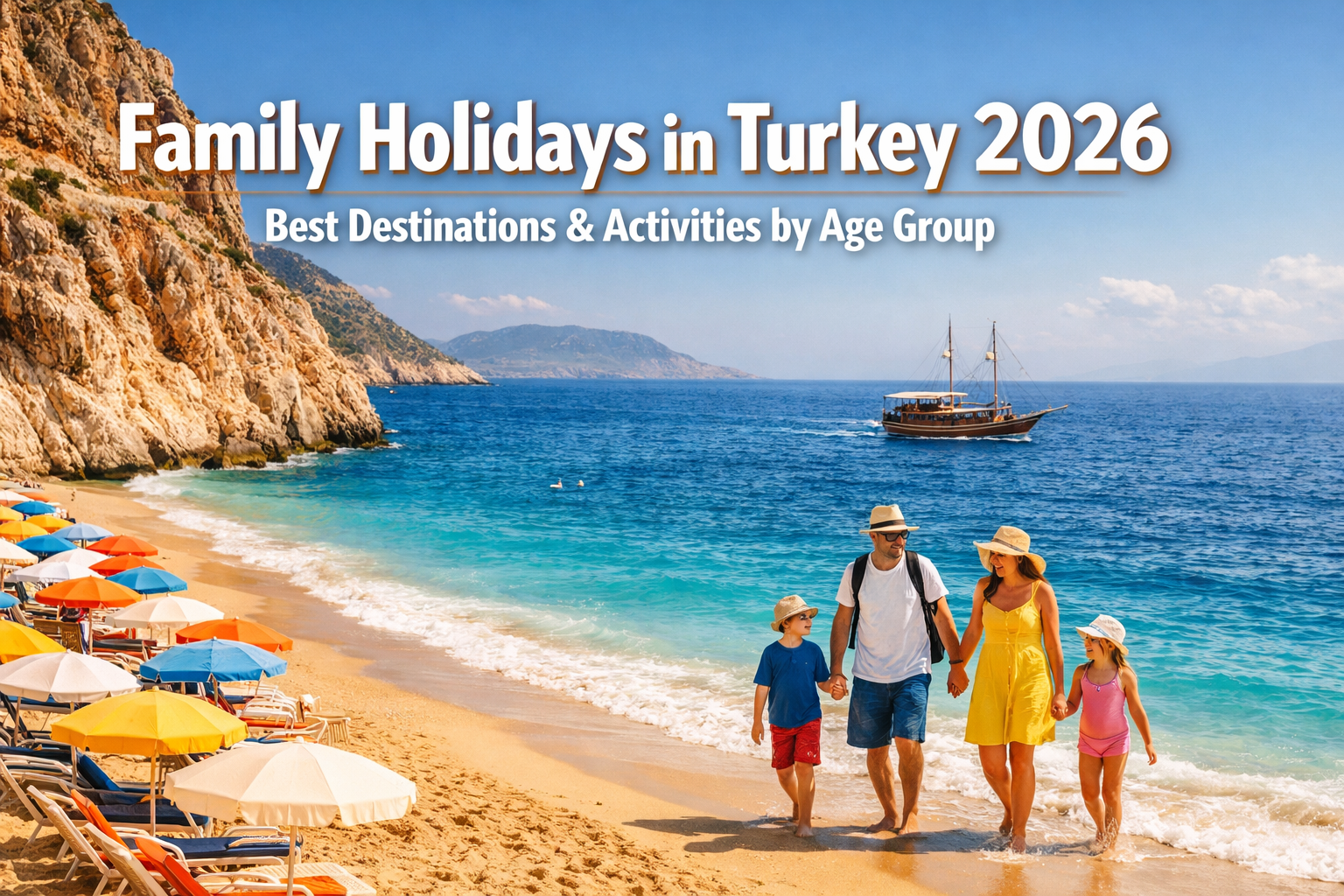

Turkey remains one of Europe’s most versatile family holiday destinations, offering something special for toddlers through to teenagers. Last updated: May 1, 2026
Quick Answer: Turkey is one of the best family holiday destinations in 2026, offering beach resorts, ancient ruins, and adventure activities suited to every age, from toddlers to grandparents. The Antalya coast works best for families with young children, Cappadocia thrills school-age kids and teens, and Istanbul delivers something for literally everyone. Costs remain favorable compared to Western Europe, with family-friendly all-inclusive resorts starting around €80–€120 per night.
Key Takeaways
- Toddlers and under-5s do best on the Antalya and Aegean coasts, where shallow beaches and all-inclusive resorts minimize stress.
- Kids aged 6–12 light up at Cappadocia’s fairy chimneys, Ephesus’s ancient streets, and Antalya’s waterparks.
- Teenagers actually stay engaged with paragliding in Ölüdeniz, surfing the Aegean, and Istanbul’s street food scene.
- Grandparents and multi-generational groups thrive in Bodrum and the Turquoise Coast, where the pace is gentle and the scenery does the heavy lifting.
- June and September are the sweet spot: warm enough for swimming, cool enough for sightseeing, and less crowded than July–August.
- Turkey’s e-Visa system makes entry straightforward for most nationalities (apply online, takes about 3 minutes).
- Turkish hospitality is no joke: expect strangers to help with strollers, offer your kids snacks, and generally make your family feel like honored guests.
Why Is Turkey the Best Choice for Family Holidays in 2026?
Turkey combines affordability, safety, short flight times from Europe, and a staggering range of things to do, which is exactly why it keeps climbing family travel lists. Here’s the magic: you can swim in the Mediterranean on Monday, explore 2,000-year-old Roman ruins on Wednesday, and float over a lunar landscape in a hot air balloon on Friday, all without a single connecting flight.
The Turkish lira’s exchange rate continues to make dining, activities, and accommodation genuinely affordable for families traveling on euros, pounds, or dollars. A full family dinner at a seaside restaurant in Kaş might cost what you’d pay for two coffees in central London. And the food? Even your pickiest eater will find something ridiculously good (fresh bread, grilled chicken, and those little cheese-filled pastries called börek are universal crowd-pleasers).
For a deeper dive into what every tourist should know before visiting Turkey, we’ve got you covered.

What Are the Best Destinations for Families with Toddlers and Under-5s?
The Antalya coast and southern Aegean are your best bets for very young children, thanks to calm, shallow water, purpose-built resorts, and short transfer times from the airport.
Top picks for the littlest travelers:
- Belek (Antalya province): Sandy beaches with a gentle slope into warm water. Most resorts here have kids’ clubs starting at age 2, splash pools, and shaded play areas. The Belek strip is basically engineered for family comfort.
- Side: A small-town feel with a spectacular ancient temple right on the waterfront (toddlers love columns they can run around). The beach is wide and sandy.
- Ölüdeniz lagoon: The famous Blue Lagoon area is almost lake-calm, making it one of the safest natural swimming spots for little ones in all of Turkey.
Pro move: Book accommodation with a kitchenette. Turkish supermarkets (Migros, A101) stock everything from baby food to familiar snack brands, and preparing a quick breakfast saves both money and meltdown time.
Common mistake: Flying into Dalaman airport and booking a hotel 3+ hours away. With a toddler, that transfer will feel eternal. Choose hotels within 60–90 minutes of your arrival airport.
Which Activities Work Best for Kids Aged 6–12?
This is the golden age for Turkey travel. Kids this age have enough stamina for real adventures but still find ancient history genuinely exciting (before the teenage “whatever” phase kicks in).
Activities that consistently win with this age group:
| Activity | Location | Why Kids Love It |
|---|---|---|
| Hot air balloon ride | Cappadocia | Floating over fairy chimneys at sunrise feels like a movie |
| Ephesus ancient city | Selçuk, Izmir | Walking down actual Roman streets, spotting cat colonies in the ruins |
| Waterparks (The Land of Legends) | Antalya | Turkey’s largest theme/waterpark, with roller coasters and a dolphin show |
| Boat trips (gulet cruises) | Fethiye, Kaş | Jumping off the boat into turquoise coves, snorkeling, and lunch on deck |
| Underground cities | Derinkuyu, Cappadocia | Exploring 8 levels of ancient tunnels (basically a real-life video game) |
| Science museums | Istanbul, Ankara | Interactive exhibits that make rainy days a non-issue |
Steal this tip: At Ephesus, arrive when the gates open (8:00 AM in summer). By 10:30, tour buses flood in and the magic dims. Early morning means cooler temperatures, better photos, and space for kids to explore without being herded. Check our guide to ancient ruins worth visiting in Turkey for more detail.
Fair warning: Cappadocia balloon rides typically have a minimum age of 6 and require kids to stand for about an hour. If your child is on the younger side of this range, gauge their patience honestly.
How Do You Keep Teenagers Engaged on a Family Holiday in Turkey?
Give them adrenaline, independence, and food. Turkey delivers all three.
Teenagers are the toughest audience on any family trip, but Turkey has a secret sauce: it offers genuinely cool experiences that don’t feel “parent-approved.” The paragliding in Ölüdeniz tandem flights (minimum age typically 10–12, depending on the operator) are a total game-changer. Your teen launches off Babadağ mountain at 1,960 meters and soars over the Blue Lagoon for 25–40 minutes. They’ll be posting those photos for months.
More teen-approved activities:
- Istanbul street food tours: Balık ekmek (fish sandwiches) by the Galata Bridge, fresh-squeezed pomegranate juice, and hunting down the best künefe in Kadıköy. For the full culinary experience, explore the best Turkish delicacies and where to find them.
- Surfing on the Aegean coast: Alaçatı near Çeşme has consistent wind and surf schools with English-speaking instructors.
- Paddleboarding and kayaking in Kaş: Including kayaking over the sunken city of Kekova, which is seriously underrated as a family activity.
- Bazaar shopping in Istanbul: The Grand Bazaar’s 4,000+ shops give teens the chance to practice haggling (a life skill, honestly).
Edge case: If your teenager is a reluctant traveler, consider this your sign to let them plan one full day of the itinerary. Ownership changes everything.

What About Multi-Generational Family Holidays in Turkey in 2026?
Bodrum, the Turquoise Coast, and Istanbul are the best bases when you’re traveling with grandparents alongside kids, because they offer gentle pacing with enough variety to prevent anyone from getting bored.
Why these work for mixed ages:
- Bodrum: Upscale but relaxed. Grandparents can sip Turkish coffee at a harbor café while kids swim at nearby Bitez Beach (shallow, pebbly, calm). The Bodrum Castle museum keeps history buffs happy. The town is walkable and flat near the waterfront.
- Gulet cruises (Fethiye to Olympos): Everyone gets what they need: swimming stops for the energetic, on-deck lounging for those who prefer it, and meals served family-style. Cruises range from budget to luxury.
- Istanbul (Sultanahmet + Kadıköy): The Hagia Sophia, Blue Mosque, and Topkapı Palace are manageable for older visitors, and the ferry across the Bosphorus is a highlight for every generation.
Decision rule: Choose Bodrum if your group prioritizes beach relaxation with culture on the side. Choose Istanbul if everyone agrees that history, food, and city energy matter more than sand.
For quieter alternatives, browse our picks for the best small towns for a quiet getaway in Turkey.
When Is the Best Time to Visit Turkey with Kids?
June and September are the sweet spot for families. Here’s what nobody tells you: July and August are peak season with peak prices, peak crowds, and peak heat (regularly 38°C+ on the southern coast). Early June and mid-to-late September give you swimming-friendly water temperatures (24–27°C), manageable air temperatures, and noticeably fewer tourists at major sites.
Quick seasonal breakdown:
- April–May: Great for Istanbul and Cappadocia. Beach resorts are just opening; water may be too cool for little kids.
- June: Prepare to be obsessed with this month. Warm, long days, everything’s open, and you’ll beat the July rush.
- July–August: Hot. Crowded. But all-inclusive resorts are fully staffed with kids’ programs.
- September: Our favorite. Water is warmest, crowds thin, and prices drop. Chef’s kiss.
- October: Still pleasant on the coast. Cappadocia starts getting crisp mornings (bring layers for balloon rides).
For more timing advice, check the best time of year to visit Turkey.
How Much Does a Family Holiday in Turkey Cost in 2026?
A week-long family holiday in Turkey in 2026 can range from roughly €1,200 to €4,500+ depending on your style, but even mid-range budgets stretch further here than almost anywhere else in the Mediterranean.
Rough cost estimates for a family of four (2 adults, 2 children):
| Category | Budget | Mid-Range | Luxury |
|---|---|---|---|
| Accommodation (7 nights) | €560–€840 | €1,050–€1,750 | €2,500+ |
| Meals (per day) | €30–€50 | €60–€100 | €150+ |
| Activities (total) | €100–€200 | €300–€600 | €800+ |
| Internal transport | €50–€100 | €150–€300 | €400+ |
Budget tip: All-inclusive resorts in Antalya province often represent the best value for families with young kids. You trade culinary adventure for predictability, and with toddlers, that trade-off is absolutely worth it.
FAQ
Is Turkey safe for families in 2026?
Yes. Major tourist areas like Antalya, Cappadocia, Istanbul, and the Aegean coast have well-developed tourism infrastructure and low crime rates affecting visitors. Standard travel precautions apply, same as anywhere in Southern Europe.
Do I need a visa for Turkey?
Most EU, US, UK, and Canadian citizens need an e-Visa, which costs approximately $50 USD and takes minutes to obtain online at evisa.gov.tr. Check your specific nationality before booking.
Can I rent a car with kids in Turkey?
Yes, and it’s a great way to explore the coast and Cappadocia at your own pace. Car seats are legally required for children under 3 but aren’t always provided by rental companies, so request one in advance or bring your own.
Is Turkish food kid-friendly?
Extremely. Bread, rice, grilled meats, fresh fruit, and mild cheeses are staples. Even picky eaters tend to love pide (Turkish flatbread pizza), köfte (meatballs), and fresh-squeezed orange juice available everywhere.
What about dietary restrictions?
Turkey is increasingly accommodating. Check out our guide to vegan and vegetarian restaurants in Turkey for plant-based options.
Are beaches in Turkey suitable for young children?
Many are. Sandy beaches with gentle entry points include Patara, Iztuzu, Lara Beach (Antalya), and Ölüdeniz lagoon. Pebbly beaches are more common on the Aegean, so pack water shoes.
How do I get around Turkey with kids?
Domestic flights connect Istanbul to Antalya, Dalaman, Bodrum, and Kayseri (for Cappadocia) in about 1–1.5 hours. Intercity buses are comfortable and affordable but long. Renting a car gives the most flexibility.
What’s the healthcare situation for families?
Private hospitals in major cities and tourist areas are modern and well-equipped. Travel insurance is strongly recommended. Pharmacies (eczane) are widespread and well-stocked.
Conclusion
Planning family holidays in Turkey in 2026 comes down to matching your destination to your kids’ ages and your family’s energy level. Start with the age-group recommendations above, pick your season (June or September, future you will thank us), and build your itinerary around two or three anchor experiences rather than trying to see everything.
Your next steps:
- Decide on a region: Coast for relaxation, Cappadocia for adventure, Istanbul for culture, or combine two.
- Book flights early: Direct routes to Antalya, Istanbul, and Dalaman fill up fast for summer 2026.
- Apply for your e-Visa at least two weeks before departure.
- Browse our best family-friendly activities in Turkey for more inspiration by region.
- Pack water shoes, sunscreen, and patience. Turkey will handle the rest.
Consider this your sign to stop researching and start booking. Turkey has a way of exceeding every family’s expectations, and 2026 is shaping up to be a brilliant year to go.
For the complete guide, see our full Best Family-Friendly Activities In Turkey.